
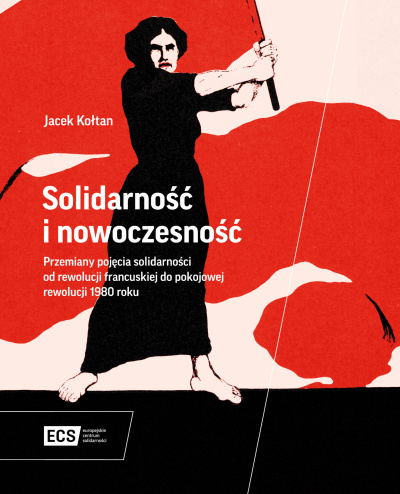
Nagroda Splendor Gedanensis, finał Nagrody im. Marcina Króla, Nagroda im. Zygmunta Baumana oraz nominacje do dwóch kolejnych wyróżnień: Nagrody im. Jerzego Giedroycia oraz Nagrody Znaku i Hestii im. ks. Józefa Tischnera. Wszystkie dotyczą tej samej książki: „Solidarność i nowoczesność. Przemiany pojęcia solidarności od rewolucji francuskiej do pokojowej rewolucji 1980 roku”, autorstwa dr. Jacka Kołtana, pracownika Instytutu Pedagogiki UG oraz Europejskiego Centrum Solidarności. Sukces monografii wskazuje na wagę oraz wyjątkowe ujęcie omawianego tematu. Czym jest solidarność? Jak zmieniało się rozumienie tego pojęcia na przestrzeni wieków, w różnych kontekstach historycznych i społecznych? Jakiej solidarności potrzebujemy współcześnie? Zapytaliśmy o to autora książki.

The Splendor Gedanensis Prize, a finalist for the Marcin Król Prize, the Zygmunt Bauman Prize, and nominations for two further awards: the Jerzy Giedroyc Prize and the Znak and Hestia Prize named after Father Józef Tischner. All relate to the same book: ‘Solidarność i nowoczesność. Przemiany pojęcia solidarności od rewolucji francuskiej do pokojowej rewolucji 1980 roku’ (“Solidarity and Modernity. The Transformation of the Concept of Solidarity from the French Revolution to the Peaceful Revolution of 1980”), by dr Jacek Kołtan, a researcher at the Institute of Pedagogy, University of Gdańsk, and the European Solidarity Centre. The success of this monograph highlights the importance of the subject and the unique approach taken to it. What is solidarity? How has the understanding of this concept changed over the centuries, in various historical and social contexts? What kind of solidarity do we need today? We asked the author of the book these questions.
Karolina Żuk-Wieczorkiewicz: - Your book on the evolution of the concept of solidarity has received widespread acclaim and continues to garner nominations and awards. Why did you choose this particular topic?
Dr Jacek Kołtan: - As I also work at the European Solidarity Centre, solidarity was important to me from a purely professional point of view. And as I am a philosopher by training and by passion, I was very curious about the idea itself - where it came from and what it really means. We ascribe many different meanings and interpretations to solidarity; our notions of what is good and noble also lead us to romanticise the concept somewhat. I was keen to somehow make sense of this vast jumble of associations - very diverse and at times incredibly contradictory - all the more so because, believe it or not, few before me had attempted to do so.
- Solidarity is also sometimes associated with other concepts…
- The term ‘solidarity’ is sometimes used interchangeably with brotherhood, charity and love for one’s neighbour. It seemed to me, however, that there is something very specific behind this term; that when we use this word, we have something very distinctive to say to the world: about this world, about ourselves, and about the nature of human relationships. I wanted to examine this word from a historical perspective: where it came from, how it took shape, how its meanings have changed, and how people’s perceptions of it have evolved. That is why I decided to look at those texts in which the term ‘solidarity’ features prominently.
- When did this term first appear in the language? I’m referring to the earliest examples.
- It has its roots in Roman law. There was an institution in civil law known as obligatio in solidum, whereby someone who entered into a commitment - for example, a form of loan - was not the sole person liable for repaying that loan, as repayment could also be demanded from family members or co-initiators of the transaction in question.
A specific legal formula emerged, stating that ‘one and all’ were liable for the repayment of the obligation. This is reminiscent of the famous phrase from *The Three Musketeers*: ‘one for all, all for one’. It has its origins in Roman law.
Thus, one and all were held jointly and severally liable for the fulfilment of a particular legal obligation. Over time, the Latin phrase in solidum began to evolve in French into ‘joint and several liability’. It was there that the adjective ‘solidary’ first appeared, followed later by the noun.
- Which period are we talking about?
- There are documents showing that this adjective was already in use in French in the second half of the 16th century (it was eventually adopted into English as well). Later, in the 17th century, the noun ‘solidarity’ began to appear in legal texts. And this was a novelty; there had been no such word in the language before. So we are dealing with a term in its noun form that is very young, just over 300 years old.
- It began as legal terminology, but over time the term took on a different meaning.
- This is linked to the development of the bourgeoisie. In the modern era (particularly in the mid-18th century), the bourgeoisie began to gain increasing importance. An increasingly autonomous social class emerged, one which demanded civil and political rights and which brought its own bourgeois culture to the fore. In contrast to the aristocratic culture that had been shaped over centuries, this culture was not concerned with honour, dignity, death or chivalry, but rather with social trust and the peaceful development of commercial interests. Relationships that could yield mercantile benefits became important, and with them a sense of security.
Against this backdrop, the concept of solidarity begins to be used with increasing frequency; it gradually breaks away from its legal context and comes to denote interpersonal relationships: the fact that we can trust one another; that in the event of any collective disasters, everyone is jointly responsible for every individual; that we commit to helping one another; and that the interests of the community and those of the individual are in balance. The term ‘solidarity’ thus begins to emerge from a wide variety of contexts.
- What are these contexts?
- For example, the religious context, concerning charity, that is, Christian caritas. Acts of charity were always linked to some metaphysical promise, and people performed them because in doing so they were fulfilling divine commandments (for which a reward in heaven awaited them). However, the realm of solidarity is not the vertical relationship between heaven and earth, but the horizontal, interpersonal relationship. In other words, solidarity does not expect metaphysical fulfilment, but fulfilment on Earth, in interpersonal relationships. What is at stake here is happiness, not salvation.
Solidarity is motivated by acts of solidarity performed for the sake of other people, rather than out of a religious obligation towards them.
This is why, in the nineteenth century, the concept began to be defined more and more strongly as a term describing the birth of modern society. Until then, society had consisted of three estates: the nobility, the clergy, and the Third Estate - the working population - which was subordinate to them. Finally, the bourgeoisie entered the scene as an estate that had hitherto had no specific political rights. The bourgeoisie began to develop its own social relations. An increasingly independent society took shape, which ultimately led to the French Revolution of 1789.
This society, which sought to shape the world itself, to define it and to exercise political power, also required a new language, emancipated from religious or feudal traditions. The concept of solidarity increasingly came to fulfil the role of describing this newly emerging world. By the mid-19th century, it had already become a political concept, denoting people’s ability to organise themselves regardless of origin, blood ties, and so on. The concept was subsequently adopted by the working class in the context of the great industrial revolutions, the emergence of factories, and the mass migration of people from the countryside to the cities. At the time, however, this group did not realise that it was a key social actor on the political stage and that, without fighting for their own rights, they stood no chance of securing them. When Marx and Engels, in their famous Communist Manifesto, called on the proletariat to unite, they were, in effect, forging a new variant of the solidarity formula.
- The concept of solidarity is also significant in the context of women’s rights…
- The nineteenth century was an age of struggle against extreme poverty, particularly amongst the working classes. After all, these were people deprived of all political rights, not to mention property rights. It was also during this period that socialist, anarchist and communist movements intensified their use of the term ‘solidarity’ in an emancipatory context. This also applied to relations between men and women - the so-called ‘social question’, that is, the issue of radical poverty amongst the lowest social groups, was discussed as inseparable from the ‘women’s question’. These were the arguments put forward by the first social democrats, both men and women: Wilhelm Liebknecht and August Bebel (author of the popular book *Woman and Socialism*), and above all Clara Zetkin and Rosa Luxemburg. It was they who popularised the use of the term ‘solidarity’ in the context of women’s equality. This is the origin of the radical political changes at the turn of the 19th and 20th centuries, and, from the second decade of the 20th century onwards, the struggle for women’s political rights, including, above all, the right to vote. Let us not forget that the last country in Europe to grant women the right to vote was Liechtenstein in 1984, and the last place in Europe where women were granted the right to vote was one of Switzerland’s most conservative cantons - and that was in 1990. It sounds like a bad joke, but it is, unfortunately, true. This shows, of course, that women’s issues have had to wait a very long time for political recognition, and that gender equality is a relatively recent phenomenon and - despite our enthusiastic beliefs about progress - by no means a given.
- Solidarity, particularly in Poland, also has very specific connotations linked to the ‘Solidarity’ movement of the 1980s. Does this solidarity, associated for example with the events of August 1980, stand out from other solidarity movements in Europe?
- I believe it was something exceptional. In my book, I myself refer to that moment in 1980 as the great return of the idea of solidarity. After the Second World War, virtually the entire language of European humanism had to be called into question because of the crimes that had taken place at that time. Western civilisation had shown that it was capable, on two occasions, of unleashing global-scale catastrophes that even the most perceptive people of the era had not anticipated.
In this context, it was very difficult to invoke grand words that would describe humanity as endowed with particularly noble qualities. This is a challenging time for the term ‘solidarity’. This term describes the ability of an individual or a community to ‘reach out to another’, to set aside individual interests for the sake of someone else - with all the consequences that entails, which can, after all, sometimes be difficult. The year 1980 is particularly interesting because people were using this term in defiance of its ideological misappropriation (for example, in an authoritarian, socialist state, ‘Solidarity’s’ internationalism was very readily invoked). This social movement sought to reclaim a word that had been appropriated by a great many different historical currents, and it succeeded in an extraordinarily spectacular manner.
In my view, the ‘Solidarity’ movement is the fulfilment of modernity’s emancipatory promise. In 1980, workers used the phrase from Marx and Engels’ Communist Manifesto: ‘Workers of the world, unite!’. They made a slight adjustment - they hung a banner calling for all workplaces to unite, mobilising the workforce across Poland to begin a serious conversation about the world in which they lived, about the sense of injustice they experienced, and about the fact that people should have the right to shape political reality.
This is an incredibly explosive moment and highly original in the sense that it appears to be the last great workers’ uprising, as it takes place at the twilight of industrial modernity.
The old way of organising production in large factories, where people spent their entire working lives, is coming to an end. Since the 1980s, computerisation and digitalisation have been playing an increasingly significant role; cubicles and open-plan offices have emerged, where people work side by side but are separated by low partitions. The factory-style organisation of work is ceasing to be the dominant form, and with it, Western culture is losing the cultural spaces in which people practised the good habits of cooperation, being together and mutual trust. The workers at the Gdańsk STOCZNIA were the embodiment of this culture - they built ships whilst simultaneously bringing about a political revolution, bringing the great tradition of workers’ emancipation to a close.
- In your book, you also write about a distorted understanding of solidarity.
- I must admit that I wrote the book partly out of anger. Today, we probably imagine all too often that solidarity is a social relationship in which people of the same views, ethnic origin and lifestyle come together. But in this book, I wanted to show that when modern societies were taking shape, the concept of solidarity did not arise because people wanted to be the same. On the contrary: social transformations, the break with the traditions of rural life and the migration of people to urban centres, along with the rapidly changing culture of everyday life, meant that, on an ever-greater scale, people were taking control of their own lives and were able to shape them according to their own will. They sought to fulfil the promise of modernity, linked to the right to dignity, to freedom, to equality and to mutual solidarity, so that every person might have the opportunity to realise their own aspirations or life plans. I therefore propose a metaphorical definition of solidarity as a readiness to ‘reach out towards others’ (those who think differently, live differently, etc.) in order to build society together with them. The fundamental element of solidarity is not identity, but difference - diversity, within the framework of which people seek the factors that will enable complex social integration.
- This reminds me of the European Union’s motto: ‘United in diversity’.
- This slogan links the individual with the collective. It opens up a space where there is room not only for a shared identity, but above all for differences themselves. It suggests that if we wish to build any sense of community and belonging, it must never be achieved by eliminating differences. That is why, instead of an overly homogeneous community, solidarity creates - let us indulge in a bit of wordplay here - ‘diversity’.
- History shows, however, that attempts were made to ‘standardise societies’ in this way.
- We are talking about the totalitarian regimes of the 20th century. It might seem that under Leninist and, later, Stalinist communism, the word ‘solidarity’ ought to have functioned very well. Communist leaders drew inspiration from Marx’s writings or, more broadly, from the Marxist tradition (socialist and communist), and yet in that tradition the term ‘solidarity’ was an expression of the workers’ struggle, the class struggle. However, if we examine all of Lenin’s and Stalin’s official writings, it becomes clear that they marginalise the significance of this concept.
Interestingly, Stalin actually uses the concept of solidarity in a pejorative (for him) sense. Because he is creating a totalitarian system that abolishes all possible differences, he is unable to accept diversity. Everyone must be subordinated to a single goal, a single culture, a single policy, a single party and a single leader.
The example of the Third Reich is also deeply troubling. The Nazis were keen to win over working-class groups who, until then, had voted for the Social Democrats and were deeply attached to the socialist tradition. This led to highly skilful semantic distortions in Nazi propaganda. On the one hand, they fought against international solidarity (Communist internationalism); on the other, they spoke of national solidarity, according to which the nation should support itself. For example, propaganda posters appeared with slogans such as ‘The nation helps itself’. It would be hard to find more bizarre formulations that contradict the original meaning of the concept.
German propaganda of the 1930s and 1940s led to the degradation of this word and its previous meaning. The term ‘solidarity’ (used, for instance, in the so-called German Winter Relief Campaign - Winterhilfswerk) was radically manipulated and woven into the self-centred, nationalist narrative of a totalitarian state.
We have been familiar with manipulators of language for centuries. Their task is to appropriate certain words, values and meanings in order to exploit them for their own political ends. Unfortunately, we see this trend today as well.
- Since we are talking about the present day, what kind of solidarity do you think we need today?

- We are in great need of a culture of solidarity, that is, a culture in which people are aware of the complexity of the world, of our interdependence on one another and, as a result, of a sense of shared responsibility. We live today in a world where this culture is being radically challenged. This is particularly evident in the political sphere. Times in which walls are built and wars are waged are times in which solidarity loses its privileged place.
Why? Because solidarity is a very fragile construct. It exists wherever people are prepared to practise acts of solidarity. If such practice is lacking in everyday life and we cease to foster relationships in which people adopt such behaviour as a natural habit, then solidarity will begin to fade away. Solidarity thrives wherever people are prepared to reach out to others. So when political elites claim that suspicion should be an inherent part of our daily lives, and that strength - rather than the fragility of relationships that must be constantly nurtured - is to become the norm, this is a disastrous framework for acts of solidarity.
When we look today at the great political leaders and the armed conflicts they provoke, we see a world that is turning its back on this very delicate, fragile structure of solidarity and democracy. Solidarity is, after all, a profoundly democratic concept. Democracy, too, is a fragile system, for it is based on solidarity: people, in a spirit of solidarity, guarantee one another the right to freedom, autonomy and equality.
Freedom, equality and solidarity are three concepts inextricably linked. If any one of them is missing, democracy cannot exist.
It seems to me that today we should be reminding people very forcefully that the whole of modernity was born out of the promise of a more just, more equal, free and united world. And this is perhaps the huge problem of our times: that we do not realise what a dramatic game is currently being played out above our heads, and what is at stake in this game.
It seems that the democratic promise of modernity is no longer self-evident, that we have forgotten what it truly means to us. And that we live in a world which is turning its back quite radically on that which is fragile, delicate and requires constant nurturing, care and integration into our daily routines, in favour of the logic of strength: the strongest wins. After all, *Solidarity* is a story about something radically different.
- The book has been shortlisted for numerous awards (most recently the Jerzy Giedroyc Prize and the Znak and Hestia Prize named after Father Józef Tischner), and has won several accolades (including the City of Gdańsk’s Splendor Gedanensis Prize for culture). What does this book mean to you - and what do the honours you’ve received mean to you?
- This book took me on a journey I hadn’t expected at all. At first, it gave me immense pleasure, because it was the first time I’d written a major work in Polish (I studied in Germany and wrote my first book in German). I was able to play with the language’s metaphors, to toy with the meanings of words, to construct sentences and structures that would reveal non-obvious meanings, and to provoke thought about phenomena that are seemingly obvious but about which we actually know very little - all in the Polish language, which lends itself exceptionally well to this.
I then received favourable reviews from critics, and finally nominations and awards. First came a nomination for the Marcin Król Prize (my book was among the five selected for the final), then, for *Solidarity and Modernity…*, I received the City of Gdańsk’s Splendor Gedanensis Award in the field of culture, which was an extraordinary experience for me, as I write about events at the Gdańsk Shipyard and portray the shipyard workers as the great heroes of this story. I was then awarded the Zygmunt Bauman Prize by the Polish Sociological Association; its beautiful observation that the Gdańsk STOCZNIA not only produced ships but, above all, forged bonds of solidarity, can be regarded as an integral point of reference in the research I present.
In other words, the patrons of these awards and nominations are, in fact, my intellectual heroes. Zygmunt Bauman and his sociological insight; Jerzy Giedroyć, with his openness and willingness to conceive of Polishness as a political project open to diverse ethnic groups, rather than one trapped within an ethnic straitjacket. And yet we live today in an increasingly diverse Poland; the Ukrainian language is an ever-present feature on our streets, and people from Ukraine have become an integral part of our society. We, on the other hand, oscillate between helplessness and aggression towards otherness - which, incidentally, is not all that radically different. Instead of feeding on the fear generated by the world of politics, let us make more room for the imagination and sensitivity that stem from acts of solidarity. Bauman, Tischner and Giedroyć are giants of precisely this kind of sensitivity and imagination.
I am therefore simply humbled by these honours. I interpret them as recognition of the chosen topic and the proposed analysis - we have a problem with solidarity today and we must begin to speak about it more loudly, but also more practically. If my book were to contribute to a sensible debate on solidarity, if it reaches people and strikes a sensitive chord in their minds and hearts, then that gives me a sense of fulfilment. Ideas really do matter; they are the key not only to understanding, but also to shaping our world.
- Thank you for the interview!