

academic life
Nearly 12,000 journeys and almost 72,000 km cycled by participants - these are the figures for this year’s 5th edition of the ‘Bike to University’ campaign at the University of Gdańsk. Students, doctoral students and staff at the University of Gdańsk who took part in the campaign collectively saved nearly 5,800 litres of fuel, and thanks to their…

academic life
The GFPS Association invites people from Ukraine and Belarus studying at Polish universities to apply for the Association’s Scholarship. The programme is open to students of all disciplines and degree levels who hold Ukrainian or Belarusian citizenship, live in Poland and are studying at a Polish university. The main sponsor of the current…

academic life
Twenty-one projects - including five in the new ‘Events’ category - have been shortlisted for voting in this year’s edition of the University of Gdańsk’s Academic Citizens' Budget! Do you want to see new relaxation and collaborative work areas created on campus, green initiatives developed, or perhaps classrooms equipped with modern facilities? Would you rather take part in a student social event or watch a film? Vote…

cooperation
October has long been recognised as Breast Cancer Awareness Month. This coming Saturday (24 October), as part of the ‘Gdańsk Chooses Health’ programme, the University of Gdańsk Library will host the event ‘FIRST IN BREAST CANCER PREVENTION. Don’t Put Yourself on the Back Burner’, co-organised by the Fahrenheit Universities Women’s Club, dedicated to…

sport
Following a bittersweet start to the league season, the JohnnyBros ASA UG women’s volleyball team will face SPS Hydropex Sparta Złotów on home turf this coming Saturday. For the University of Gdańsk, this will be a historic occasion: the first match to be played at the newly opened University of Gdańsk Sports Centre! Come along to the stands to cheer…

science
10,000 PLN to carry out your own seminar initiative or small-scale research project – the Foundation for the Development of the University of Gdańsk announces the first call for grant applications under the ‘Seminarium TuuM’ Special-Purpose Fund! The fund was established thanks to a donation from two University of Gdańsk's academics: Prof. Maria Mendel and Prof. Tomasz Szkudlarek. The call for applications is primarily…

academic life
The University of Gdańsk Library is kicking off the academic year with renewed vigour. Ahead of us lie the Student Opening of the Academic Year and Library Night - and these are just some of the attractions awaiting UG students. We spoke to Monika Budzińska, Patrycja Laskowska, and Marietta Tiszbein about what the UG Library has in store for this academic year…

academic life
This year’s winner of the Nobel Prize in Literature is the Canadian poet Anne Carson: ‘For her bold and innovative work, which, in a humorous dialogue with classical tradition, has created new forms of contemporary literature’. One of Anne Carson’s Polish translators is dr hab. Olga Kubińska, prof. UG, Head of the Division of English Language…

cooperation
The Fahrenheit Union of Universities in Gdańsk (FarU) announces the call for entries for the 5th edition of the ‘Fahrenheit Champions of Cooperation’ competition. Grants of up to 30,000 zł await the best ideas submitted by students, doctoral students, academic staff, or science circles from the universities that make up FarU!
True innovation arises at…

science
Is gender research the exclusive domain of the social sciences? Absolutely not! Male and female organisms may, for example, react differently to certain chemicals, such as medicines, or be exposed to varying degrees of risk from road traffic accidents. The ‘I Include Gender in Research' competition is open to researchers - both men and women - who, regardless of their field or scientific discipline, take gender into…

academic life
The Independent Students' Association of the University of Gdańsk once again warmly invites everyone willing to share their ‘elixir of life’ to the autumn edition of Wampiriada – a blood donation campaign for students, staff, and volunteers from outside the University of Gdańsk. Poland’s largest student blood donation campaign will take place on the Oliwa and Sopot campuses from 12 to 16 October 2026…

academic life
Academics, students, local councillors, and residents once again marched together along the Royal Route in Gdańsk to symbolically welcome the new academic year and showcase the potential of the Pomeranian academic community. Representatives from as many as 20 universities took part in this year’s parade. An additional reason to celebrate was the signing of the Metropolitan Act in August…

science
Researchers from the University of Gdańsk have once again been included in the prestigious list of the top 2 per cent of the world’s most influential scientists. The list is compiled and updated annually by Stanford University in collaboration with the UG Publishing House.
The ranking, compiled and updated annually by Stanford University in…
academic life
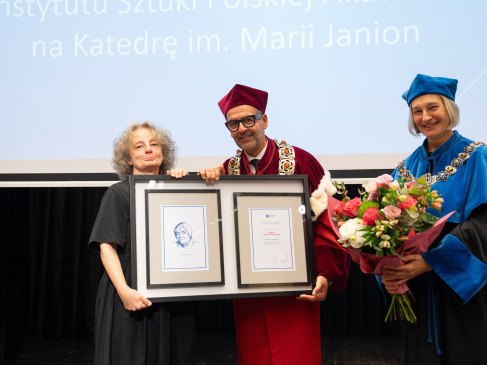
‘Is there an excess or rather a shortage of free-thinking at today’s universities?’ wondered dr hab. Joanna Krakowska, prof. at the Institute of Art of the PAS, during her inaugural lecture. An eminent theatre scholar, twice nominated for the Nike Literary Award, she has taken up the Maria Janion Named Chair of Honour. The ceremony took place on 6…
academic life
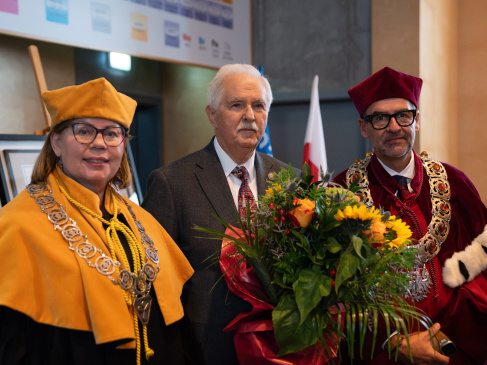
The Faculty of Chemistry at the University of Gdańsk has officially begun the academic year. During the ceremonial opening on 6 October, prof. Jerzy Leszczyński, a professor of chemistry and President’s Distinguished Fellow at Jackson State University, who specialises in computational chemistry, research into the structure and properties of DNA, and…
academic life
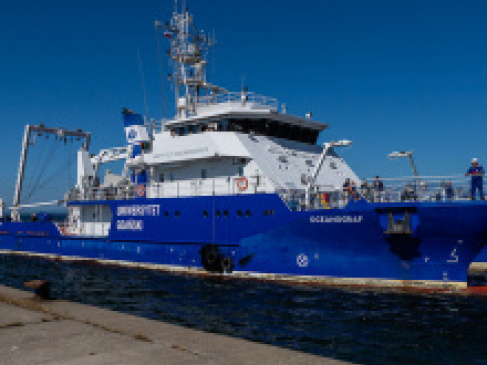
49.5 metres long, with four laboratories, an aerosol observatory, a conference room, and specialised research equipment - the University of Gdańsk’s r/v Oceanograf catamaran is one of the most modern research vessels in Europe. Interdisciplinary oceanographic research covering a very wide range of fields is carried out from its deck, including…
people of UG
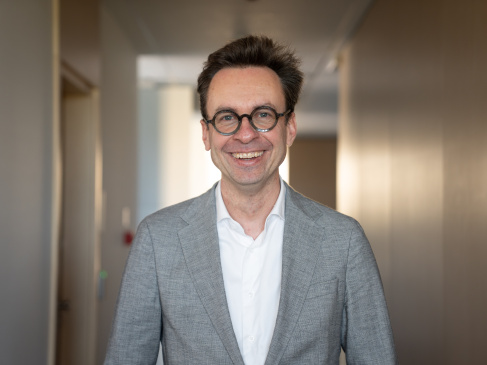
Nagroda Splendor Gedanensis, finał Nagrody im. Marcina Króla, Nagroda im. Zygmunta Baumana oraz nominacje do dwóch kolejnych wyróżnień: Nagrody im. Jerzego Giedroycia oraz Nagrody Znaku i Hestii im. ks. Józefa Tischnera. Wszystkie dotyczą tej samej książki: „Solidarność i nowoczesność. Przemiany pojęcia solidarności od rewolucji francuskiej do pokojowej rewolucji 1980 roku”, autorstwa dr. Jacka Kołtana, pracownika…

academic life
Applications are now open for the Erste Award programme, run by the University of Gdańsk in collaboration with Erste Bank Polska. This year, 64 students and doctoral students will receive one-off awards of 2,000 zł or 1,500 zł. Applications can be submitted until 2 November. The awards will recognise not only academic achievements…
science
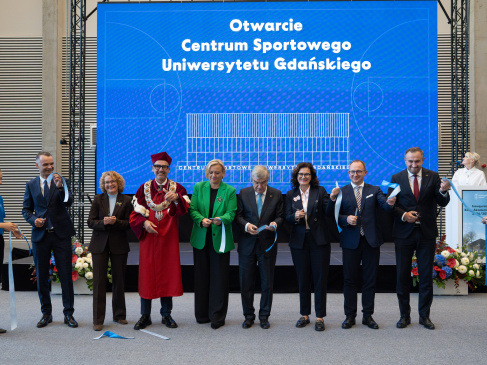
‘We have it!’ - with these words, the Rector of the University of Gdańsk, prof. Piotr Stepnowski, opened the University of Gdańsk Sports Centre. After more than half a century of waiting, the university has gained a modern and multi-purpose sports hall, which is intended to serve the entire academic community. And it was there, in this brand-new and…
academic life
By Rector's Decree, a policy has been introduced governing the use of modern IT tools at the University of Gdańsk, in particular artificial intelligence. Comprehensive technical support in this area will be provided by the Interdisciplinary Laboratory for Artificial Intelligence Applications, whose Director, dr Jakub Neumann, prof. UG, serves as the…
academic life
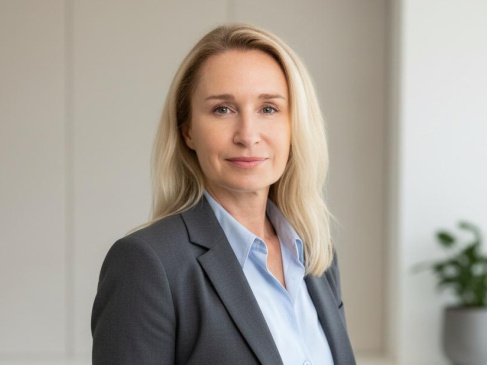
Dr hab. Monika Białek, from the Institute of Media, Journalism and Social Communication at the University of Gdańsk, has been honoured with the 2nd Zygmunt Gloger Award and Medal for her research into and promotion of knowledge about Polish radio reportage.
‘Polish radio is celebrating its 100th anniversary, and radio reportage has been part of it from…
academic life
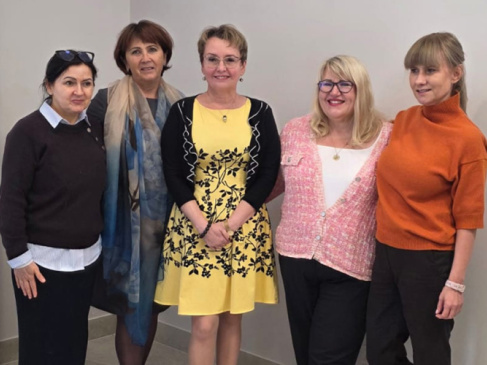
Polish Society of Clinical Psychology (PTPK) has elected a new executive committee. Prof. dr hab. Małgorzata Lipowska, Director of the Institute of Psychology at the University of Gdańsk, has taken up the post of President of the Society.
The new PTPK leadership was elected on 22 September 2026 during the PTPK General Meeting of Members. In addition to…

science
Dr inż. Marta Chylińska from the University of Gdańsk has received a prestigious honour in the POLSIF Sustainable Finance Research Award competition. The award-winning publication, of which she is a co-author, concerns the behaviour of financial markets incorporating ESG criteria in conditions of heightened uncertainty.
The honoured publication,…

cooperation
Yasmine from Algeria, Ines from Portugal, Jenny from Germany, and Hitesh from India. They came from different places, each with their own stories and experiences. For a few weeks, Gdańsk became their shared home. As part of the European Solidarity Corps, 14 volunteers from different parts of the world learnt not only to work together, but also what…

cooperation
Nearly 30 experts, researchers and practitioners representing 11 partner institutions from 5 European countries took part in a working meeting of the international TRIC consortium (Toward Resilient and Innovative Communities: Making Uncertainty Productive), in which the University of Gdańsk is also participating. The meeting took place on…

science
Dr Marek Rewizorski, prof. UG, has been honoured with a commendation in the Polish Society for European Studies (PTSE) competition for the best academic article in the field of European studies published between 2023 and 2025. The commended publication discusses the consequences of Russian aggression against Ukraine for the development of European…

culture
As part of the ‘Between.Pomiędzy Dispersed Festival’, prof. Christopher Morash from Trinity College Dublin will deliver a lecture on the dialogue between two UNESCO Cities of Literature – Gdańsk and Dublin. The event will take place at the House of Literature in Gdańsk on Thursday 24 September 2026 at 6.00 pm.
In his lecture, ‘What Rough…

sport
The ASA UG martial arts team took part in the annual European Universities Championships. This trip will go down in our club’s history - the University of Gdańsk returned from Tirana with three medals! Thanks to this result, our university has become, alongside AWF Katowice, the most successful Polish university at the European Universities…

academic life
‘Gaudeamus igitur’ will be heard for the 57th time at the University of Gdańsk – this time in the exceptional surroundings of the newly built University of Gdańsk Sports Centre! The ceremony of the 2026/2027 academic year inauguration, combined with the grand opening of the Sports Centre, will take place on 1 October 2026 at 10.00 am. The inaugural lecture will be delivered by dr Thomas Bach, Honorary Doctor of the…

academic life
We encourage all students with a PESEL number to use mLegitymacja, a secure, modern and free tool available in the mObywatel app. Activating mLegitymacja does not require submitting an application – you simply need to meet a few conditions to quickly and easily obtain a document confirming your student status.
Due to the late publication of an…