
‘If someone needs to flee from home, we must suppose living conditions in their country are extremely difficult.’ Dr Francesca Tessitore, psychoanalyst, works with forced migrants and asylum seekers both as a researcher and as a clinician. Her research focuses on the relationship between undergoing extreme trauma and autobiographical narrative in the context of forced migration and seeking international protection. What are the biggest challenges faced by psychologists working with migrants - and what should we all be aware of to understand their experience?
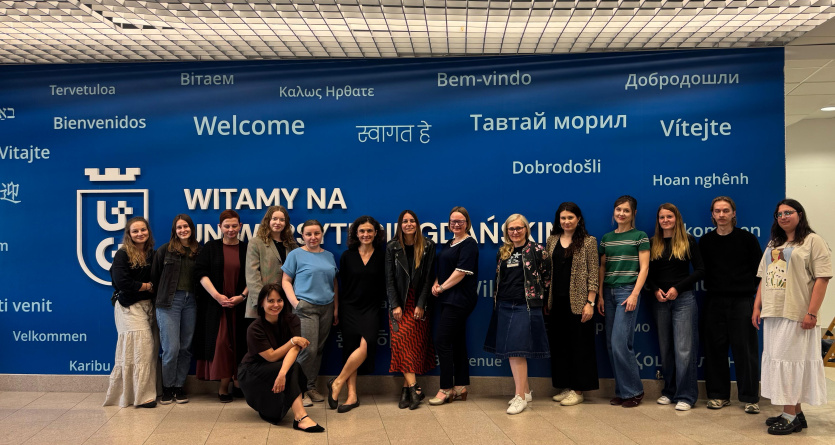
Karolina Żuk-Wieczorkiewicz: - Both the field of your research and your clinical practice relate to forced migrants and asylum seekers. How did it start? How did you get involved in such a challenging issue?
Dr Francesca Tessitore: - Working on my PhD at the University of Naples Federico II, I started to study maternity in the situation of migration. Meanwhile, I became qualified as a psychologist and started working in several asylum seekers’ and refugees’ centres. So, I changed the direction of my PhD project and started to work with asylum seekers and refugees - both as a researcher and as a clinical psychologist. I started to study migration trauma and got interested in research and clinical practices with migrants. And it’s been over ten years since I started studying these things.
- In your work, what is the hardest part?
- The hardest part refers to dealing with the extreme traumatisation that forced migrants usually go through. They often experience double trauma. The first one is migration - a kind of daily micro-traumatisation, which is about identity redefinition that is demanded of migrants. But they also deal with extreme traumatisation (usually of an interpersonal nature), such as torture or other kinds of human rights violations. We should remember that most of them are fleeing from wars or persecution. So, the hardest part, both for the researcher and for the clinician, is to deal with the consequences of highly traumatic experiences. When you get in touch with such traumatised people, you have to host their trauma in your mind, as well as to see and recognise it - sometimes before they do it. You act as a container, and your mind must work as a vicarious witness’s mind, holding and processing what the other person cannot yet bear alone. That can be really hard.
- What aspect of your work brings you the most satisfaction?
- The most satisfactory part is when you help them. When you do this difficult work of hosting their trauma in your mind, when you establish a relationship with them, then you can help them restore relational and social bonds that are usually disrupted due to the extreme traumatisation they’ve experienced. So, when you see that by doing your work, you can truly help them - this is the most satisfactory moment.
- We live in turbulent times. As there are a lot of wars and other problems around the world, forced migration seems a pressing issue which generates a lot of concern. Do you think we need a change in public discourse about migration and migrants? As you said, they are often deeply traumatised people. What can we do?
- To change the discourse? We’d need to change people’s minds. A forced migrant is often seen as the enemy, as the stranger, as the symbol of the unknown - but I believe that this kind of attitude is the result of strong defence mechanisms we usually set when we deal with strangers (or with something we simply don’t know). When we get in touch with the unknown, with people who are traumatised, whose identity is rooted in a different social and cultural background, we usually feel a lot of anguish - so we need to protect ourselves using some defence mechanisms, such as rejection or denial. If something is too difficult to deal with, we tend to push it away.
However, I believe the public debate can change if we - as researchers and clinicians - work with the anguish people often experience when they get in touch with migrants.
For example, I work with migrants both as a psychologist and as a researcher, but I also do a lot of work with professionals who work with migrants themselves. I did supervision with professionals working in reception centres because we need to make these people aware of the anguish that can be caused by contact with migrants. I believe it is important to direct our efforts not just at migrants, but also at people who work with them. Moreover, we need to share knowledge with people. When we get in touch with something so hard and so unrepresentable to our minds, we need to do a lot of work to understand the severity of the trauma. Teaching and learning about migration or extreme traumatisation might help in the process.
- According to your experience, do you know examples of migrants who overcome their trauma and adapt to living in the place they arrived?
- I come from Italy, which is a specific place because for many forced migrants, it is just a transit land. Most of them arrive, ask for international protection, and after having obtained it, they go away. They usually go to Germany or the United Kingdom because there are far more opportunities available there that are not available in Italy. For example, when I went to the United Kingdom during my Ph.D. course, I saw that migrants, including those from Africa, are integrated into society.
- I understand that the nature of working with migrants varies from country to country.
- I suppose so. In Italy, for example, we have a lot of problems concerning services and money. Many Italians have difficulties with finding a job or getting a satisfying standard of living. For migrants, it is even more complex. We also need to consider that Italy has a specific geographical location: it is very close to Africa. So, for example, when refugees start their journey in North Africa, they usually end up in Italy. The Dublin Protocol says that the first land you arrive at is the place where you should ask for international protection.
Another problem is lengthy procedures. If you come to Italy as an irregular migrant and ask for international protection, you have to wait for a long time before the committee can evaluate your request. And to do so, the committee asks you to talk about your pre-migration and migration experience - because they are to assess whether you fled from your country for valid reasons or not. The problem is that forced migrants are usually traumatised - and when someone is traumatised, they have great difficulty telling their story and producing a coherent narrative of what they experienced. And so is the paradox: if someone is severely traumatised, they cannot produce a coherent narration (which is disrupted by trauma), but the committee evaluates their narration - whether it is coherent or not.
In my work as a researcher and as a clinician, I try to help asylum seekers to overcome the distortion of the narrative caused by the trauma.
- Do you work with them before or after they are evaluated by the committee?
- Usually before, so they can arrive at the committee when their trauma is more integrated into their inner world and, consequently, they are able to put their experience into their narratives. The problem is that when you are traumatised, the moment of trauma (especially interpersonal trauma) usually disrupts the narrative’s organisation. It disrupts memory processes. When we experience a traumatic event, we usually store traumatic memories in different ways than other, non-traumatic memories. This kind of different mnestic storage produces some consequences on the narrative level. So, we need to help them to overcome this traumatic condition to produce a better integration between traumatic memories and narrative dimensions. It’s complex.
- I suppose every person is completely different?
- Yes, of course, every person is different, but there is also something that all have in common. Most migrants have experienced interpersonal trauma during their trip, starting from pre-migration conditions. If someone needs to flee from home, we must suppose living conditions in their country are extremely difficult. So, the trauma starts before the journey, but they usually go through even more traumatic experiences of violence during their journey.
I work a lot with North African forced migrants (Africa is the place that most of the forced migrants in Italy come from). They experience a lot of interpersonal traumatisation during their journey. For example, crossing the Sahara Desert is terrible for them as they experience severe violence at every checkpoint they pass through - women are often abused, men are beaten. When they arrive in Libya, they are put in detention centres, beaten and abused. Also, crossing the Mediterranean Sea is very hard. And so, there is cumulative traumatisation, and even though every person is different, they have a common background which is characterised by this cumulative interpersonal trauma.
- So, memory works as a defence system that helps to cope with traumatic experiences when someone is not ready to face them? But traumatised people must get through them again and report them in a coherent way to the committee to justify their need to get international protection?
- In fact, the committee is going to retraumatise migrants if they are not helped to understand what is going to happen and why. They need to be explained what the aim of the committee is, what the aim of the interview is, and why it is important to create a coherent narration about their pre-migratory and migratory experience. Because they will be assessed on this basis.
- It seems hard…
- Yes, it’s hard, because the problem is that when you speak with strongly traumatised people and hear about their history (i.e. speaking about their journey), the feeling that you usually have is that their narration seems fake. Because there is dissociation of the affect and emotions from what they are saying. They produce some detached, disjointed and specific narratives – and, even more, due to our defence mechanisms through which we try to protect ourselves, when you hear these stories, you usually think “No, it’s impossible”.
- What exactly seems impossible? Migrants’ experiences or the way they describe them?
- Both. We usually think it’s impossible that they experienced all these things, but also that it’s not possible that this person is telling the truth, because the way they tell their story is completely detached. Their narration sounds just as if they were describing something “normal” or “neutral”, like a daily shopping at the market. Emotions are completely disconnected - and this is the effect of dissociation, which is a typical defence mechanism for everyone who experiences extreme traumatisation (especially if it’s interpersonal traumatisation). The role of the clinician is to try to help them to reconnect the affective and emotional dimensions to their memories.
- I wonder if bringing those emotions back, when the defence mechanism is disarmed, isn’t harming in some ways.
- Dissociation is, of course, a defence mechanism, and we need it (just like all defence mechanisms) to protect us. The problem is that if dissociation and emotional disconnection continue for a long time, they are harmful to us. The problem we have as clinicians is that we must recognise dissociation as a defence mechanism - and recognise the negative consequences of dissociation as well. Of course, only clinical psychologists can perform this kind of work, because reintegration is a complex and demanding process. We need to be empathic; we need to host their trauma in our minds, and we need to do all these things carefully.
- In your opinion, how could the system (for instance, the government system) be improved to help those people?
- I believe the system could help them more effectively by increasing the amount of money dedicated to this field. This is the first thing. In Italy, for example, we have reception centres in which asylum seekers stay while waiting for the date of their meeting with the committee. However, the government doesn’t invest in those centres. So, for one centre that hosts around 200 people, we have only one psychologist, one Italian teacher, and one educational specialist - too few to meet the needs.
- You said most migrants you work with come from Africa. How do you communicate with them? I suppose the language barrier may be quite a challenge.
- We work with them with the help of a cultural consultant. In almost every reception centre, there’s a cultural consultant or mediator who speaks the migrants’ language and participates in sessions or interviews with them. So, there are usually three of us: a migrant, a psychologist, and a cultural consultant who is responsible for translation.
- I guess a cultural gap is also an obstacle?
- Of course it is. When you work with migrants, you need to be aware of the culture they come from. The ideal situation would be one where you work with people representing the culture you specialise in. For example, as a clinician, I worked with Nigerian asylum seekers. I studied Nigerian culture a lot, as well as Nigerian practices and customs. I also learned to understand a lot of things in Italian culture that may seem unusual to them. To sum up: cultural difference is an obstacle, of course, but obstacles are something you can always learn from - and transform them into opportunities.
Cultural diversity has a huge potential; you can learn and benefit from it - you just need to stay open-minded.
- Thank you very much!
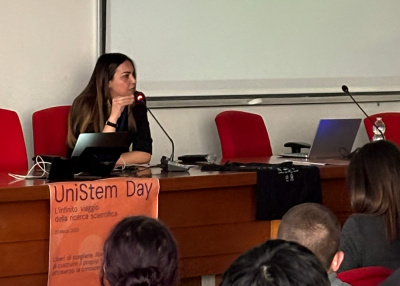
Francesca Tessitore visited the Faculty of Social Sciences in June 2026. She led a clinical seminar for psychology students at the University of Gdańsk and staff at the Children’s Psychiatric and Rehabilitation Day Centre in Gdynia, led by Anita Sumiła, PhD, which collaborates with the Institute of Psychology.