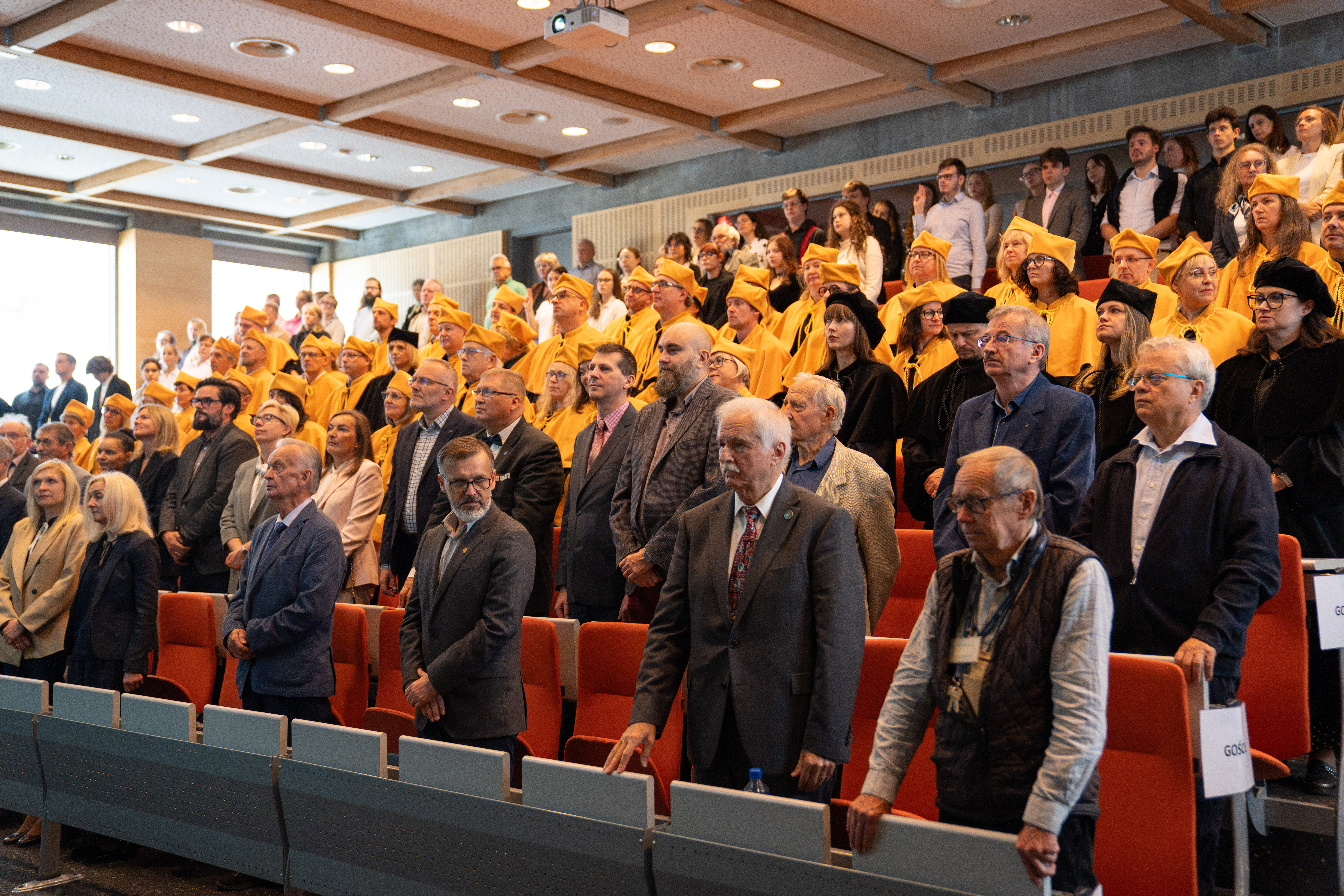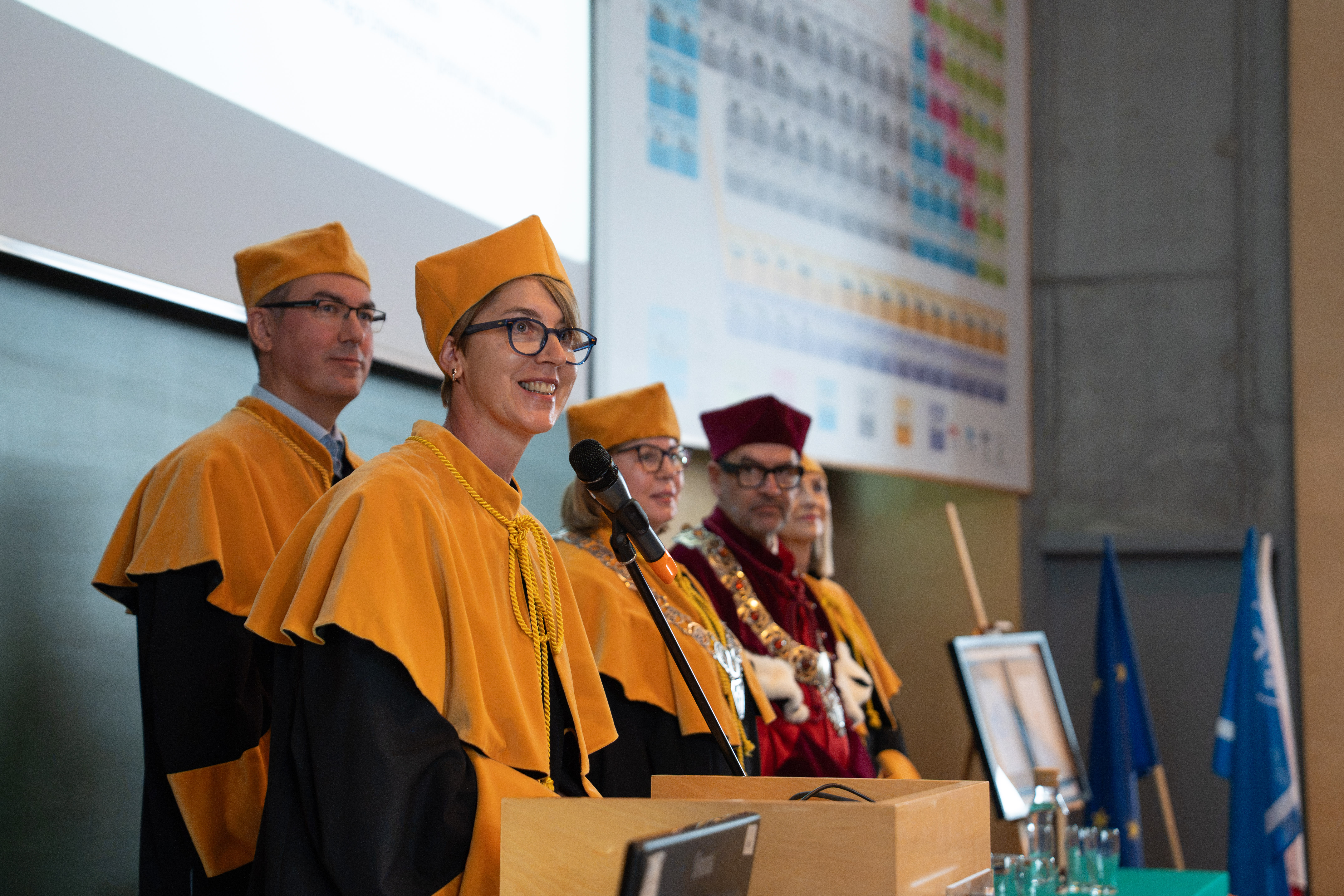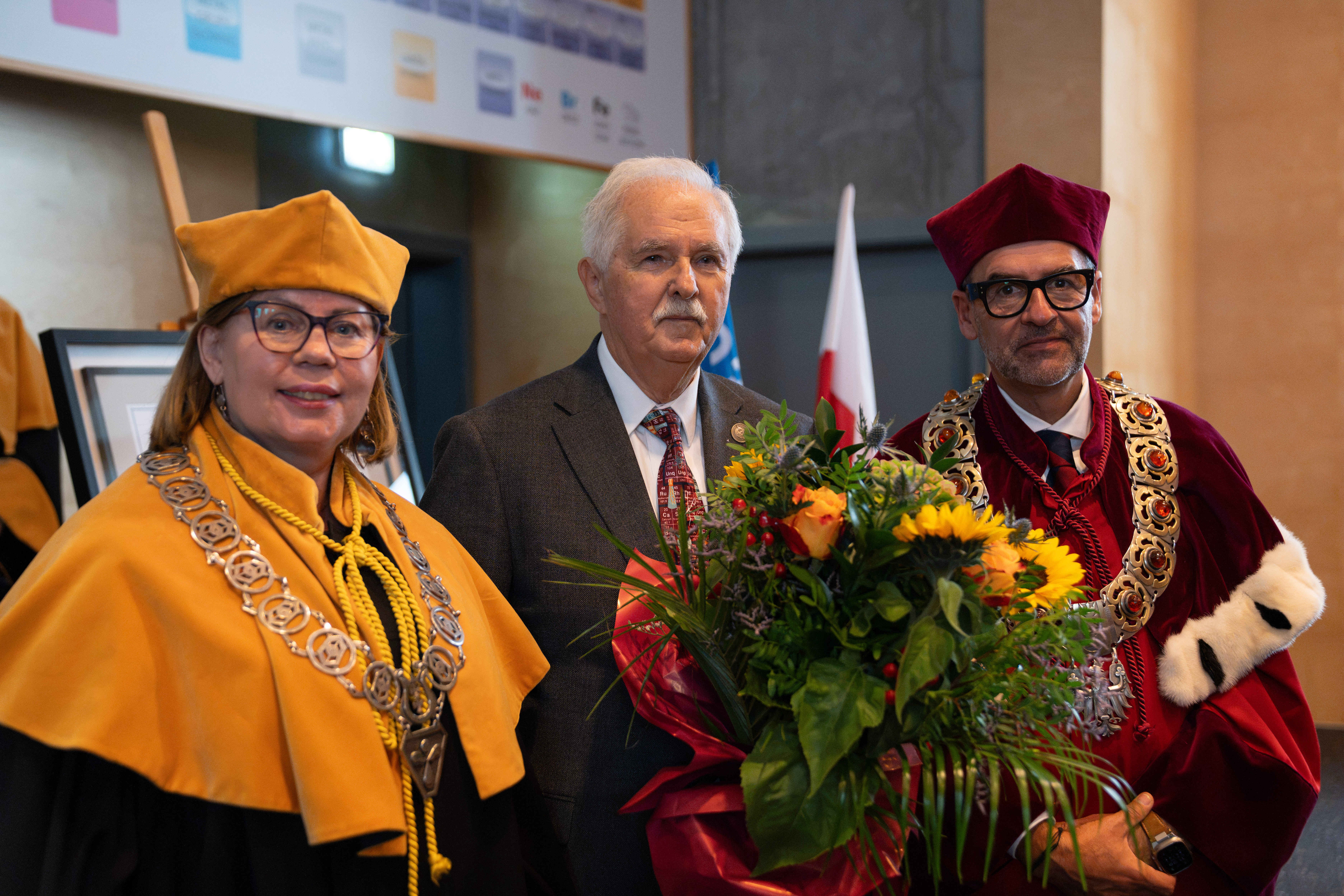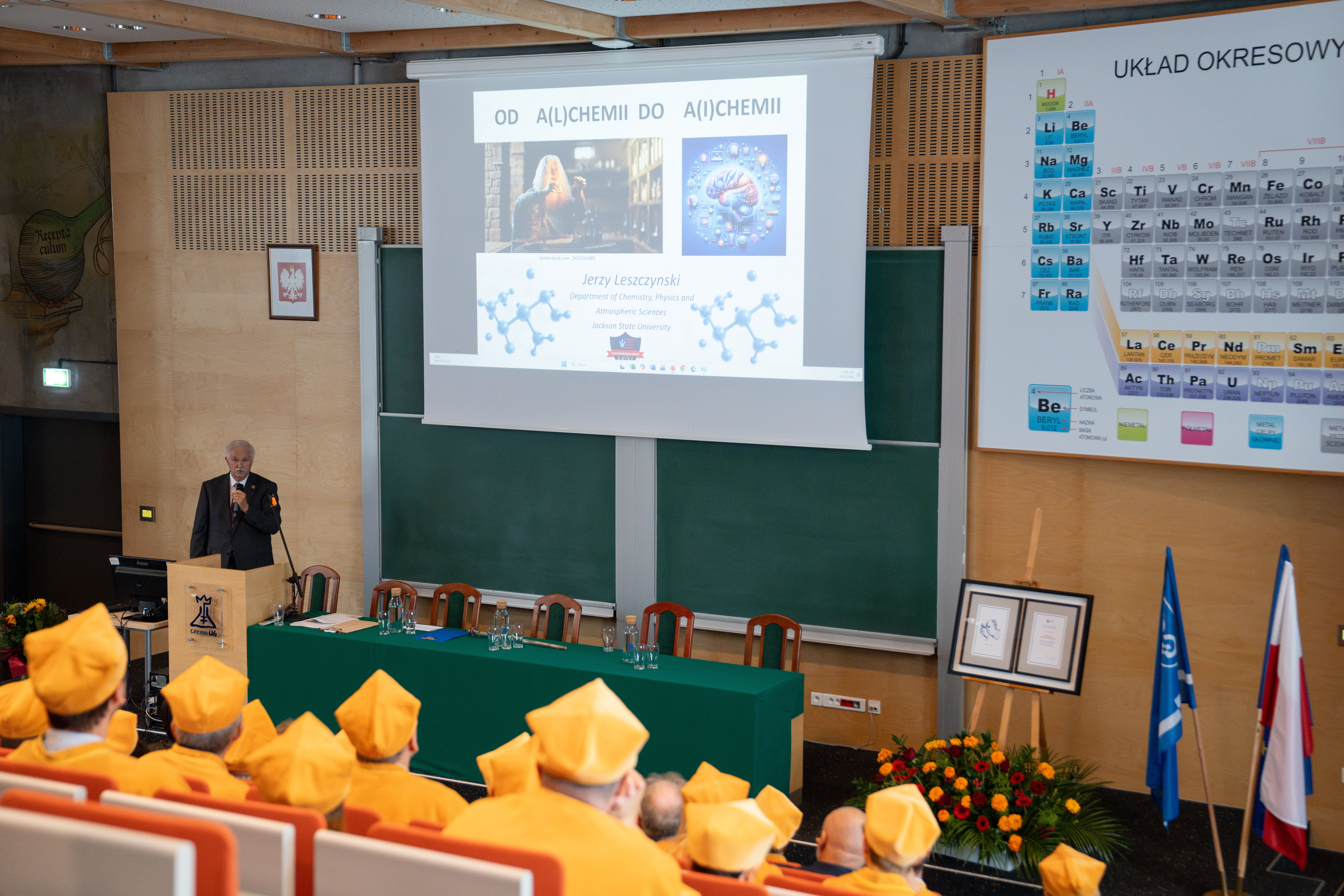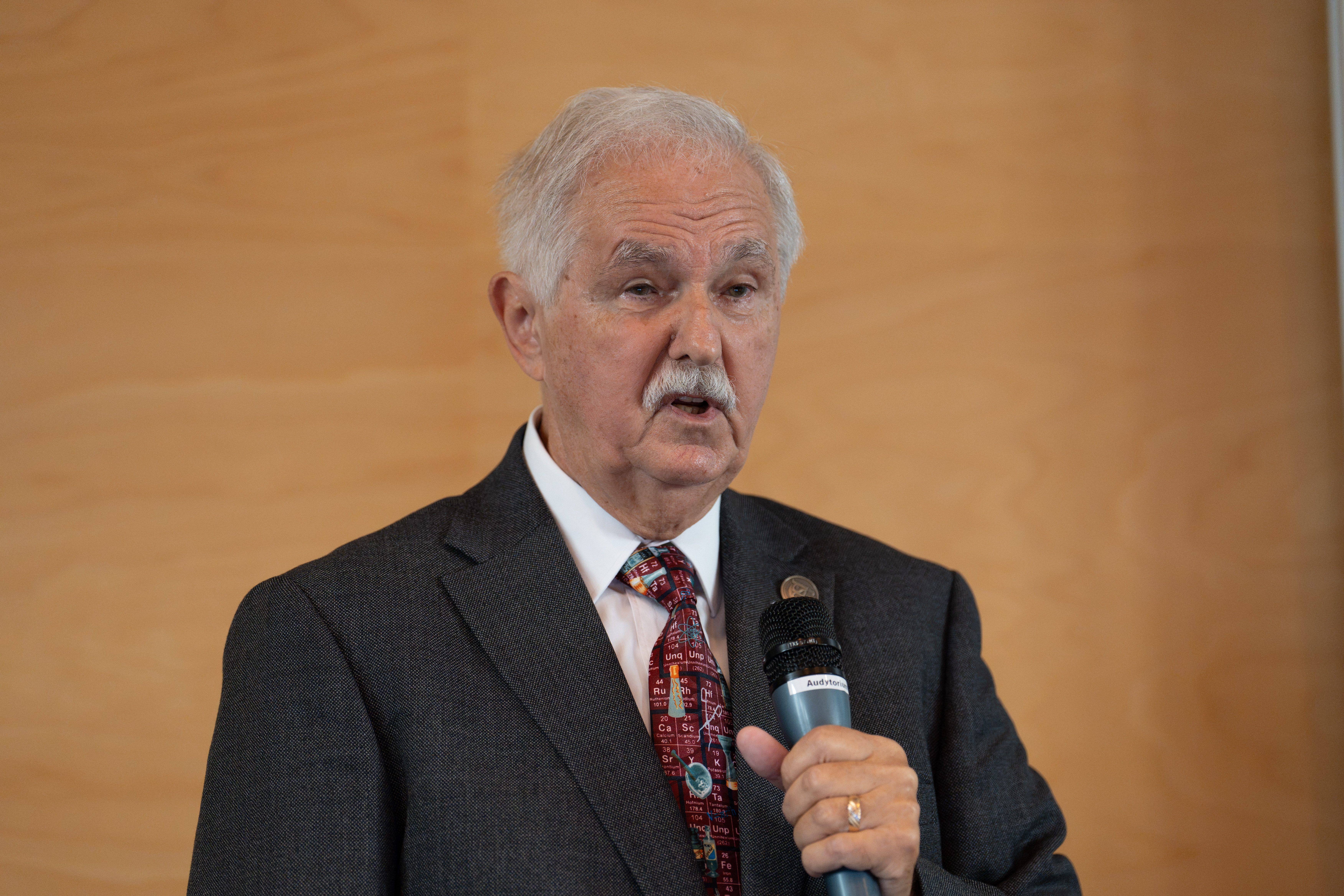
The Faculty of Chemistry at the University of Gdańsk has officially begun the academic year. During the ceremonial opening on 6 October, prof. Jerzy Leszczyński, a professor of chemistry and President’s Distinguished Fellow at Jackson State University, who specialises in computational chemistry, research into the structure and properties of DNA, and the design and characterisation of nanomaterials, was also appointed to the Wacław Szybalski Named Chair of Honour.
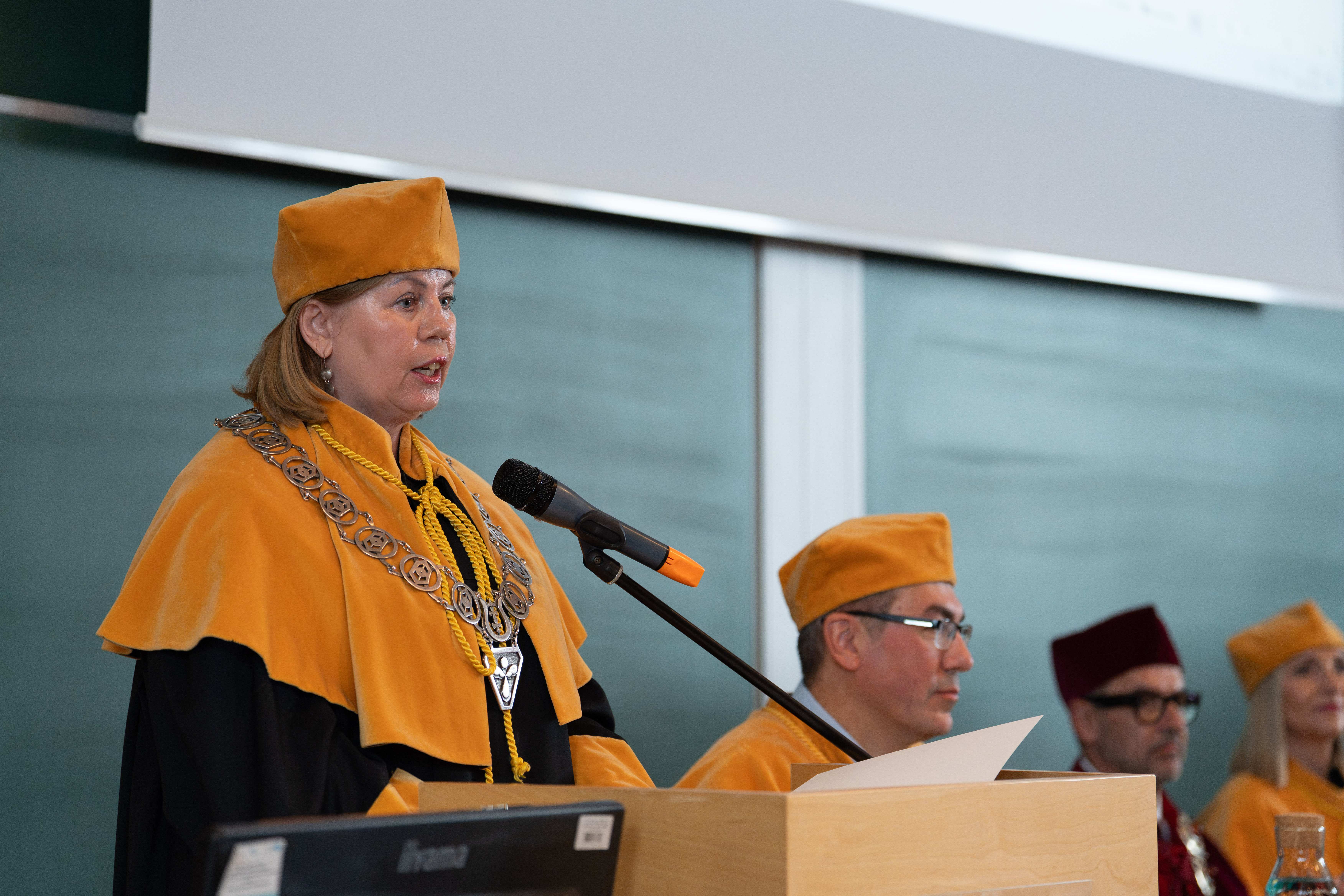
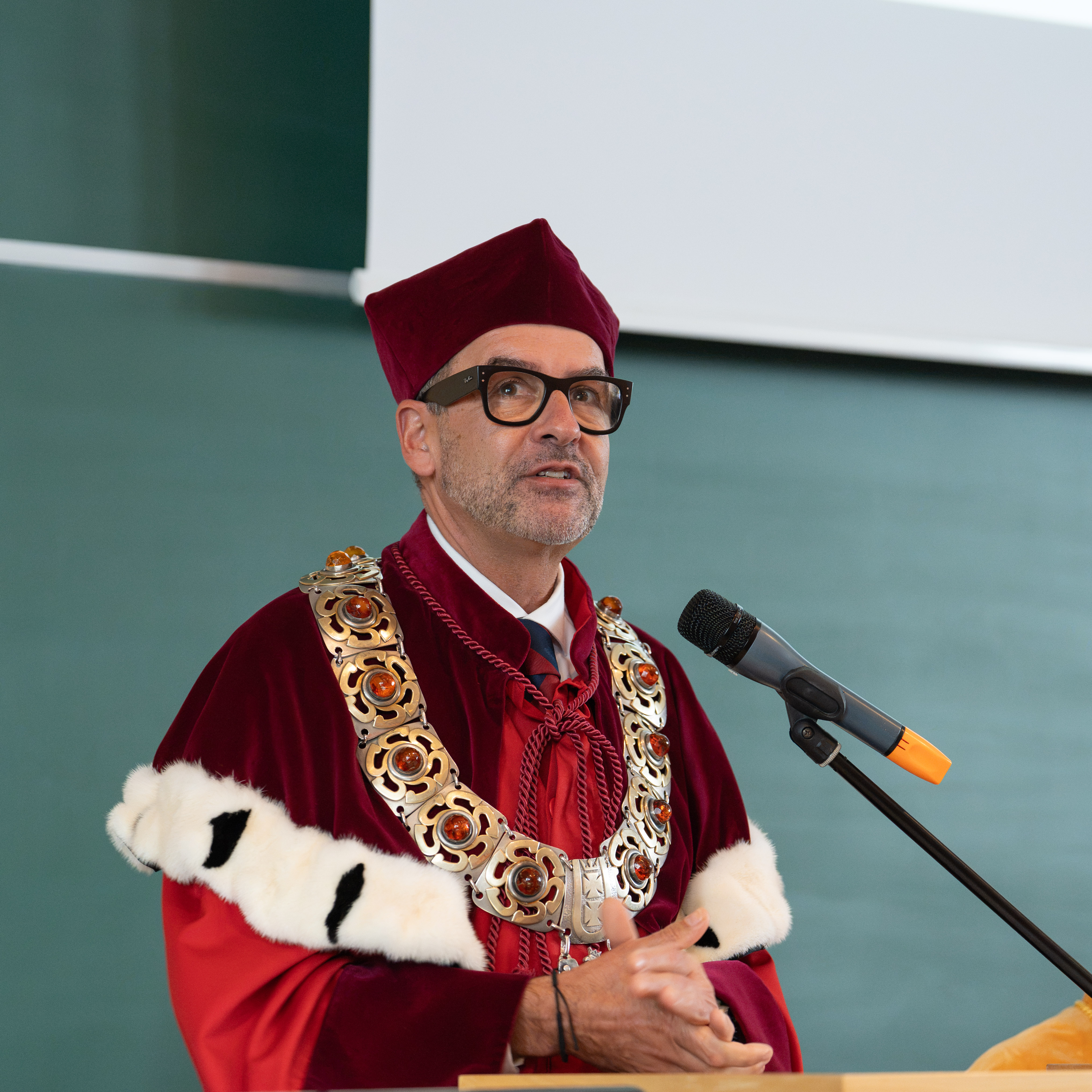
‘It is always a great pleasure for me to return to my home faculty,’ said the Rector of the University of Gdańsk, prof. dr hab. Piotr Stepnowski. ‘Today I am all the more delighted that we are beginning another academic year with the sense that we have had a truly good year, a good time, both for the university as a whole and for our faculty.’
Prof. Piotr Stepnowski warmly congratulated the Faculty of Chemistry community on their outstanding achievements, starting with the success of the Environmental Protection degree programme, which, according to the ‘Perspektywy’ ranking, took first place in Poland. Among the successes mentioned by the Rector of the University of Gdańsk were also numerous scientific achievements, including grants from the NSC secured by staff, as well as exceptional commitment to the popularisation of science, which is yielding visible results. ‘The strength of the Faculty of Chemistry lies, above all, in the activity of its community,’ emphasised the Rector.
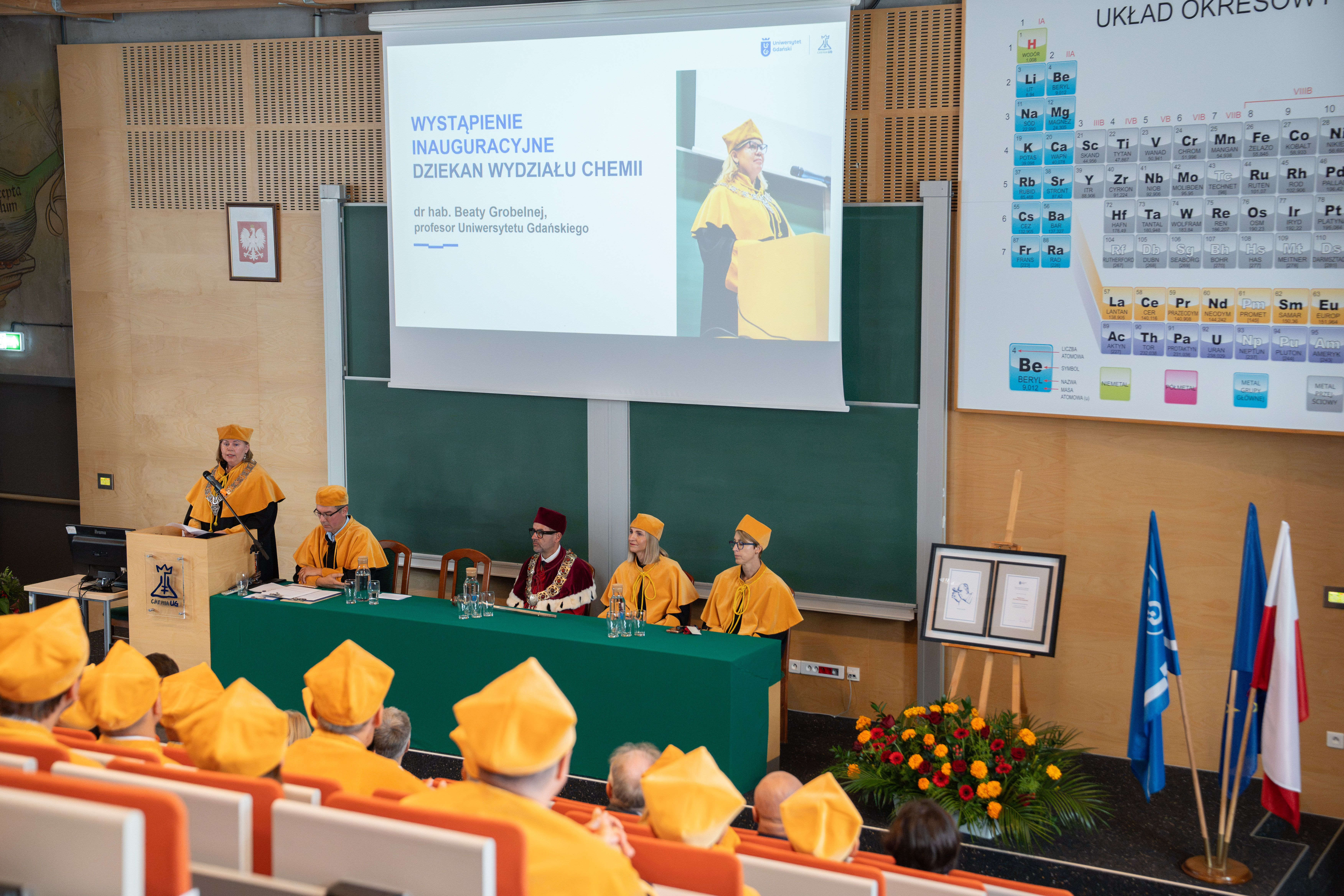
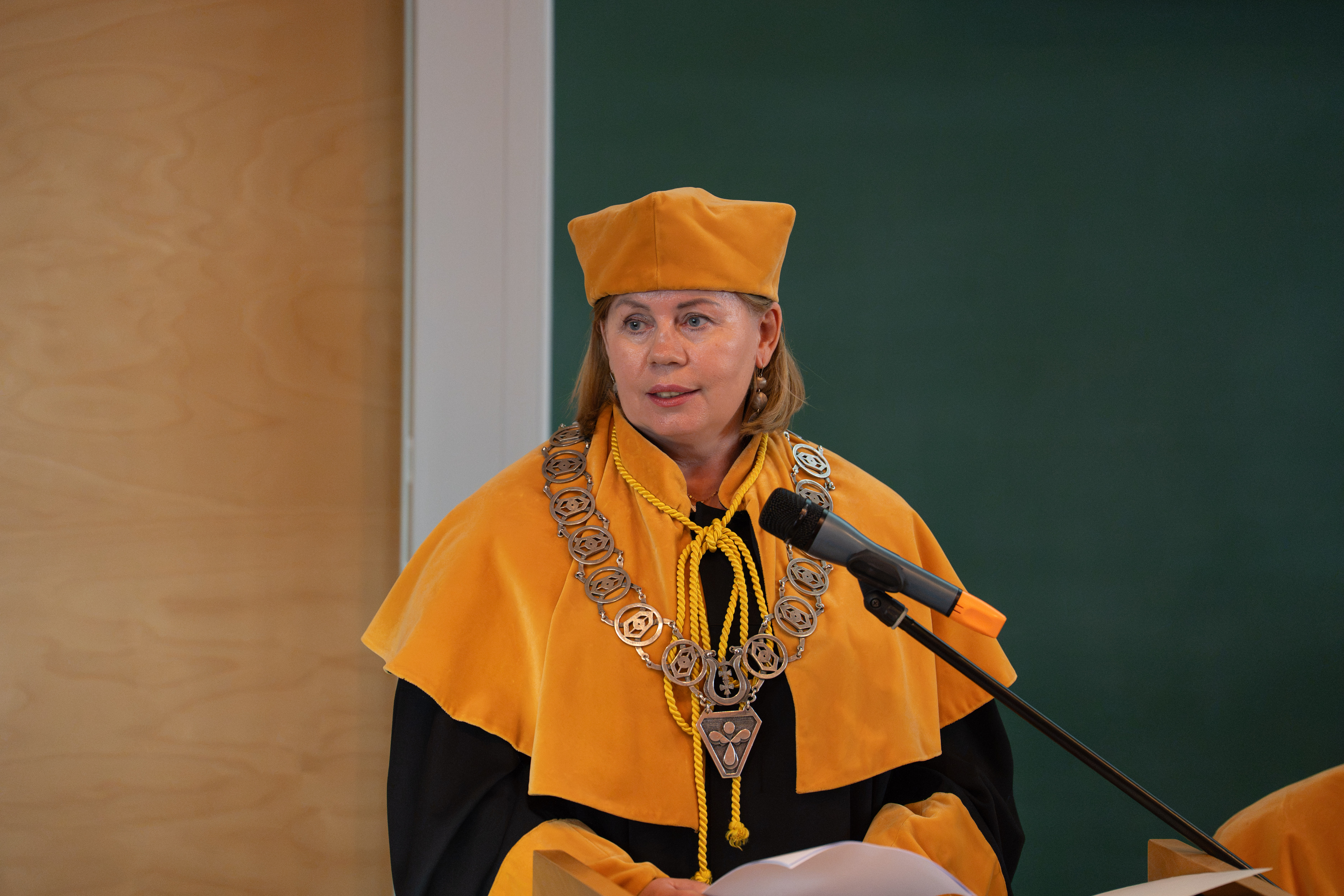
The Dean of the Faculty, dr hab. Beata Grobelna, prof. UG, spoke at length about the Faculty of Chemistry’s achievements – in the context of the pivotal moment between the old and the new which the inauguration of the academic year is. She highlighted, amongst other things, record-breaking enrolment figures, the award of Certificates of Excellence in Education from the Polish Accreditation Committee, the growing number of publications in highly ranked scientific journals (in 2025, 228 research papers were published in JCR-listed journals) and the increasing number of patents granted. ‘As chemists, as people of science, we know full well that the value of our work is determined first and foremost by its results. Not just what we say about it, not just plans and declarations, but above all what we actually manage to achieve,’ remarked prof. Beata Grobelna.
Each of the speakers addressed the students in their own way, emphasising above all the value of commitment to work and study, critical thinking and the courage to ask questions. This message was also reflected in the speeches by the representative of the Student Council, Amelia Ciskowska, and the Chair of the Doctoral Students’ Council, Kamil Klimkowski.
An integral part of the inauguration ceremony was the matriculation of students and doctoral students, the formal conferral of doctoral and postdoctoral degrees, and the honouring of staff members who were awarded prizes and distinctions.
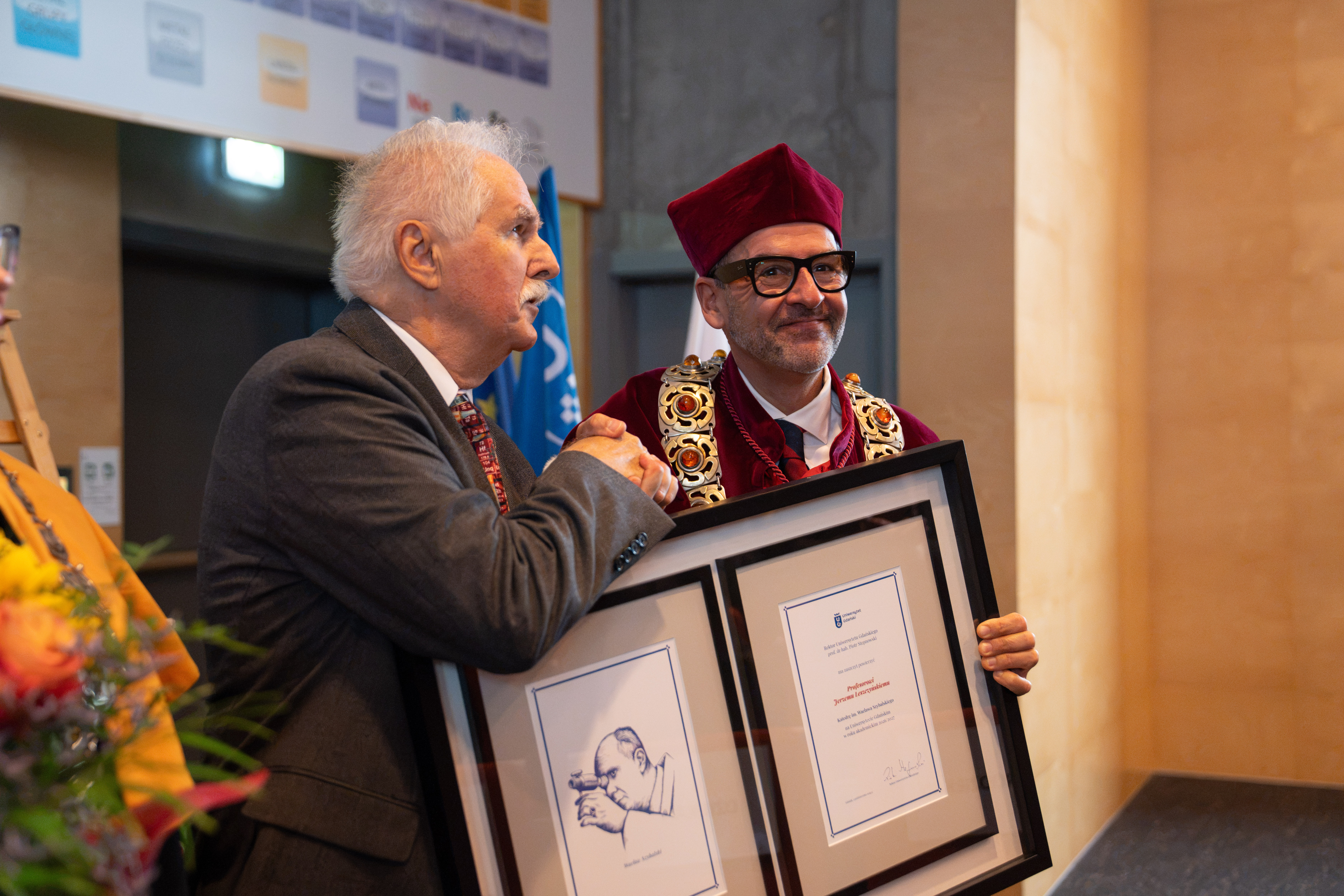
Prof. Jerzy Leszczyński, dr hab., taking up the Wacław Szybalski Department
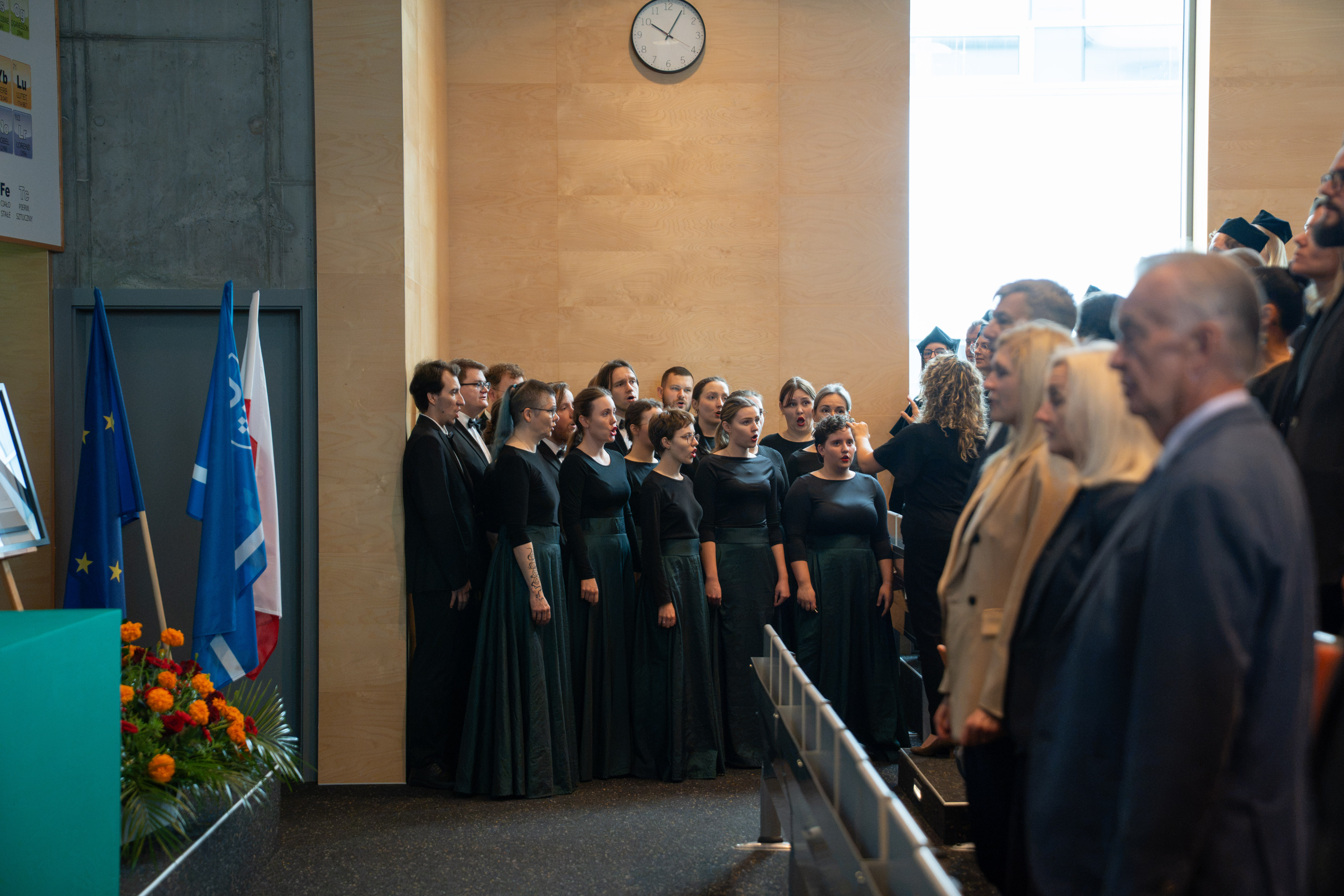
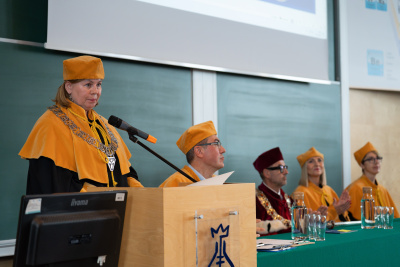
‘Dear Academia, the time of academic inaugurations is a moment when we very often draw upon academic tradition. These traditions take many different forms: our ceremonial attire, the inauguration ceremony itself, the choir (always moving), but also the honorary titles we confer at our university,’ said prof. Piotr Stepnowski in his introduction to the ceremony.
The Rector of the University of Gdańsk recalled the fine tradition of Named Chairs of Honour at renowned European universities (such as the University of Cambridge) and briefly outlined the profiles of the patrons of the three Named Chairs of Honour established at the University of Gdańsk: Professor Maria Janion (patron of the chair in the humanities), Eugeniusz Kwiatkowski (patron of the chair in the field of social sciences), and Professor Wacław Szybalski (patron of the chair in the field of natural and exact sciences), to which prof. Jerzy Leszczyński has been invited to take up the post in the 2026/2027 academic year.
A profile of prof. Jerzy Leszczyński was presented by the Vice-Dean for Development and Digitalisation of the Faculty of Chemistry at the University of Gdańsk, dr hab. Artur Giełdoń, prof. UG.
Prof. Jerzy Leszczyński is a professor at Jackson State University, where he also holds the position of President’s Distinguished Fellow. He specialises in computational chemistry. His research interests include, amongst other things, the study of the structure and properties of DNA, as well as the design and investigation of the properties and toxicity of nanomaterials.
‘The professor’s research has contributed to a better understanding of DNA, its structure and the mechanisms governing it,’ emphasised prof. Artur Giełdoń. ‘The professor predicted that the amino groups of DNA bases are not flat, a finding that was only confirmed experimentally a decade later.’
Prof. Jerzy Leszczyński’s work on materials combines QSAR methods with calculations of interactions between nanoparticles and biological systems, supporting the assessment of their properties and safety. His body of work includes authorship or co-authorship of over 1,000 scientific papers, cited approximately 35,000 times.
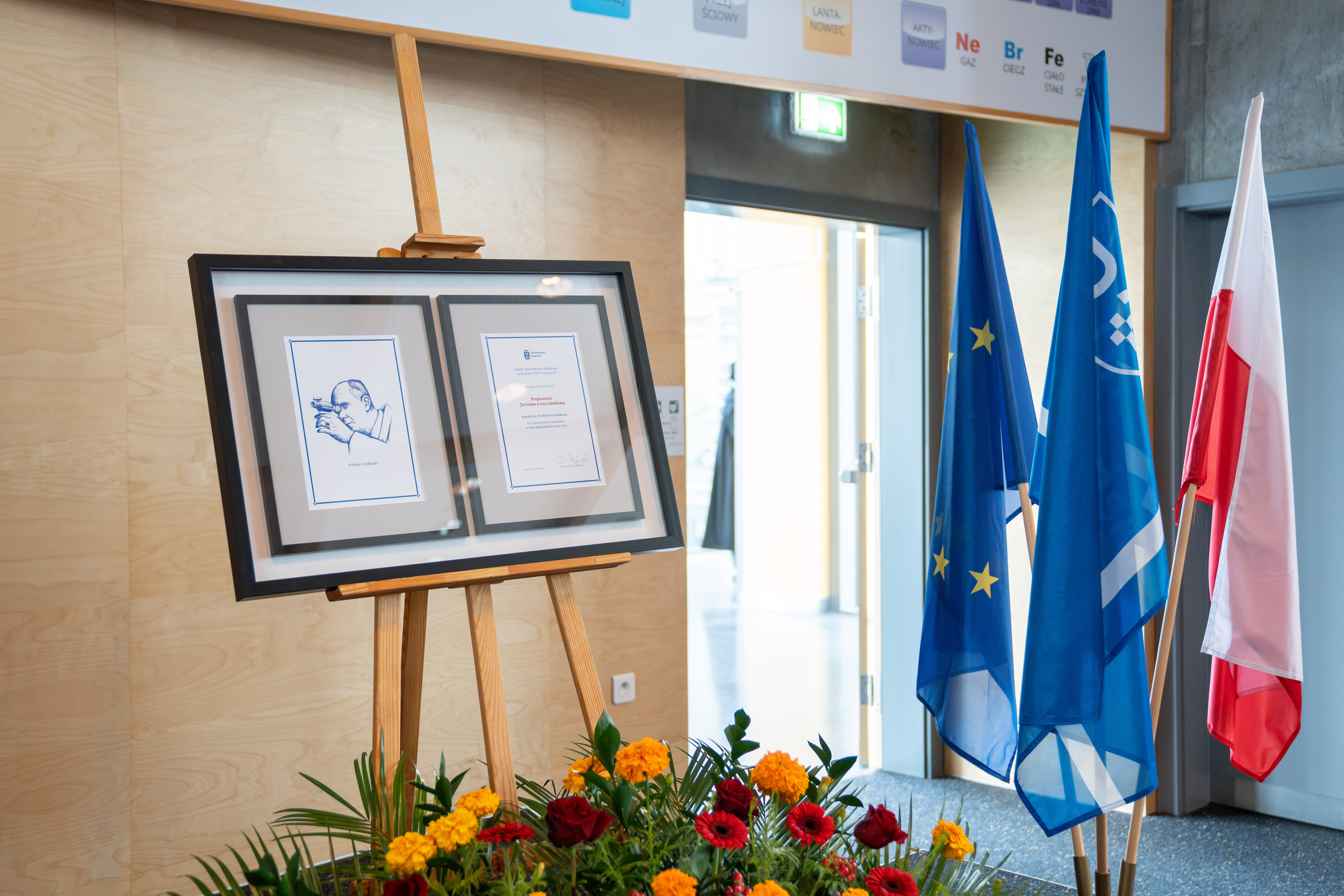
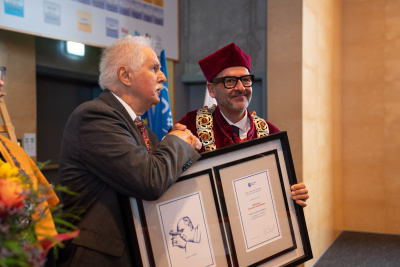
‘I can see this will be a heavy responsibility, but also a great pleasure,’ joked prof. Leszczyński after the ceremonial handover of the chair, when he was presented with documents mounted in a sturdy frame.
Inaugural lecture: ‘Chemistry and AI’
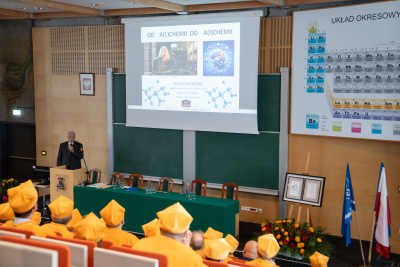
‘It gives me immense pleasure and is a great honour to accept this significant distinction. I hope that this will contribute to further fruitful cooperation with the University of Gdańsk,’ began prof. Jerzy Leszczyński.
As he noted, ‘when embarking on a new stage in life, it is good to reflect on the past’. This past was not only recounted as the story of the professor’s academic career, but also became the theme of a lecture devoted to chemistry and its development as a science.
Prof. Jerzy Leszczyński shared key moments from his own life linked to his academic work – such as his visit to a student research society conference in Gdańsk on the eve of the protests in December 1970, or his first departure for a one-year research placement in the United States, which “dragged on a little”. He then began his account of chemistry, highlighting various milestones in human history where people encountered chemical processes: from mastering fire and using it for the thermal processing of food, through metalworking, ancient philosophical concepts of the world (which converged with later discoveries), the experiments of alchemists from various eras and cultures, leading to important discoveries – right up to the birth and development of modern chemistry and the application of artificial intelligence models within it.
Among the figures who had a significant influence on the development of chemistry, prof. Leszczyński mentioned, amongst others, Robert Boyle, Antoine Lavoisier, Joseph Proust, John Dalton and Dmitri Mendeleev. He also mentioned researchers associated with computational chemistry and the birth of quantum theory, including Erwin Schrödinger (who formulated the fundamental wave equation describing quantum systems), Walter Heitler and Fritz London (authors of the quantum explanation of chemical bonding) and others. He emphasised that for quantum chemistry to develop, we need new students (the professor himself has supervised as many as 31 PhD students).
Prof. Leszczyński’s speech was not without highly universal references, such as the ‘gold rush’, which has been an obsession for both past and present rulers. He also quoted the American proverb ‘When life gives you lemons, make lemonade’, which can serve as a guide for people in science, encouraging them, for instance, to learn from their mistakes - and to draw conclusions.
The final part of the lecture was devoted to issues surrounding artificial intelligence. The expansion of knowledge and the vast number of information sources mean that utilising and processing this knowledge often exceeds human capabilities. In this context, artificial intelligence may prove to be an indispensable aid. There is no doubt that AI is transforming chemistry - it enables, for example, the optimisation of experiments. Currently, AI is used, amongst other things, to predict the properties, reactivity and toxicity of chemical compounds, to design molecules and materials, and to carry out various analyses. As the professor points out, AI is transforming chemistry from a science based mainly on trial and error into one that is increasingly driven by data and predictions. However, it still does not replace humans.
‘We must realise that AI does not replace chemistry,” emphasises Prof. Jerzy Leszczyński. “It is still a machine that combines chemical data and simulates experiments. It is the person responsible for the entire process who is the decision-maker, at least for the time being.’
What will the future look like? It is difficult to predict exactly. One can imagine both positive and negative scenarios related to the development of AI and its consequences. Despite not always having an optimistic vision of the future, Prof. Leszczyński concluded his lecture on a humorous note: ‘Please direct any questions to ChatGPT.’
In the near future, as part of the Named Chair of Honour, Prof. Jerzy Leszczyński will deliver a lecture to the academic community of the Faculty of Chemistry. The lecture will be held in English.