
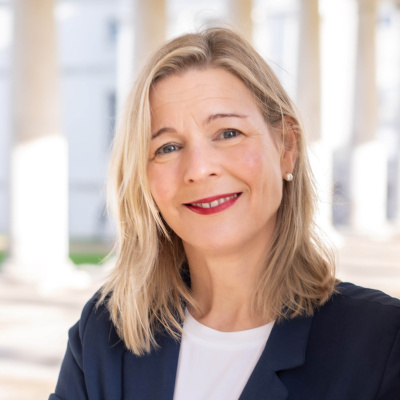
‘I believe research should do more than describe problems, it should contribute to finding solutions and making a positive difference to people's lives’. As a researcher and international expert focusing on social sustainability, labour and human rights, and sustainable tourism, dr Anke Winchenbach is trying to apply research knowledge into policy and practice to make tourism more ethical and sustainable branch of economy. As she visited University of Gdańsk, we talked about her research and work.
Karolina Żuk-Wieczorkiewicz: - What is most challenging in doing research on tourism?
Dr Anke Winchenbach: - One of the most challenging, but also fascinating, aspects of tourism research is its complexity. Tourism is not a single industry, it involves transport, hospitality, local communities, governments, workers, and many other stakeholders, often with competing interests. Tourism has significant economic, social and environmental impact, and, while there is some progress, measuring that impact in an integrated and consistent approach remains one of the key challenges, particularly when it comes to social impact which is my focus area.
Another challenge is translating research knowledge into policy and practice. We have considerable evidence about the negative impacts of tourism, including environmental degradation, poor working conditions and inequalities in how tourism's benefits are distributed. Yet translating this knowledge into meaningful change can be difficult. In my own research, I often engage and collaborate with unions, policymakers, and industry from the start of a project to ensure my research addresses real-world challenges they face, and that my findings and recommendations are useful and create opportunities for positive change.
Much of my research focuses on the social impact of tourism, particularly workers whose voices are often overheard. Researching issues such as dignity at work, labour and human rights, social sustainability and livelihood diversification often involves doing in-depth interviews or document reviews, and the data can be quite complex and nuanced. So, telling the story from the data and making useful recommendations can take some time, but it’s definitely worth it, especially when recommendations then get taken on board by industry and policy.
Some of the challenges are also what motivates me to do tourism research. I believe research should do more than describe problems, it should contribute to finding solutions and making a positive difference to people's lives.
- Tourism is a branch of economy that have significant impact on environment, local business and residents who are not always fond of crowds visiting their places. What can we do to reconcile the interests of all parties and assure social sustainability?
- The key consideration should be who actually benefits from tourism. For too long, tourism success has primarily been measured in terms of visitor numbers, expenditure and economic growth. These are important indicators, but they tell us very little about whether tourism improves the lives of local people, creates decent jobs or contributes positively to the environment and communities.
Social sustainability requires us to look beyond economic growth and consider how tourism's benefits and costs are distributed. It also means recognising that residents, workers and local businesses are not simply stakeholders to be consulted, but they should have a genuine voice in decisions that affect their lives. The challenge is to establish governance and monitoring and evaluation processes that are inclusive, transparent and fair. Where such processes are co-designed, there is a much higher chance for tourism to be benefit both, hosts and guests. For example, destinations can involve local communities in tourism planning and governance, involve unions to ensure that tourism generates meaningful employment opportunities, support local supply chains and introduce measures to manage potential overtourism before problems occur.
I also think we need to pay much more attention to tourism workers. We often talk about the relationship between tourists and residents, which of course is important, but then overlook the people who deliver tourism experiences every day. Tourism supports over 270 million jobs worldwide, yet many workers face low wages, insecure employment and poor working conditions. Socially sustainable tourism is about ensuring that tourism genuinely contributes to people’s dignity, wellbeing, and quality of life.
- Can tourism be ethical - and what does it mean? What can you say as a researcher and expert in the field?
- Yes, I certainly believe tourism can be ethical. Tourism can be a tremendous force for good and The UN Tourism’s Global Code of Ethics for Tourism is a comprehensive and important set of principles designed to guide governments, industry, communities and tourists on ethical tourism. It addresses ten key areas, including tourism’s contribution to mutual understanding and respect between peoples and societies, tourism as an aspect of sustainable development, as beneficial activity for host countries and communities, and rights of tourism workers and entrepreneurs. Tourism companies such as Responsible Travel, Intrepid and EXPLORE are good examples of how ethical principles can be integrated into commercial business operations.
For tourism to be ethical, we need meaningful dialogue, inclusive decision-making, and accountability. It requires strong collaboration and partnerships, where governments, businesses, workers’ unions, communities, NGOs, tourists and other rightholders all have a role to play.
Importantly, I believe ethical tourism should not be a niche product or a marketing label. It should be at the heart of how we develop and manage tourism and requires collective effort so tourism can contribute to a fairer and more inclusive society and improve people’s lives.
- Please tell me about the project you’ve been working on with Professor Piotr Zientara. I read it is based on the interview data you collected from global labour union leaders. What findings do you find most interesting?
- We know that tourism faces persistent challenges relating to low pay, insecure employment, inequalities and poor working conditions, and there is widespread anti-unionism in the industry. At the same time, sustainability has become an increasingly important priority for tourism businesses and policymakers, especially with new mandatory ESG regulations coming into force. However, the social dimension of sustainability, particularly workers' rights and the role of unions, is often not well understood and has so far received limited attention.
That’s why prof. Piotr Zientara, dr Joanna Adamska and I worked together to highlight the important role unions play in shaping social sustainability in tourism. Drawing on interviews with international trade union representatives, the study reveals how unions play a critical role beyond collective bargaining. Our findings show that unions are increasingly engaging with international organisations, policymakers, investors and sustainability standard-setting bodies to influence how social sustainability is defined, understood, measured and implemented. For example, unions are working to ensure that labour rights are recognised as fundamental human rights, rather than simply employment-related matters. They are also seeking to influence the development of sustainability reporting standards and the expectations placed on businesses.
What I find particularly interesting is that this demonstrates how trade unions can act as agents of wider institutional change. They are not only negotiating better conditions for their members; they are helping to shape the rules, norms and expectations that govern the tourism industry. Our research, published in the Journal of Sustainable Tourism, one of the leading tourism journals, encourages tourism businesses and policymakers to recognise the important role unions play in labour-centred sustainable tourism, and emphasises that collaboration and partnerships with unions are necessary and make business sense, especially at times of widespread global tourism labour shortages.
- What are most crucial risks in tourism business nowadays? Maybe you have some ideas what way tourism should develop?
- Tourism faces several interconnected risks, including climate change, geopolitical instability, economic uncertainty, labour shortages and the rapid development of technologies such as artificial intelligence. I think the biggest risk for businesses is continuing business as usual, instead of pro-actively addressing these challenges.
Staying with the topic of labour and human rights, tourism is a major source of jobs worldwide, but many workers continue to experience low wages, insecure employment, excessive working hours and limited opportunities for career progression. On the extrem spectrum of violations there is child labour and exploitation, modern slavery and human trafficking, with the tourism and hospitality industry being amongst the key risk industries, including their supply chain. Not only is this morally and legally unacceptable, but from a business perspective exposure of this bares reputational and commercial risks.
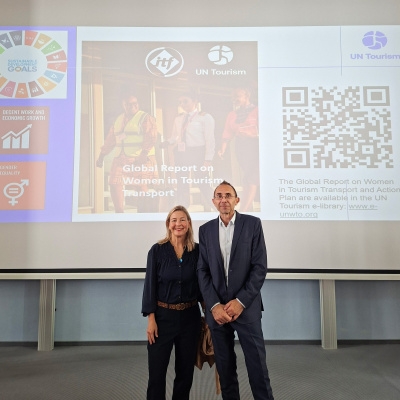
So, the future of tourism partly depends on how well businesses and the industry at large are able to address these challenges. Labour shortages are often discussed as a business problem and risk, but we also need to ask why people may not want to work in tourism in the first place or leave the industry. Tourism workers must feel safe and free from harassment and violence, they must be fairly compensated, have equal progression and leadership opportunities, and have their voice included in decision making. The ITF/ UN Tourism ‘Global Report on Women in Tourism Transport’, and ITF’s report ‘Why the S in ESG matters: labour and human rights in travel and tourism’, which I both was led on, discuss these risks in much detail and give concrete recommendations and action plans on how decent work and gender equality should be addressed. Further, the International Labour Organisation’s Decent Work Principles and UN Guiding Principles on Business and Human Rights offer excellent frameworks and guidance for governments and businesses on what decent and dignified work looks like, and importantly, demand remediation if violations occur.
- What did you like most in your visit at the Faculty of Economics?
- I very much enjoyed my visit to the Faculty of Economics. From the moment I arrived, everyone was very welcoming and spending time in and around the beautiful Sopot campus and in Gdańsk was very enjoyable. Having the opportunity to be with Prof Piotr Zientara, Dr Joanna Adamska and colleagues and students in person was a great opportunity to exchange ideas about how we can ensure that tourism, as one of the world’s largest economies, can be a force for good. As part of this, I shared insights from my ongoing collaboration with the global union federation ITF and UN Tourism, which focuses on decent work and gender equality in tourism transport.
Tourism spans across so many disciplines, from economics and management to sociology, geography and ethics, and I always find it stimulating and inspiring to engage with researchers who approach similar challenges from different perspectives. It is exactly that inter-disciplinary and international exchange and collaboration that leads to high quality and innovative research and teaching. We also exchanged ideas about amplifying the impact of our work through engagement with industry and policy makers to ensure our research has real world impact. Most importantly, I enjoyed the openness of the discussions and the opportunity to explore potential areas for future collaboration. For me, these personal connections and intellectual exchanges are among the most rewarding aspects of academic life and my time at Gdańsk was perfect for this.
Finally, the warm hospitality I received throughout my stay, the delicious Polish food (especially waffles and pierogi) and being by the sea made my stay extra special and I hope to come back soon. I certainly felt we made the most of the time together and I am looking forward to continuing working with Prof Zientara and colleagues.
Dr Anke Winchenbach visited the Faculty of Economics as part of the Visiting Professors programme at the University of Gdańsk. She is researcher, consultant, teacher and international expert, focusing on social sustainability, decent and dignified work, labour and human rights, gender equality and sustainable tourism. At its heart is a commitment to understanding, and improving, what sustainability means for people: how they experience work and community, whether their voices are heard, and how tourism can contribute to more equitable and resilient livelihoods and societies. She works at the intersection of research, policy and practice, translating evidence and diverse stakeholder perspectives into practical insights that inform policy, organisational practice and meaningful change. Dr Winchenbach is a Senior Lecturer in the School of Hospitality and Tourism Management, Surrey Business School, at the University of Surrey. She is also the co-Director of the Centre for Sustainability and Wellbeing in the Visitor Economy (SWELL), Co-President of the ISA Research Committee RC50 Sociology of Tourism, and a member of UN Tourism’s Expert Group on Measuring the Sustainability of Tourism. She has led research and consultancy for organisations including UN Tourism, ITF and the World Sustainable Hospitality Alliance, secured funding from the ESRC and British Academy/Leverhulme, and publishes in leading academic journals.