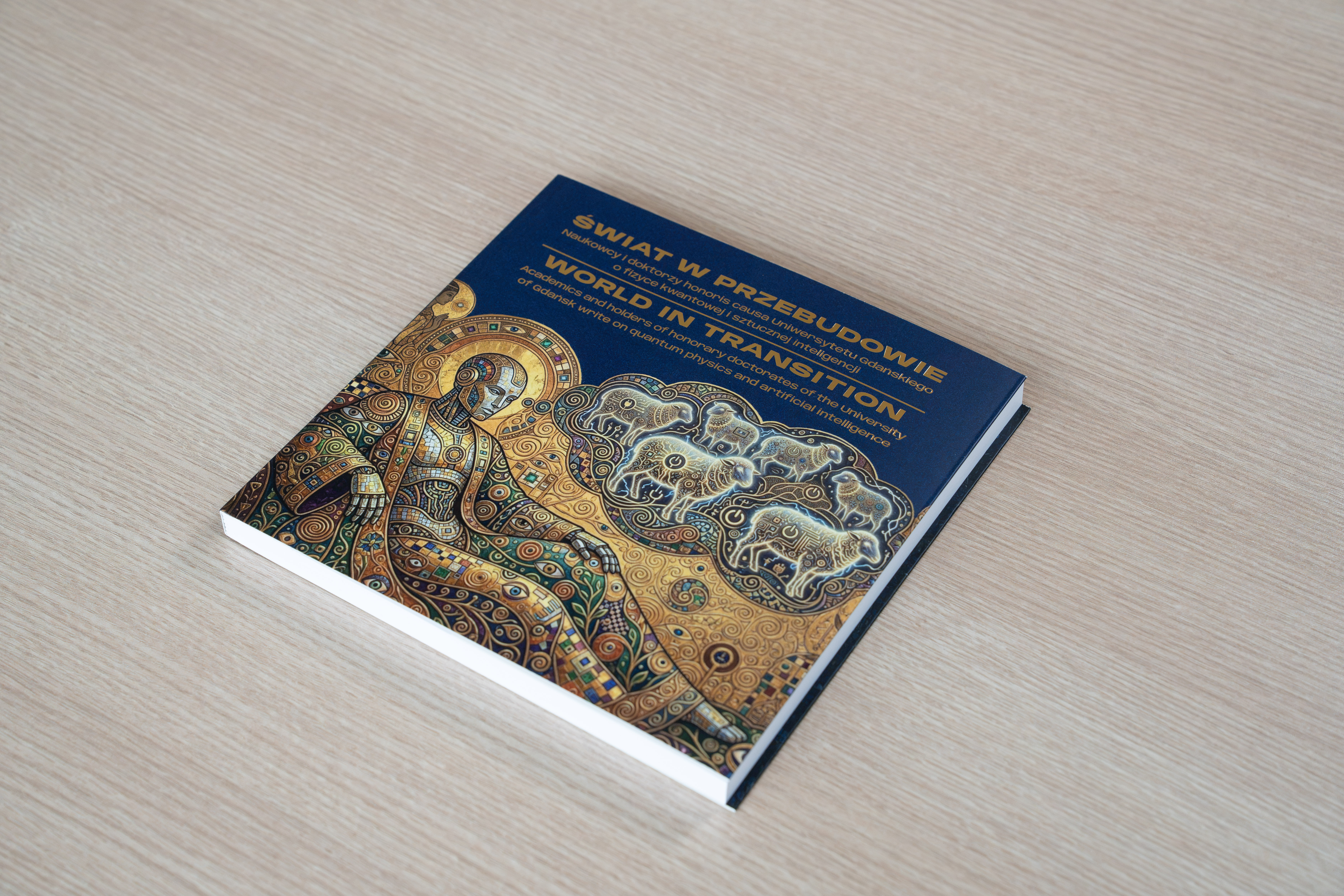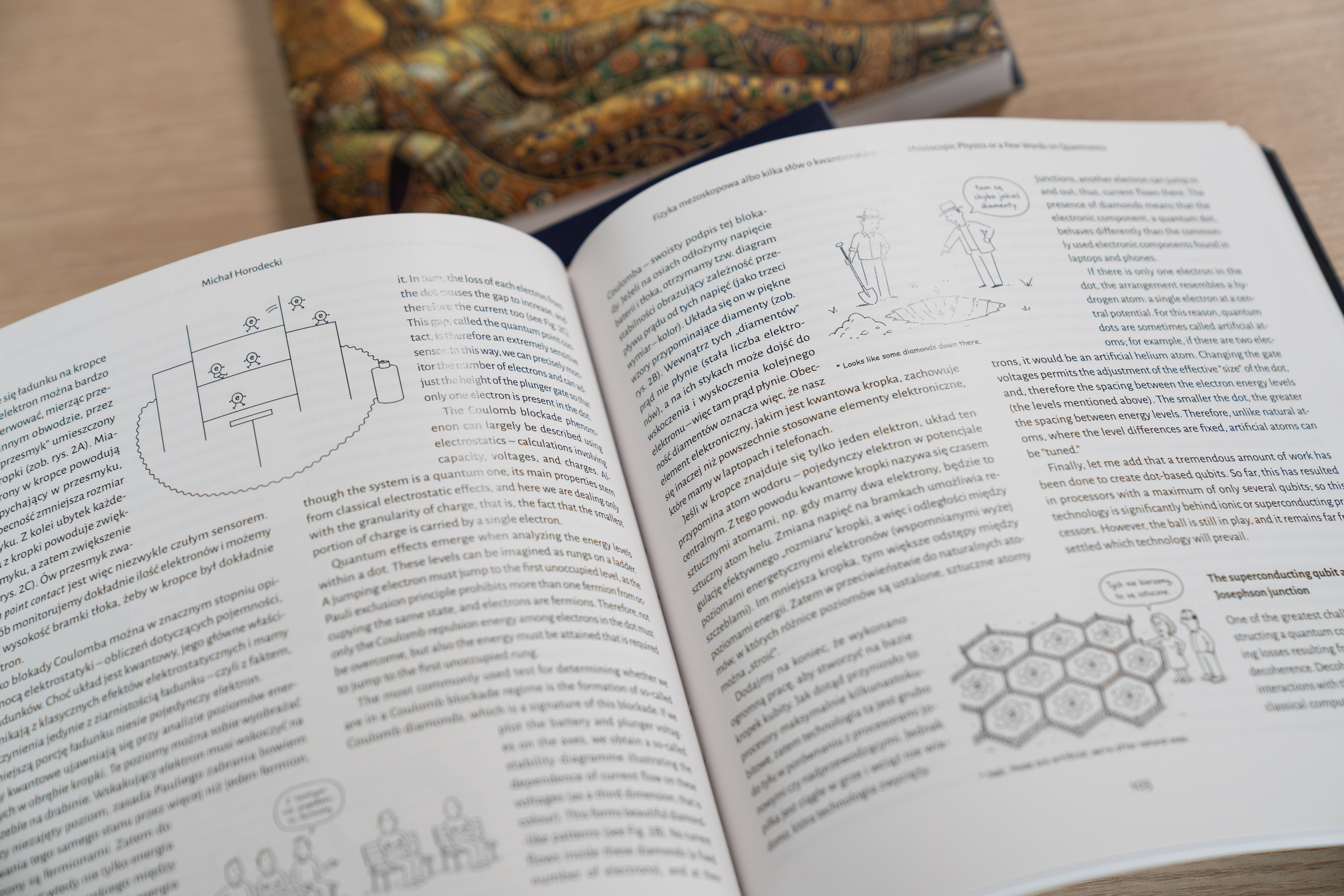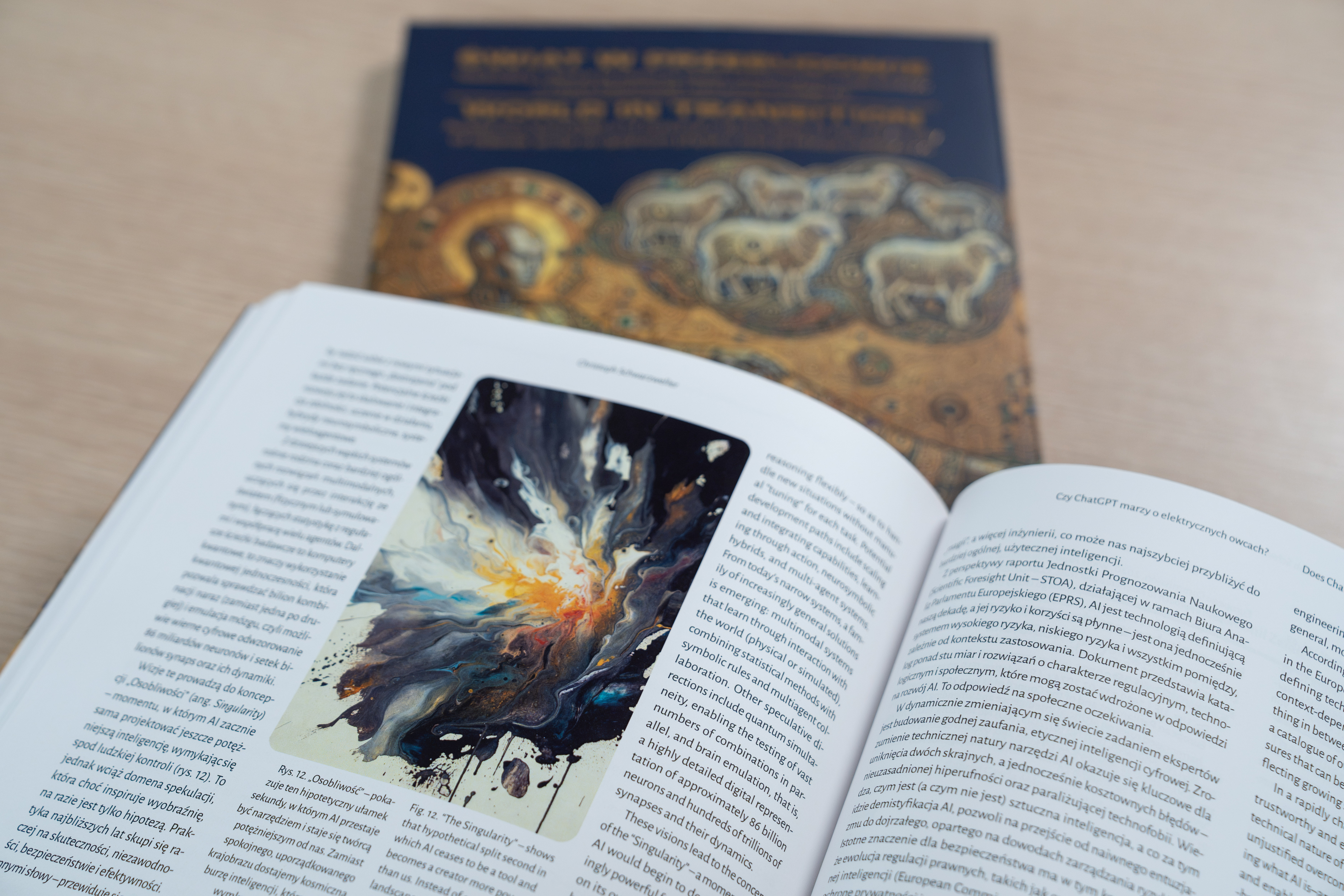
What were the early days of research into quantum physics and artificial intelligence like? Are these fields as new as we might think? What is quantum entanglement - and how many photons do you need to entangle to win a Nobel Prize? Will quantum physics allow us to travel through time? How does the Coulomb blockade work, and how did we manage to trap a single electron? What are artificial neural networks? How do large language models function? Can androids be entitled to human rights? How would AI fare in the role of a judge? These and other questions are answered by scientists and honorary doctors of the University of Gdańsk in a unique, bilingual (Polish-English) book ‘World in transition. Academics and holders of honorary doctorates of the University of Gdansk write on quantum physics and artificial intelligence’, edited by the Rector of the University of Gdańsk, prof. Piotr Stepnowski. Only on Tuesday, 24 November 2026, the book can be purchased with a 20 per cent discount.
Quantum physics recently celebrated its centenary. Alan Turing’s work, which laid the foundations for thinking about machine intelligence, was published in the 1950s. However, it is only in recent years that both these fields have gained a significant place in the collective consciousness and in practical technological reality - as confirmed, on the one hand, by the Nobel Prizes for quantum discoveries, and on the other, by the dynamic development of large language models and AI-based tools.
Both quantum information theory and artificial intelligence technology are still evolving and pose numerous challenges to the scientific community. The general public, trying to understand these complex, multifaceted issues, faces even more challenges. This lack of understanding is often filled by pop-culture narratives, rife with inaccuracies and myths that bear no relation to reality. Researchers from the University of Gdańsk have attempted to answer the questions troubling those interested in these technologies but who are not specialists in the field, whilst the University’s honorary doctors have added a humanistic and social dimension to this, examining quantum physics and AI (and their potential applications) from the perspective of their own respective disciplines.
In addition to a wealth of scientific knowledge, the book also offers a unique historical background, told from a personal perspective. Professor Ryszard Horodecki (co-creator of the foundations of quantum information theory and creator of concepts such as ‘bound entanglement’ and ‘quantum deficit’) recounts the beginnings of quantum physics in Gdańsk and the circumstances in which discoveries were made that have become a permanent part of the global body of quantum knowledge, whilst Prof. Marek Żukowski (Director of the International Centre for Theory of Quantum Technologies at the University of Gdańsk) recalls the experimental research in which he participated, and for which Prof. Anton Zeilinger was awarded the Nobel Prize in 2022.
The publication, edited by the Rector of the University of Gdańsk, Prof. Piotr Stepnowski, was published by the University of Gdańsk UG Publishing House. It is bilingual - containing both Polish and English versions of the text. On 24 November 2026, it can be purchased with a 20 per cent discount: A World in Transition. Academics and holders of honorary doctorates from the University of Gdańsk on quantum physics and artificial intelligence - University of Gdańsk UG Publishing House.