The RESSAC Festival - Festival of Research in Science, Arts and Creation - is an event that brings together science, art and creative research presentations. Its fourth edition took place in Brest (France) from 10 to 14 March. An important - and visually spectacular - element of the festival was the (Very) Big Data! competition, organised as part of the SEA-EU alliance, in which researchers from the Faculty of Biology at the University of Gdańsk also took part.
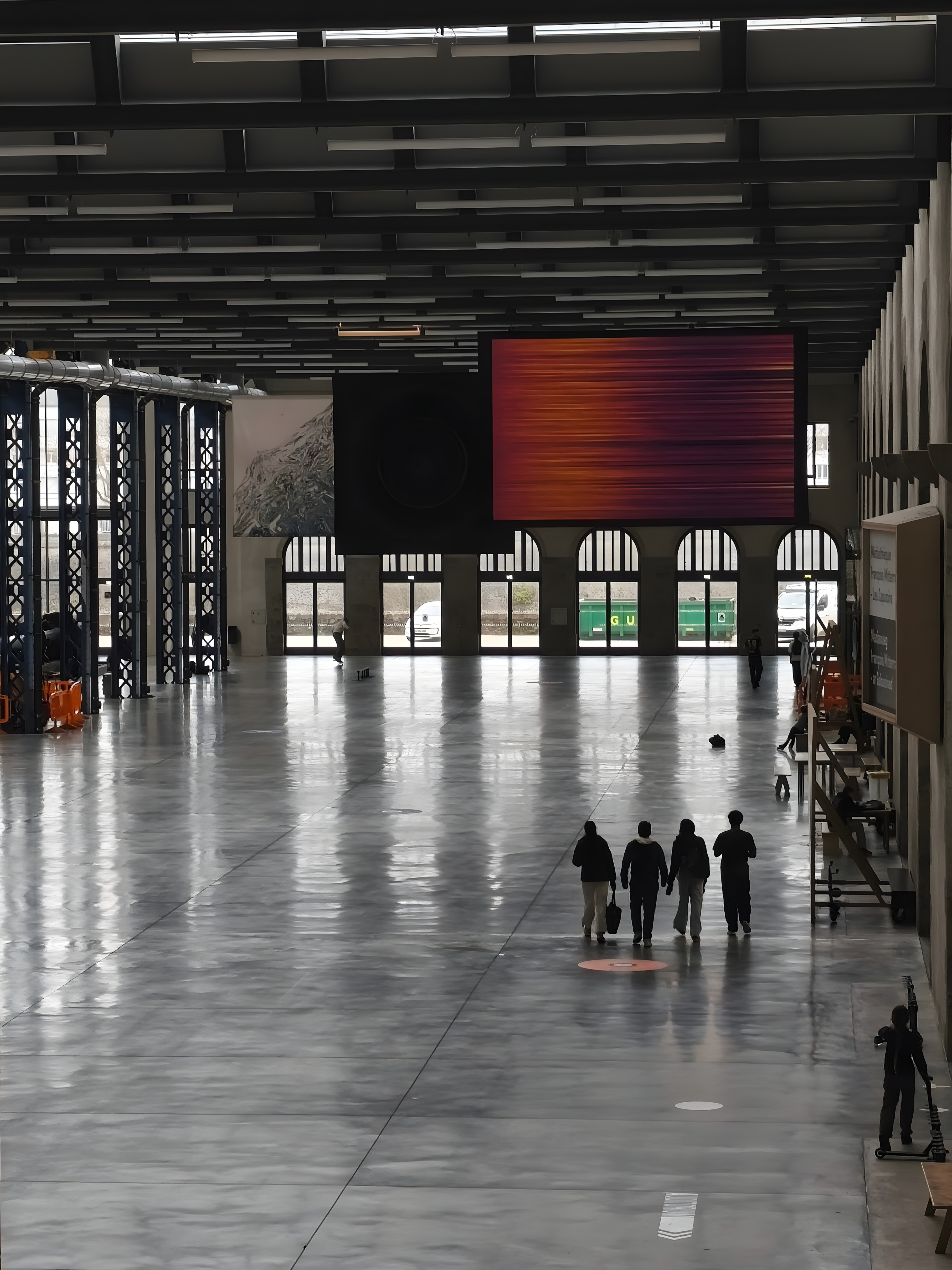
The aim of the (Very) Big Data! competition was to present scientific data in a visual and artistic form - which could involve both massive datasets and smaller ones containing more detailed data. The competition, organised by the University of Western Brittany (UBO), was also open to partner institutions within the SEA-EU alliance. One of the five winning entries came from the University of Gdańsk. The projects were printed in a format of up to 15 m² and presented in the covered square of Les Ateliers des Capucins.
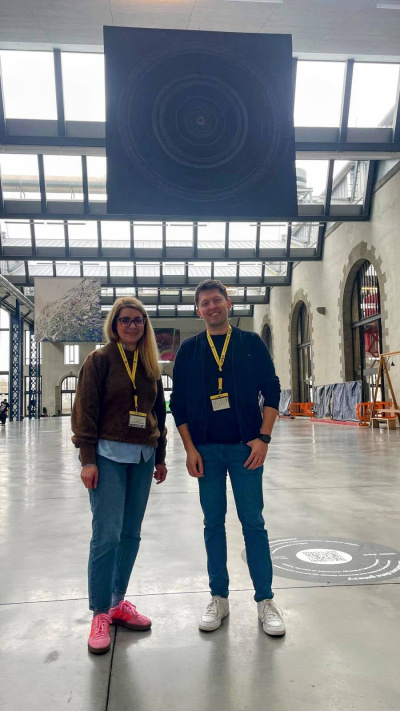
The highlight of the University of Gdańsk’s entries was Herbarium Data Galaxy, prepared by mgr Joanna Korybut-Orlowska (Gdańsk Biological Resource Centre, Faculty of Biology, University of Gdańsk) and dr Sławomir Nowak (Department of Plant Taxonomy and Nature Conservation, Faculty of Biology, University of Gdańsk).
Herbarium Data Galaxy - a few words about the project
As herbaria are digitised, there is a growing need to manage vast datasets on plant specimens (each of which is marked with a unique barcode). In the Herbarium UGDA, this data forms a visual map of the ‘Galaxy’, where:
- each specimen is a point with its own coordinates,
- the colour of the point indicates the plant family,
- the brightness indicates age and historical value.
‘Thin lines connect specimens collected by the same botanist, forming so-called “collector constellations” that reveal research routes, field strategies and exploration patterns. Such a galactic visualisation is not only visually striking but also supports collection management: identifying gaps, planning acquisitions, tracking history and organising data. The herbarium thus becomes a dynamic system in which data, history and biodiversity form a coherent and meaningful whole,’ explains Joanna Korybut-Orlowska.
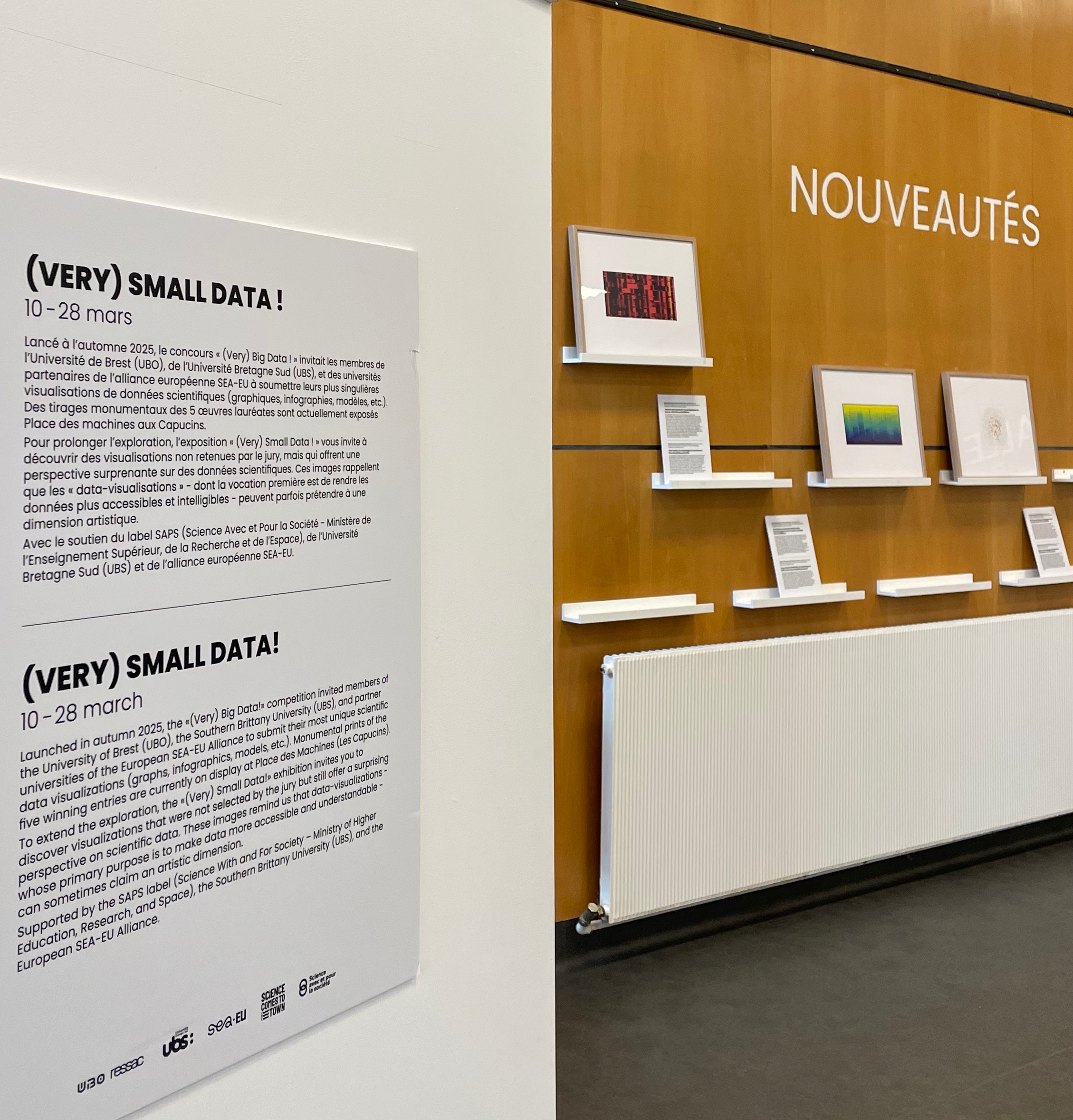
(Very) Small Data!
The festival also featured the exhibition (Very) Small Data!, which highlighted smaller data formats. Among them were works prepared by dr Aleksandra Naczk and dr Sławomir Nowak from the Department of Plant Taxonomy and Nature Conservation.
The researchers demonstrate that even compact visualisations can be both aesthetically pleasing and scientifically valuable.
‘Projects from the University of Gdańsk show that scientific data - regardless of the size of the dataset - can inspire, educate and delight the public. All the entries attracted considerable interest, which shows that sometimes a change in the way research results are presented is enough to capture the imagination of a wider audience’ comments Sławomir Nowak.
We warmly congratulate our researchers on their success in this exceptional competition!