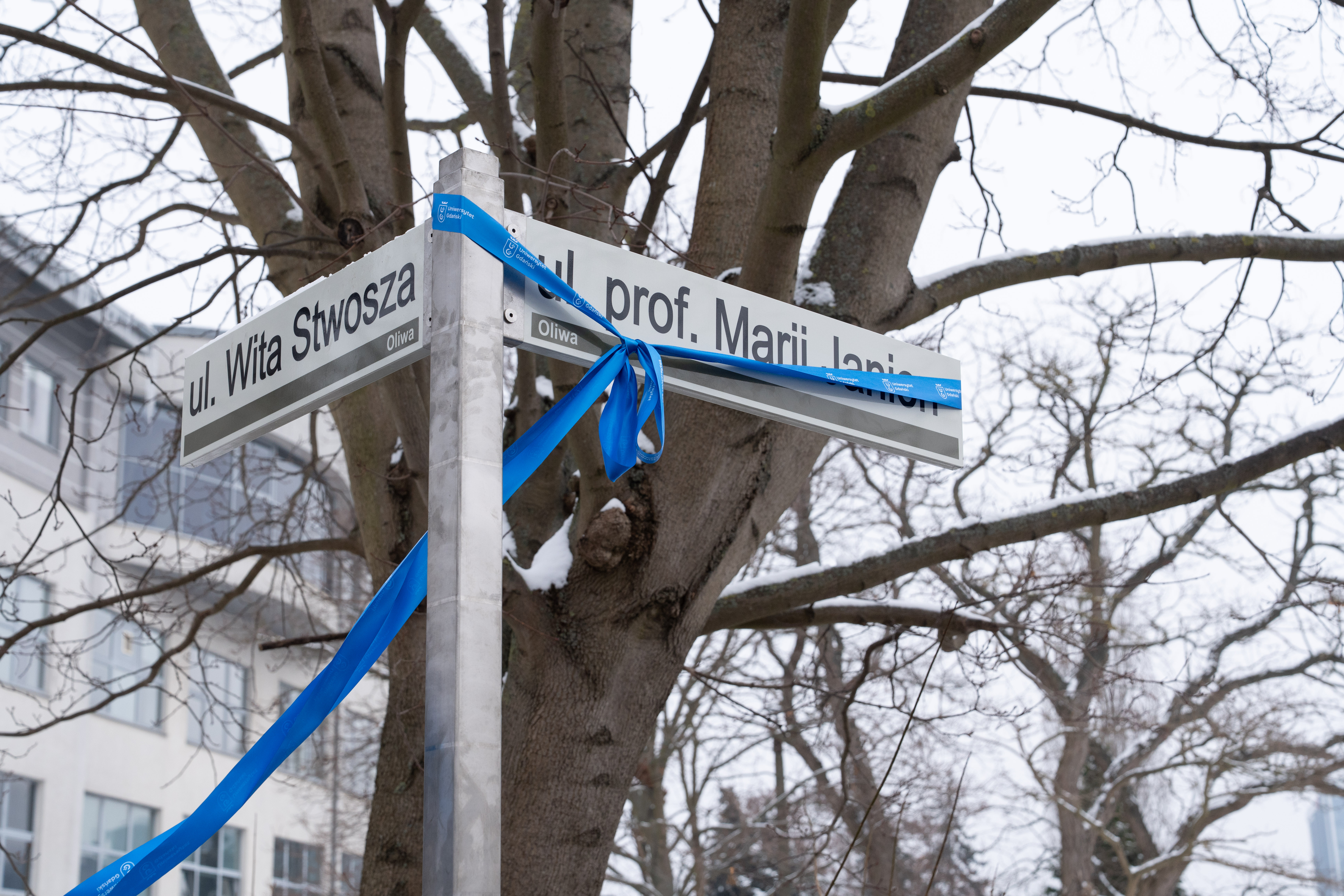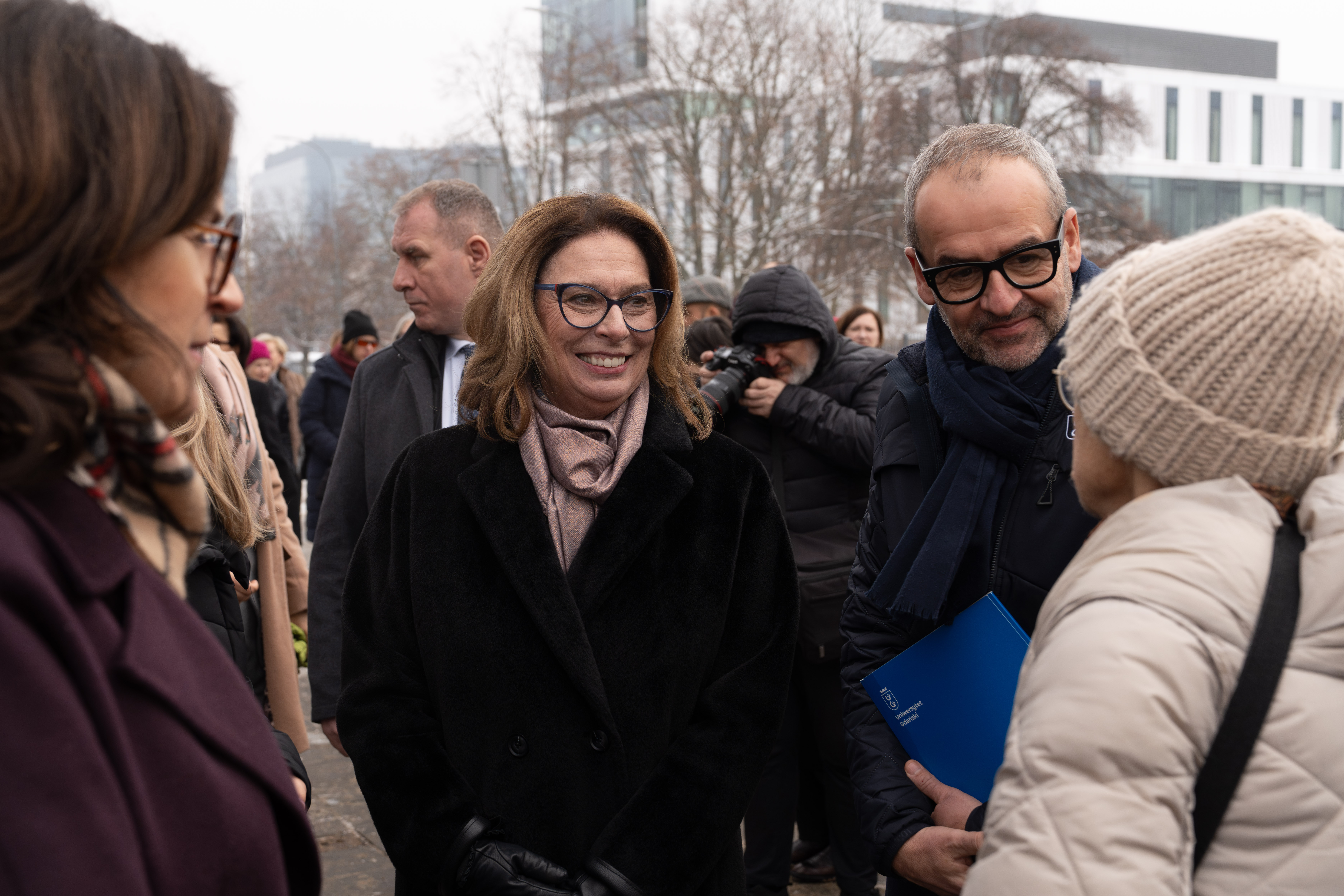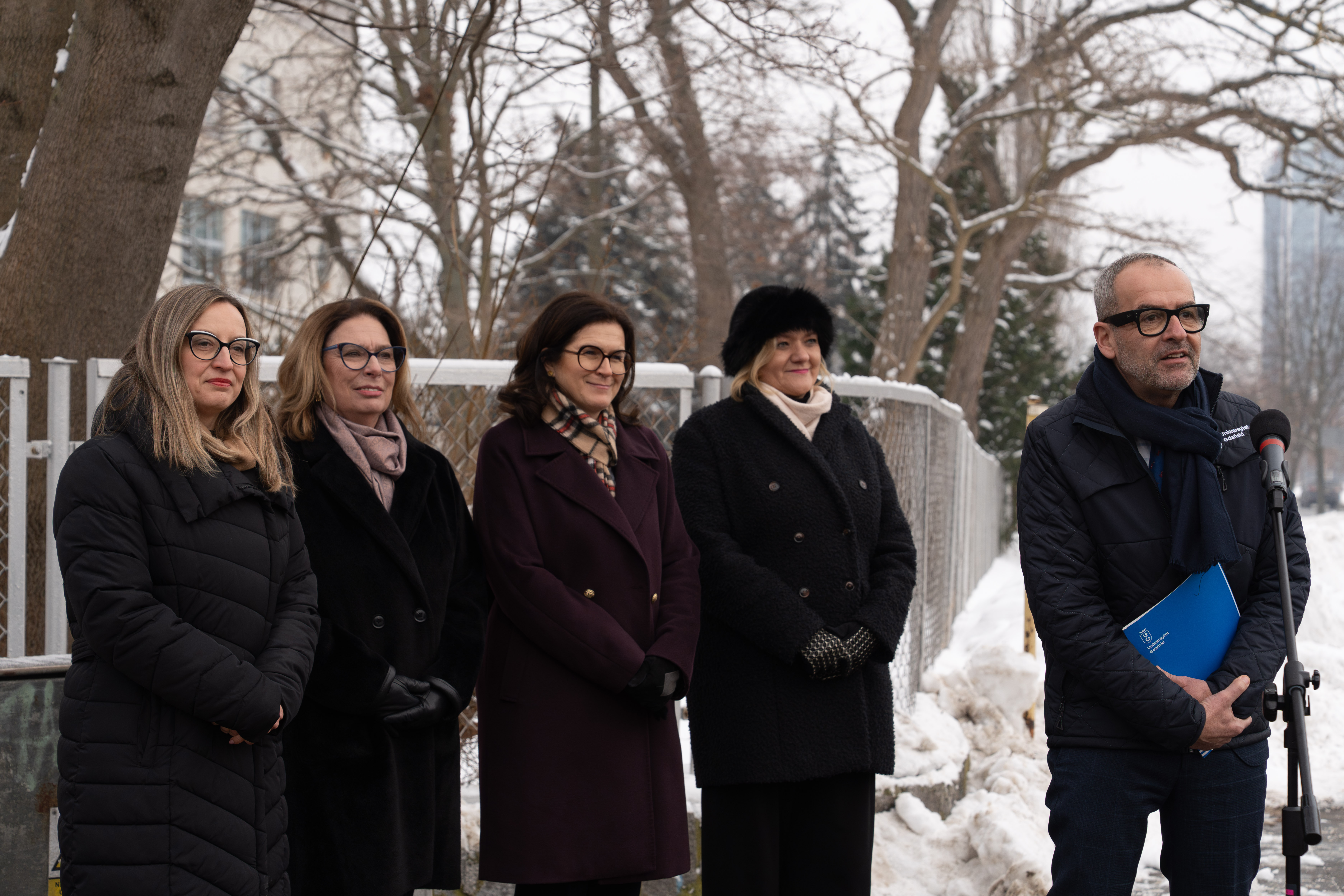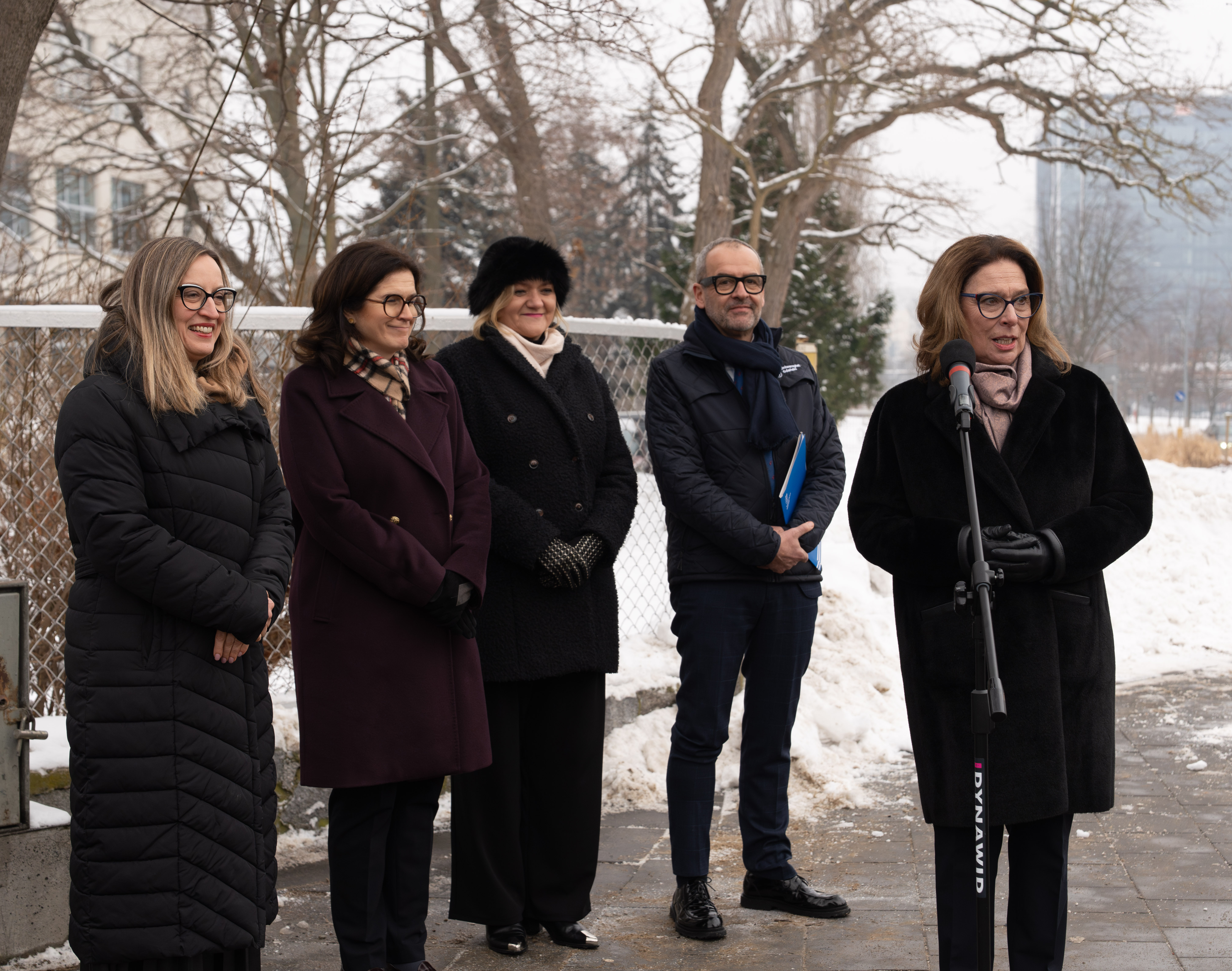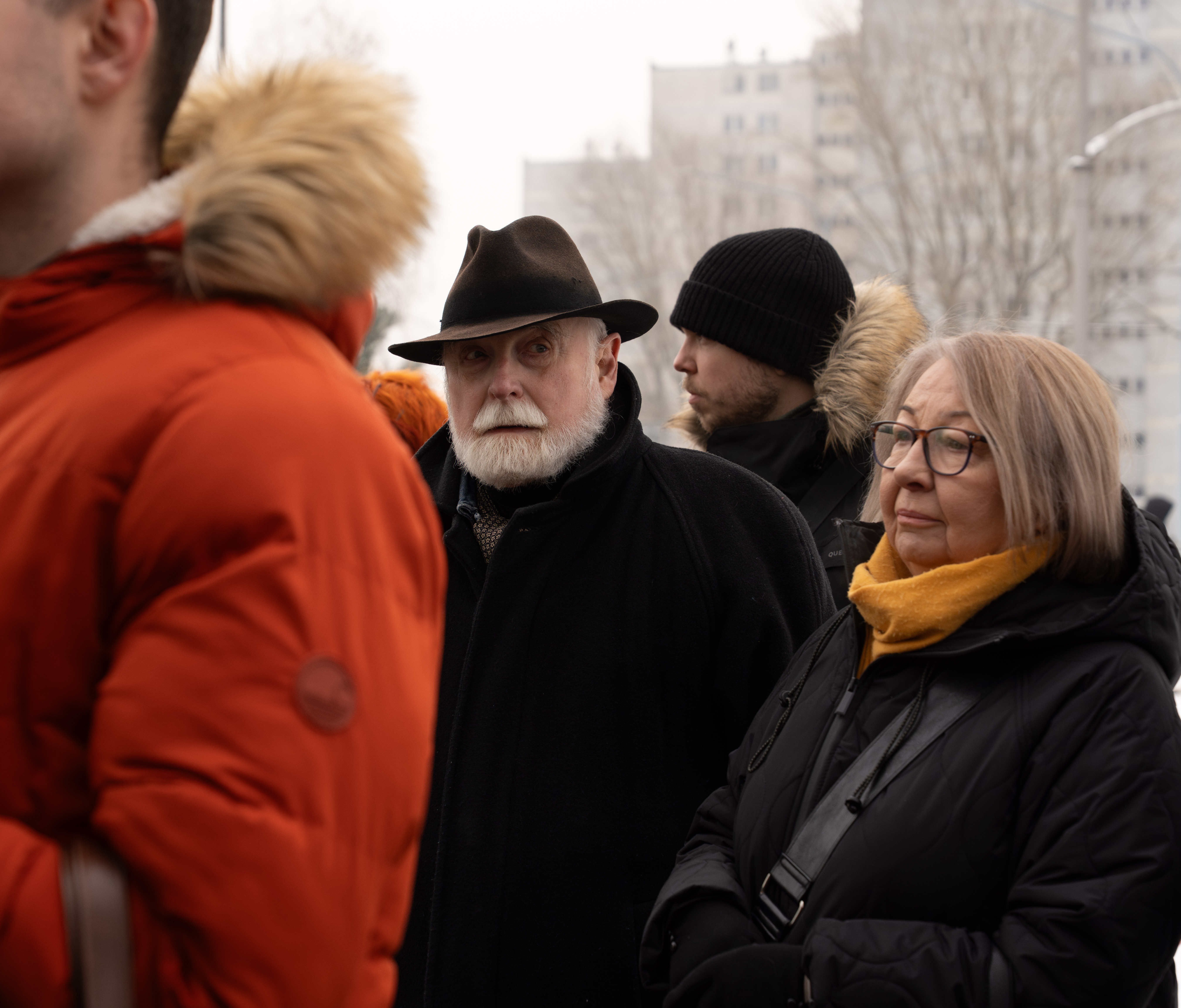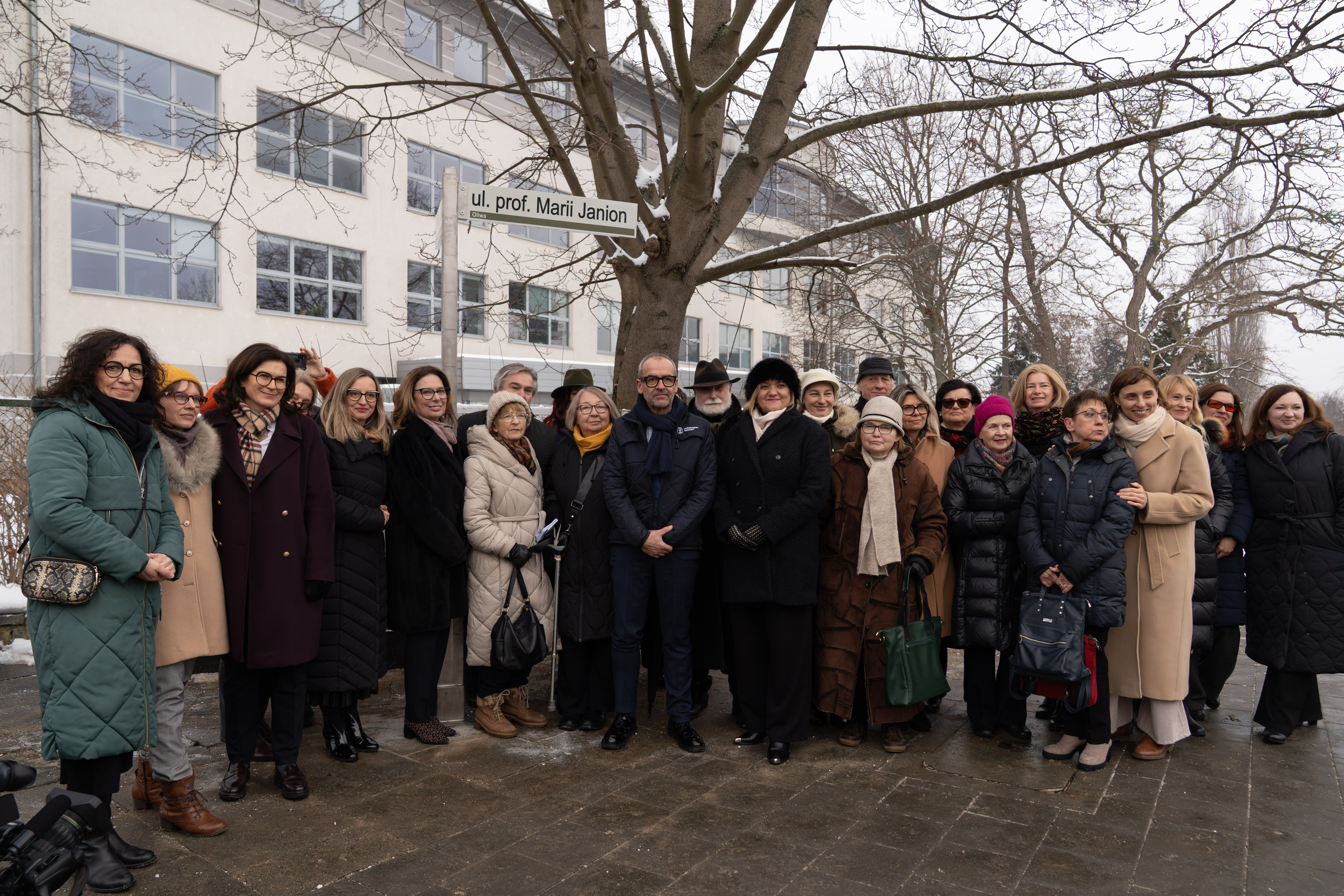
Professor Maria Janion has joined the list of patrons of streets in the vicinity of the Oliwa campus of the University of Gdańsk. Her name will be given to the section between Grunwaldzka Avenue and Wita Stwosza Street, running along the grounds of the University of Gdańsk. In addition to the authorities of the University of Gdańsk, the ceremony was attended by, among others, Małgorzata Kidawa-Błońska, Marshal of the Senate of the Republic of Poland, Deputy Governor of Pomerania Anna Olkowska-Jacyno, Mayor of Gdańsk Aleksandra Dulkiewicz, Chairwoman of the Gdańsk City Council Agnieszka Owczarczak, as well as Prof. Maria Janion's students, represented by prof. Małgorzata Książek-Czermińska.
The initiative to rename the section of Bażyńskiego Street running along the University of Gdańsk campus was linked to the desire to celebrate the anniversary and memory of Prof. Maria Janion, an outstanding scientist who had a significant impact on the development of humanities in Gdańsk. A letter on this matter (in September 2024) was submitted to the Rector of the University of Gdańsk by Krystyna Chwin, prof. Stefan Chwin, Anna Czekanowicz, prof. Małgorzata Książek-Czermińska, and prof. Stanisław Rosiek. The initiative was supported by the Senate of the University of Gdańsk, and a relevant motion on the matter was then submitted to the City Council. The ceremonial unveiling of the placard with the new street name took place on 10 February 2026, on the eve of the International Day of Women and Girls in Science. The event was preceded by a meeting between the Marshal of the Senate of the Republic of Poland, Małgorzata Kidawa-Błońska, and female scientists from the Fahrenheit University Women's Club, during which the ladies discussed, among other things, strengthening the role of women in science and the activities undertaken by the club.
‘This is a moment that is as moving as it is historic, because we are permanently linking the legacy of a great scholar, a personality of science, an honorary doctor of the University of Gdańsk, Professor Maria Janion, with this place: not only with the University, but also with our city, which should boast about and be proud of such a legacy,’ said the Rector of the University of Gdańsk, prof. Piotr Stepnowski, during the ceremony. In his speech, he also referred to an important anniversary: ‘Today, we are also celebrating the centenary of the city of Gdynia, which is said to have been created from the sea and dreams. All the ideas of freedom that we have come to love so much in our city also arise from the sea and dreams (...). After all, Gdańsk is a city of freedom and solidarity. (...) May the figure of Prof. Maria Janion and her great legacy of modern humanities in Gdańsk remain with us as a symbol of freedom.’
The Marshal of the Senate of the Republic of Poland, Małgorzata Kidawa-Błońska, emphasised the qualities of Prof. Maria Janion as a courageous woman of science who spoke the truth and was not afraid to ask difficult questions - and who should be appreciated, among other things, ‘for saying loudly that without literature, without culture, we will not be able to develop our imagination, we will not be able to care for our freedom, we will not understand our identity, and we will not be able to cope with our limitations.’ The Mayor of Gdańsk, Aleksandra Dulkiewicz, emphasised the role of the legacy of Prof. Maria Janion and her students for Gdańsk, which was the third city in Poland to join the UNESCO Cities of Literature: ‘I know that our city of Gdańsk is what it is today thanks to Prof. Maria Janion and the people she encouraged to think (...). I hope that those who walk down this street on their way to the university, to the UG Library, will perhaps also be inspired by various other pursuits, not only in the field of literature.'
The last to speak about Professor Maria Janion was one of her students, prof. Małgorzata Książek-Czermińska: ‘We are satisfied that our mentor has been honoured with a street named after her. We called her our mentor because she truly was one here in Gdańsk, although we knew that her intellectual work and personality had a universal dimension, extending far beyond Gdańsk and Poland, reaching as far as European humanities.’ Prof. Małgorzata Książek-Czermińska emphasised that Maria Janion worked in Gdańsk for 33 years, was strongly associated with the University of Gdańsk (she also dedicated one of her books to it), and her students teach not only in academic centres, but also in schools and institutions throughout northern Poland. At the same time, she was a person who encouraged independent thinking and even ‘fighting’ against what she, as a master, says. She tirelessly repeated to us that, together with her, we are creating humanities that will save us from the expansion of the digital world.
In addition to representatives of the authorities, Prof. Maria Janion's students gathered at the ceremony to unveil the placard with the new street name.
Maria Janion Street crosses the grounds belonging to the University of Gdańsk, as well as the area leased from the university, occupied by a McDonald's restaurant (at the intersection with Grunwaldzka Avenue). No residential buildings are assigned to this street, so the change of its name will not affect private addresses. Only four institutional buildings belonging to the University of Gdańsk will receive new addresses: the former Rector's Office building, the current Rector's Office, as well as the headquarters of two faculties: the Faculty of Law and Administration and the Faculty of Social Sciences, and McDonald's. In the age of electronic documents, correspondence and maps, this change generates minimal costs.
To celebrate the appearance of Prof. Maria Janion Street on the city map, a picnic will be held in the spring, to which we cordially invite both the academic community and people living in the vicinity of the University. The meeting will be an opportunity to celebrate and build a neighbourhood community - similar to many other University initiatives on campus, implemented with the residents of Oliwa and the whole of Gdańsk in mind.