
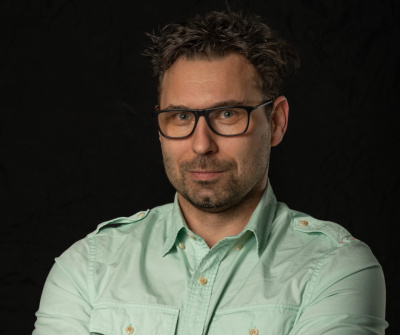
‘To truly understand the process of radicalisation, we need not only more sophisticated research methods, but also interdisciplinary collaboration.’ We spoke to dr hab. Tomasz Besta, prof. UG, about the challenges involved in researching extremism, particularly in the context of cross-cultural studies.
Karolina Żuk-Wieczorkiewicz: - As a researcher, you focus, amongst other things, on the phenomena of extremism and engagement in radical collective action. An article was recently published in which, together with your co-author, you presented data from 58 countries. What challenges do researchers face when conducting such wide-ranging studies? After all, they cover many different communities, different cultures and diverse contexts…
Dr hab. Tomasz Besta, prof. UG: - I think that in this particular project, which concerned extremism and involvement in radical activities, we can divide these challenges into two groups: those relating to the management of an intercultural project, and those relating to the study of extremists or the phenomenon of radicalisation in general.
As for the challenges related to intercultural aspects, we know from previous experience that good cooperation with local centres is very important. It is also worth selecting reliable collaborators who are embedded in the culture in question. This helps with adapting research tools, as well as with the research itself - we can then have greater confidence in the data collected. Of course, with such a large project, this is not an easy process.
Cross-cultural sensitivity is certainly essential - both in communication itself and in taking the research perspective into account. For example, at the outset, the biggest challenge in our project was determining how to jointly define what we in Europe call the right and the left. The way we understand the terms ‘right-wing’ or ‘left-wing’ within our own cultural circle may seem self-evident. However, following discussions with our partners from different cultures, it became clear that it made no sense to ask questions using these terms, as in some contexts they might prove incomprehensible - especially since these terms can refer to various aspects, ranging from economics to politics or culture.
- How did you solve this problem?
- We began to look at the values people hold. We identified groups of people who favour more inclusive values (such as helping vulnerable groups in a given society) and those inclined to favour values considered more traditional (such as maintaining order). So, in a sense, we changed our perspective, precisely thanks to discussions with our partners.
- What difficulties are involved in researching extremism?
- There’s a whole range of challenges associated with this. Even when it comes to understanding the phenomenon of radicalisation itself, we’re faced with a certain conceptual ambiguity. We might think that someone is an extremist or a radical, but from someone else’s perspective, that person might simply be an activist fighting for a cause, and their actions - if, in someone’s view, they ‘serve a good purpose’ - might be regarded as entirely desirable.
When conducting research, therefore, we cannot speak in general terms of ‘extremist behaviour’ or ‘radical behaviour’; we must define them. For example, we investigate whether people are inclined to engage in actions that are socially unacceptable but not yet violent, or whether they are inclined to engage in violent actions (in the case of online activity, this may include, for example, hate speech, name-calling or other forms of verbal abuse).
From a researcher’s perspective, another problem is actually reaching extremists or people who condone the use of violence in intergroup relations (e.g. against an ‘enemy’ or ‘outsider’ group). Fortunately, such individuals (especially those who actually resort to violence) still represent a minority in society. We therefore rely on certain approximations; we speak of the process of radicalisation, a progression towards increasingly extreme actions.
- How do you study the propensity for such actions?
- This is the third important issue. In conducting our research, we very often rely on self-reports, so we study attitudes rather than actions as such. However, we know from numerous psychological studies that there is a gap between attitudes and behaviour. We can therefore study attitudes, but we cannot say for certain that they will lead to any specific radical behaviour in a given context.
- How do you deal with these limitations?
- Aware of these limitations, we try to incorporate an experimental element into our research that would show whether a given person would actually take action against those who hold different values. Of course, this could not involve very radical behaviour (as that would contravene the principles of research ethics).
In our cross-cultural research, we included this experimental element as the final part of the survey.
Respondents could choose whether they wished to take part in an interaction with a person holding values different from their own. As part of the experimental procedure, they were informed that they could press a button which would cause the other person to hear an unpleasant sound. This is an approximate method of investigating violent attitudes towards another group, as permitted by ethics committees. Ultimately, there was no noise and no punishment, but this allowed us to identify who would be willing to punish people who differ from them in this way.
- Are there other methods?
- To test a propensity for aggressive behaviour, hot sauce was used, for example. There are studies in which participants were allowed to add drops of Tabasco to the food of someone known to dislike spicy food. The number of drops added served as a behavioural indicator of violence, or of being unpleasant towards another person.
I believe that the best way to study various phenomena is through interdisciplinary collaboration and by combining different methods. For example, we can combine large-scale survey research, including cross-cultural studies (which focus on attitudes), with an experimental component (samples of behaviour) and qualitative research. An example of the latter might be in-depth interviews with people who have used or are prone to using violence, in order to identify their motivations or experiences.
Nowadays, we also have many opportunities to analyse existing data, such as online behaviour. All the ‘likes’, all the shares, all the comments - these are behaviours that we can analyse, amongst other things, in terms of aggression.
Of course, it would be beneficial to undertake longitudinal studies [conducted on the same group of people over a longer period of time - ed. note] on large samples. This would allow us, for example, to examine which factors present at the start of secondary school might, by the end of this stage of education, serve as predictors of radical behaviour or behaviour associated with violence. In Sweden, there is a large database, based precisely on longitudinal studies, which makes it possible to track how certain factors (structural ones, but also, for example, peer pressure) influence behaviour even several years later. Together with dr Marta Miklikowska from Linnaeus University, we have just published an article based on this data. The results indicate that young people’s experiences of distrust in politics, a sense of powerlessness and dissatisfaction with the way the political system functions are associated with a greater likelihood of radicalisation during key developmental periods. They also highlight the importance of political institutions that are responsive, fair, trustworthy and inclusive as a key factor in countering the radicalisation of young people.
- So I understand that the best way to study extremism or radicalisation is to combine methods?
- Exactly. Longitudinal studies, survey research, experimental studies, qualitative research, alongside the analysis of online data - we need to combine all of these to properly understand the process of radicalisation. A single survey is easier to conduct and verify, but it is merely a ‘snapshot’ of the here and now; it does not reveal the process. To truly understand the process of radicalisation, to understand the motivations behind those who wish to engage in intergroup violence, we need not only more complex research methods but also interdisciplinary collaboration.
- I’m curious to know how you recruit participants for your research. Particularly given the still relatively small (fortunately) proportion of people inclined to engage in violent acts.
- We try to include in our research projects at least one or two survey studies based on representative samples, which take into account people who are diverse in terms of various demographic parameters (such as age, gender or type of place of residence). This allows us to capture at least an approximate distribution of the phenomenon under study within society.
We also study people who are actually involved in collective actions, for example during demonstrations or protests. Of course, not all participants in such events are inclined towards radical actions, but the very fact that they left their homes, got involved and devoted their time indicates a specific group of people who are very strongly motivated to demonstrate their own values or to fight for them. Studying such groups is a good complement to survey research.
As for qualitative research, when, for example, we are investigating an area of political or social engagement, we endeavour to carry out targeted recruitment. We recruit people whom we know, for example, to belong to a specific organisation, or who act in a radical manner (which we observe, for instance, online), who openly identify with specific views, or who belong to radical groups. There are people for whom belonging to and identifying with such a group is very important (as part of their identity).
For example, we conducted research amongst football supporters using various methods. I carried out the survey component, whilst dr hab. Radosław Kossakowski, prof. UG, was responsible for the ‘qualitative’ part (interviews). As part of this research, he spoke to various people, including those who openly identify as ‘hooligans’ or ‘ultras’ - that is, members of groups known for their radical actions. By carrying out targeted recruitment, we can simply ask the question - and select people who say: ‘Yes, we are part of this group and we agree with the norms that prevail within it’.
- I imagine that this sort of field research, particularly in the context of demonstrations or even conversations with people who identify with groups associated with violence, can be something of a challenge for researchers. How do you cope with this?
- So far, we haven’t really had to deal directly with groups that are well known for using violence, but we have carried out research, for example, at an equality march or an independence march. Fortunately, whilst we were conducting our research, none of these events saw any acts of violence in the form of direct, potentially dangerous physical confrontation. Nevertheless, the situation was actually quite difficult for those carrying out the research.
What did we do? We introduced a few safety rules: firstly, we always stayed together as a group so that we could count on each other’s support if needed. Secondly, right at the start, we would officially introduce ourselves and identify ourselves as researchers who do not take the side of either party, but simply wish to ask for people’s opinions. Thirdly, we stayed on the fringes of the march so that, in the event of a potential threat, we could withdraw or facilitate any police intervention should it prove necessary.
Above all, however, the questions themselves were phrased in such a way as to avoid being judgemental. We also didn’t ask straight away about matters that might provoke a sense of threat, anger, or any violent reactions. Rather, we asked about their motivation and whether they agreed or disagreed with specific forms of the group’s activities. We tried to do this in as non-confrontational a manner as possible.
- Have you observed any change in recent years in terms of attitudes towards involvement in radical or violent group activities?
- Unfortunately, we do not have many longitudinal studies that would allow us to demonstrate this change. However, other research suggests that the emergence and widespread use of social media has led to an increasing polarisation of attitudes over the last two decades or so.
It is worth adding here that the use of social media does not so much create radical attitudes as reinforce them. So if we start using this tool whilst harbouring an aversion to a particular group, we can expect that, after a while, we will have a much more negative perception of that group, and may even be prepared to take action against it.
Similarly, our pro-social attitudes and willingness to get involved in, for example, charitable campaigns may be reinforced.
- Why does this happen? What is the mechanism behind the formation of such polarisation?
- One possible cause is the difficulty in communication between people belonging to different groups, who hold differing worldviews. Some time ago, it was easier to have a calm conversation involving an exchange of views, even if the participants did not agree with one another. Nowadays, due to the workings of algorithms, this is becoming increasingly difficult: we shut ourselves away in information bubbles, which hinders our contact (and therefore also our ability to communicate) with people who hold different views. We have access to other sources of information; often, people not only argue about moral values, but even fail to agree on what constitutes a fact or what actually happened. Furthermore, social media mobilise and reinforce group identities. When political views become part of one’s social identity, users begin to selectively choose information that aligns with their own group, interpret ambiguous content through the prism of group interests, and reward emotional, moralising and confrontational announcements or posts. The platforms’ algorithms further reinforce this process, as they promote content that elicits strong engagement, leading to the entrenchment of the ‘us-them’ divide, increased emotional polarisation and a growing distance from the opposing group.
These mechanisms do not necessarily, in themselves, immediately translate into a greater willingness to engage in radical behaviour, but they certainly cause polarisation - a kind of entrenchment in one’s own positions. Consequently, this may lead to difficulties in cooperation within a society which, by its very nature, consists of many groups and people with differing views.
- What role could researchers, such as social psychologists, play in this situation? What should we investigate, and what recommendations for action should we develop?
- Given what we know, including from our previous projects on radicalisation and its mechanisms, we want to take a closer look at the processes of polarisation online - particularly on social media. We believe this is particularly important in an era of communication generated (or amplified) by AI. We want to trace the workings of this mechanism in detail and ascertain just how widespread it actually is. Furthermore, we intend to analyse existing data to examine the differences between interactions with humans and those with bots, to assess how widespread AI interference is in discussions (and on social media platforms in general), and to explore what we can do to protect ourselves from its negative impact. Another element will be simulations: by studying human behaviour, we will identify the distributions of various variables within society, and on this basis we will programme AI agents. Through these, we will be able to trace the process of radicalisation in an environment where propaganda - amplified by artificial intelligence and social media algorithms - exposes us to polarising messages or information specifically tailored to our values or our understanding of morality, politics and society.
We have a few ideas that would be worth testing empirically. We therefore plan to submit a grant application and hope to be able to carry out this project.
- In that case, I wish you the best of luck! Thank you for the interview.