

Dr Magdalena Miklaszewska is returning to Poland from Germany to continue her research into the metabolism and biotechnological production of waxes. She has received funding of over 2.3 million PLN to carry out her research project under the NAWA Polish Returns 2025 programme. She will conduct the research at the Intercollegiate Faculty of Biotechnology UG and MUG.
Dr Magdalena Miklaszewska is a Marie Skłodowska-Curie Fellow at the Centre for Biotechnology (CeBiTec) at the University of Bielefeld in Germany. There, she is investigating the potential of oil-producing microalgae for wax production. She is returning to the Intercollegiate Faculty of Biotechnology UG and MUG to carry out a research project entitled ‘Deciphering the biochemical and physiological mechanisms of wax metabolism in the seeds of transgenic oilseed plants’. ‘This project is a continuation of my research into the metabolism and biotechnological production of waxes,’ says the award winner.
Plant-based factories of valuable lipids
Waxes are lipids composed of fatty acids and fatty alcohols. They are used, amongst other things, in the production of cosmetics, medicines and lubricants. Scientists have been trying for years to make genetically modified oilseed plants a source of these waxes. The problem, however, is that the high wax content in the seeds hinders their germination. Dr Magdalena Miklaszewska and her team will be seeking solutions to this problem.
One of the few plants that naturally accumulate large amounts of wax in their seeds is the jojoba. However, scientists are trying to make other plant species also possess similar properties. ‘In recent years, thanks to genetic engineering, oilseed plants capable of producing waxes have been developed, such as Abyssinian crambe (Crambe abyssinica) and camelina (Camelina sativa). In the future, these could become a productive and renewable source of these valuable lipids,’ explains dr Magdalena Miklaszewska.
However, the researcher emphasises that a high wax content in seeds causes problems with germination and the development of young plants. ‘Our previous research has shown that the way waxes are stored affects the seeds’ ability to germinate. At the same time, we suspect that other, as yet unexplained processes are also responsible for the observed abnormalities,’ she explains.
It is precisely these processes that the team led by dr Magdalena Miklaszewska wishes to investigate: ‘During germination, the seed must mobilise its stored reserves and convert them into the energy necessary for the young plant’s growth. We want to investigate whether wax-producing plants are able to break down and utilise these waxes effectively.
We will pay particular attention to the enzymes responsible for this process. We will also be searching for lipases capable of breaking down waxes in jojoba and other organisms that naturally accumulate these lipids. We will then investigate whether introducing these enzymes into plants can restore normal germination and seedling development,’ describes the researcher.
The path to more productive oilseed crops
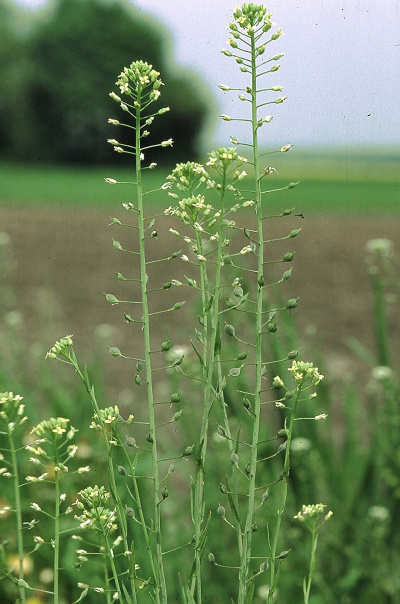
Camelina sativa, fot. commons.wikimedia.org
Identifying the enzymes responsible for wax breakdown that are effective in seeds and assessing the effects of introducing them into plants are the greatest challenges facing the researcher.
Regardless of the effects of these modifications, the aim of the project is to gain a better understanding of the metabolism of storage lipids in seeds that accumulate both waxes and triacylglycerols.
‘The data obtained will help identify the key barriers limiting the effective accumulation of waxes in oilseed plants. They may also form the basis for developing more effective strategies for their production using metabolic engineering. In the longer term, the project may contribute to the development of more sustainable methods for obtaining valuable industrial lipids,’ explains the scientist.
The project is fundamental research in nature, but the knowledge gained may find application in agriculture and plant biotechnology in the future.
‘We want to understand what limits plants’ ability to produce waxes and how these limitations can be overcome. Such knowledge may in future help in the development of oilseed crops that produce greater quantities of valuable lipids without adversely affecting their germination and growth,’ says dr Magdalena Miklaszewska.
Currently, waxes are primarily obtained from jojoba or produced using chemical methods. Research being carried out at the University of Gdańsk may, in the future, contribute to the use of oilseed crops as a renewable source of these substances. However, this will not be a direct outcome of the current project.
‘The path from research on model plants to practical applications in agriculture is a long one and requires further work. In the case of genetically modified plants, it is also necessary to meet stringent safety requirements. I view this project primarily as a research phase that may provide the knowledge and tools needed to develop such solutions in the future,’ concludes the winner of the NAWA Polish Returns 2025 programme.