
We present the profile of another winner of the National Science Centre's OPUS 29 competition: dr hab. inż. Aneta Lewkowicz, prof. UG from the Faculty of Law and Administration, whose project ‘Molecular investigation of touch traces: an innovative method for the analysis of DNA and dactyloscopic traces (Jigsaw ID) in the context of mass disaster identification and forensic thanatology’ received funding of PLN 2,252,400.00.
Dr hab. inż. Aneta Lewkowicz, prof. UG
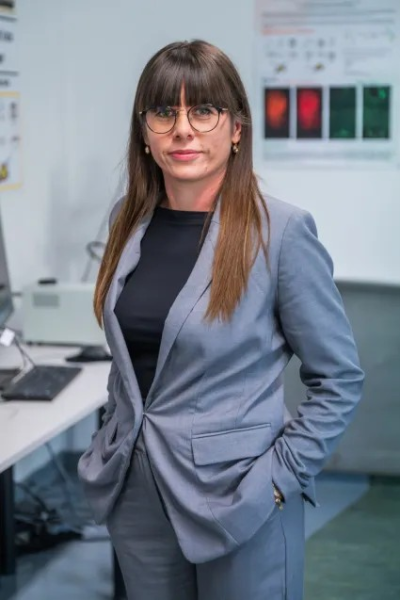
She is a graduate of the Faculty of Chemistry at the Jagiellonian University and the Faculty of Energy and Fuels at the Stanisław Staszic University of Science and Technology in Kraków, and obtained her doctorate and postdoctoral degree in physical sciences at the Faculty of Mathematics, Physics and Informatics at the University of Gdańsk. She heads the Forensic Research Unit at the Faculty of Law and Administration of the University of Gdańsk and is a member of the Physical Sciences Discipline Council at the Faculty of Mathematics, Physics and Informatics of the University of Gdańsk.
About the project
The project focuses on supporting the identification of individuals by developing a new, innovative procedure with particular emphasis on the identification of victims of mass disasters. The proposed solution introduces a completely new ‘Jigsaw ID’ identification model based on dual-mode spectroscopic analysis, combining molecular spectroscopy techniques with the analysis of evidence containing trace amounts of DNA present in fingerprints. The method involves preserving both DNA and dactyloscopic traces in optical polymer material. Such a comprehensive approach has not yet been proposed in forensic science.
The Jigsaw ID project could significantly change the practice of identifying individuals by introducing an innovative, scientifically verified procedure that can be used both in the routine work of forensic laboratories and in the identification of victims of mass disasters. The development of polymeric materials capable of simultaneously preserving fingerprints and DNA will eliminate the current conflict between the disclosure of dactyloscopic traces and their biological analysis, thereby reducing the loss of evidence. The spectroscopic results generated in the project will provide new knowledge at the molecular level, which may not only influence the future of forensics, but also stimulate innovation in the biological, physical and chemical sciences.
‘Fingerprints are unique patterns on our fingers; they are not only a characteristic feature that enables identification, but also hold hidden secrets in the form of genetic material. The fingerprint DNA mapping project is a pioneering approach, combining forensic genetics with advanced spectroscopic techniques, and allows us to discover new possibilities in the field of personal identification,’ explains prof. Aneta Lewkowicz. ‘Traditional laboratory methods for obtaining DNA from biological samples are not only time-consuming but also require extensive experience. The solution we propose presents a molecular-level action plan that will lead us to the creation of potential materials, methods and procedures for identifying individuals.’
Jigsaw ID will be the first dual-mode identification in a spectroscopic system through the analysis of optical material with biocompatibility with evidence in the form of small amounts of DNA in fingerprint traces. This will be an interdisciplinary project involving specialists in physics, biophysics, forensic chemistry, materials engineering, biology, anthropology, law and forensics.
‘Our activities will include optimising polymer hydrogel tapes for their suitability for stabilising evidence in the form of trace amounts of DNA and fingerprints. One of the key elements that we will take into account when developing this procedure will be the variability of the substrate, which exhibits a multitude of structural variants resulting from the diverse needs of the environment at the scene of the incident, e.g. paper, glass, metal surfaces, etc. Additionally, taking into account the possibility of conducting identification analyses at mass disaster sites, with full respect for human rights, we will adapt our materials for compatibility with the skin of the deceased and sweat and fat components. Another goal we want to achieve is to design polymer hydrogel tapes in such a way that they are completely safe for the people working with them,’ adds the scientist.