Two researchers from the University of Gdańsk will travel to the United States as part of the Fulbright STEM Impact Award grant programme. In the 2025/2026 recruitment process, grants were awarded to eight people in Poland.
The Fulbright STEM Impact Award is a scholarship programme for researchers representing STEM (science, technology, engineering, mathematics) fields employed at Polish academic and scientific institutions.
The scholarship allows for a research trip to a selected host institution in the United States, which can last from 2 to 6 weeks. During this time, the winner can carry out their own research or research and teaching project, as well as expand their knowledge in the field of science commercialisation or grant application writing.
In the current edition of the programme (for 2025/2026), 14 applications were submitted, and as a result of the competition procedure, 8 scholarships were awarded. Two of them were awarded to researchers from the Faculty of Biology at the University of Gdańsk: prof. Iwona Mruk and dr Katarzyna Wojczulanis-Jakubas.
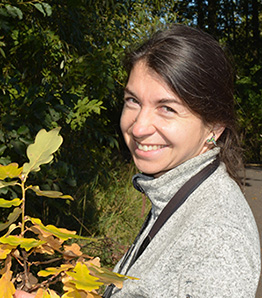
Prof. dr hab. Katarzyna Wojczulanis-Jakubas from the Department of Vertebrate Ecology and Zoology will carry out her scholarship at the University of Nevada, Reno (USA).
‘The project carried out as part of the Fulbright grant focuses on understanding the behavioural and hormonal mechanisms of parental care coordination in birds. In collaboration with experts from the University of Nevada, Reno (USA) - dr David Baldan (an expert in behavioural ecology) and dr Jenny Ouyang (an expert in ecophysiology, including hormones) - I will conduct a systematic review of the literature on patterns of parental cooperation in birds and their hormonal determinants,’ says prof. Katarzyna Wojczulanis-Jakubas about her plans.
The aim of the project, as described by the researcher, is to provide a synthetic summary of the current state of knowledge, identify research gaps and indicate directions for future research on the mechanisms of parental coordination. Particular emphasis will be placed on the ecological determinants of the observed patterns (synchronisation, alternation, lack of pattern) and the role of hormones in regulating parental behaviour.
‘This review will fill an important gap in the literature and create a basis for the development of a joint research plan, which in the future may result in new projects carried out in cooperation between research teams in Poland and the USA. The project will contribute to the development of research on the mechanisms of parental care, expand the network of scientific cooperation, and support my scientific and professional development,’ sums up the scholarship holder.
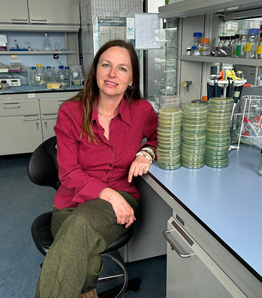
Prof. dr hab. Iwona Mruk from the Department of Microbiology will visit the Department of Biomedical Engineering, Boston University, USA, thanks to the scholarship.
‘My current scientific interests focus on understanding the functioning of cellular genetic networks, especially their control and coordination through regulatory molecules with local and global effects. This control is multi-level and hierarchical. This is an important aspect because the processes related to the virulence and pathogenicity of microorganisms are also subject to the same control mechanisms. This opens up prospects for creating new approaches to combating pathogens through targeted disruption of genetic networks using modern synthetic biology tools,’ says the researcher.
The project, which she will carry out as part of the Fulbright STEM Impact Award programme, concerns the application of modern bioinformatic methods to predict and model bacterial genetic networks using high-throughput research results.
‘This comprehensive approach allows us to identify new components of genetic networks, their interconnections, and to study their impact on the genetic plasticity of bacteria, as well as on many cellular processes, including those relevant to human health, such as bacterial virulence or resistance to therapeutics,’ emphasises prof. Iwona Mruk.
The project will be carried out in the laboratory of prof. James Galagan (Dept. of Biomedical Engineering, Boston University, USA), who is a world expert in the field of systems biology and bioengineering, with a particular focus on research integrating experimental and computational data based on machine learning. His research has contributed, among other things, to the development of a compendium of knowledge on the genetic networks of Escherichia coli K-12 (Nature Communications, 2025) and Mycobacterium tuberculosis (Nature, 2013).
Congratulations on receiving the scholarship and we wish you fruitful research!