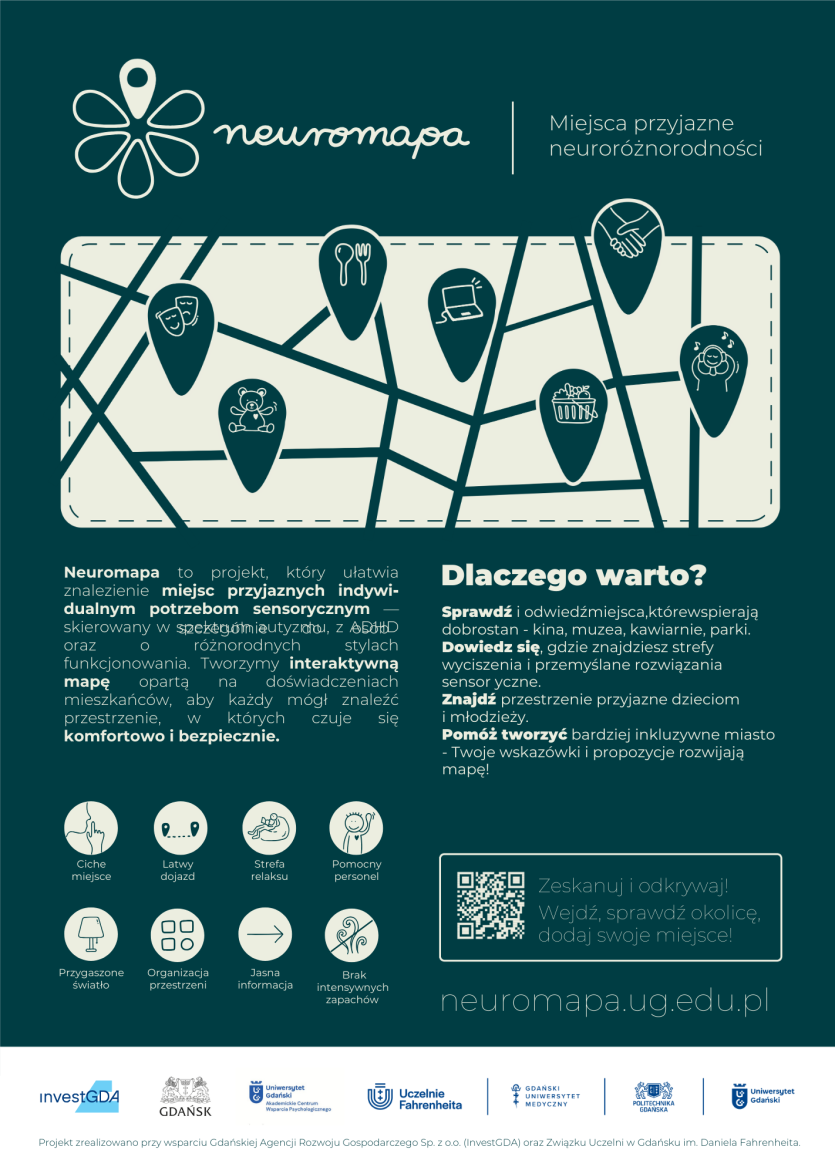
Neuromapa is a project aimed at supporting neurodiverse people. Often, due to their unusual experience of the world, they have special needs, including specific conditions in which they feel comfortable or can function well. The Neuromapa team wants to help with this, and thanks to winning a competition organised by the Gdańsk Economic Development Agency, ‘SDG Challenge. We design a sustainable future’, this support is becoming a reality. ‘We want to create solutions that not only increase accessibility, but also counteract loneliness, build a sense of belonging and connect people instead of dividing them,’ say the project implementers.
We talked about neurodiversity, the project's activities and related plans with members of the Neuromapa team - Alicja Pomian, Małgorzata Treppner and Agata Rudnik.
Karolina Żuk-Wieczorkiewicz: - It seems that awareness of diversity in Polish society is growing. How does it look from your perspective? To what extent does the presence of this topic in the media make us more knowledgeable, and to what extent does it contribute to the perpetuation of myths or the trivialisation of the problem (‘everyone has ADHD now’, ‘it's a new trend’)?
Alicja Pomian: - Awareness is indeed growing, there is more and more information being conveyed by pop culture - and on the one hand, it is good that the media are showing the stories of different people. On the other hand, few viewers reflect on the fact that a given experience concerns this one specific person, which can lead to a tendency to perpetuate myths in society. The area of neurodiversity should be approached in a multi-faceted way, and in every situation, we should remember not to generalise.
Magorzata Treppner: - I definitely see an increase in interest in the topic, which in itself is a good change. The media helps to demystify many concepts, but at the same time, it simplifies part of the narrative. On the one hand, we know more, but on the other, there are simplifications such as ‘everyone has ADHD now’ or treating neurodiversity as a trend. This shows how much we need reliable (psycho)education and concrete solutions, not just marketing slogans.
- What are the real needs of neurodiverse people in the context of everyday functioning?
Alicja Pomian: - First of all, the real needs of such people are heterogeneous. They can be imagined as a spectrum of different needs, each individual has their own unique nervous system, which tends to strive to be safe and satisfied. The same applies in the context of everyday life: some neurodiverse people will want to go out into urban spaces to experience cultural events, eat a meal or take a simple walk, while others will prefer to stay at home – and that is perfectly fine. I think the key is to try to understand that needs can be met in different ways and that everyone has the right to do so. Enabling conversation/debate on such topics can do a lot for society as a whole.
Magorzata Treppner: - The real needs of neurodiverse people often boil down to something that is ‘invisible’ to many neurotypical people - conditions in which the nervous system does not have to be in overload mode all the time. This may mean fewer stimuli, greater predictability, clear announcements, choice, and the right to regulate one's own pace and way of functioning. For some, this will mean access to sensory-friendly public spaces, for others, the ability to withdraw without feeling pressured or judged. The most important thing is not to impose a single model of ‘normal’ participation in social life, but to create an environment that offers real flexibility and a sense of security.
- Where did the idea for Neuromapa come from?
Magorzata Treppner: - The idea for Neuromapa was primarily the initiative of the project manager, dr Agata Rudnik, who saw a real gap between the needs of neurodiverse people and how public spaces function. From my perspective, it was a moment when a good concept met with the broader motivation of our team – the need to change the world into one that better responds to current social challenges. We want to create solutions that not only increase accessibility, but also counteract loneliness, build a sense of belonging and connect people instead of dividing them.
Neuromapa is therefore not only a technical tool, but also a form of social bridge between different experiences and ways of functioning.
Alicja Pomian: - Our project is an idea of how to support some people in recognising where they could pursue their individual goals and needs, as well as to identify specific places that are open to neurodiversity.
- Is it easier to find places that are friendly to younger or adult non-neurotypical people (e.g. on the autism spectrum or with ADHD)? What does support for these groups currently look like?
Alicja Pomian: - When it comes to places that are friendly to specific age groups, it is easier to find those that are adapted to younger people. Support for adults is still quite poor, with a lack of accessible and free spaces for this age group. Many factors depend on the extent to which, from an inclusion perspective, places are open to diversity: e.g. through communication style, adaptation of space in the building (quiet rooms, ‘stimulation’ rooms), describing the building's spaces (e.g. on a website), and the education of the staff working in these places is also important. These are complex elements that require many discussions between different sectors and are also challenging in terms of the costs of implementing the various options. Many services provided to people on the autism spectrum only exist thanks to the extension of certain non-governmental projects. In the case of people with ADHD, it is rarely mentioned that they also need places adapted to their needs. It is easier to adapt services to a younger audience. Little is also said about the needs of adults with dyslexia, dyscalculia or dyspraxia, as well as people with Tourette's syndrome, and these people are also neurodiverse.
Magorzata Treppner: - I also feel that it is currently much easier to find solutions aimed at children - perhaps because developmental difficulties are talked about more and more loudly today. At the same time, adults remain largely ‘invisible’ in the support system. And neurodiversity does not end with age – the needs do not disappear, but are less and less noticed and taken into account. It is this gap that we want to gradually fill through our activities.
- Who would you like to help with this project and how?
Alicja Pomian: - Ultimately, the project was intended to help neurodiverse people, but it may also be useful to other groups of people. The project includes a research component that can provide qualitative data on what is needed by people developing on the autism and ADHD spectrum (as the research group consisted of these people and their families), the practical part: free consultations with a psychologist, workshops to raise awareness about neurodiversity, and the technical and practical part in the form of a map on the website and an Android application where you can post accessible (and less accessible) spaces in the city.
Magorzata Treppner: "We want to support neurodiverse people in their daily lives, but at the same time help places to better understand these needs and respond to them in a realistic way. Neuromapa is intended to be a practical tool, facilitating the selection of sensory-friendly spaces while motivating businesses to introduce thoughtful changes that promote accessibility. Importantly, these are solutions that often improve the comfort not only of neurodiverse people, but of all users, creating more friendly, peaceful and inclusive spaces.
- What has already been achieved within the framework of Neuromapa?
Alicja Pomian: - The research part has been largely completed – at this point, the team is analysing the collected data. The team has participated in events where it has discussed aspects related to the Neuromapa project. The practical part, in the form of psychological support and workshops, is also already being implemented. The website and mobile app for Android are already available, and in the future, we may be able to develop an app for iOS.
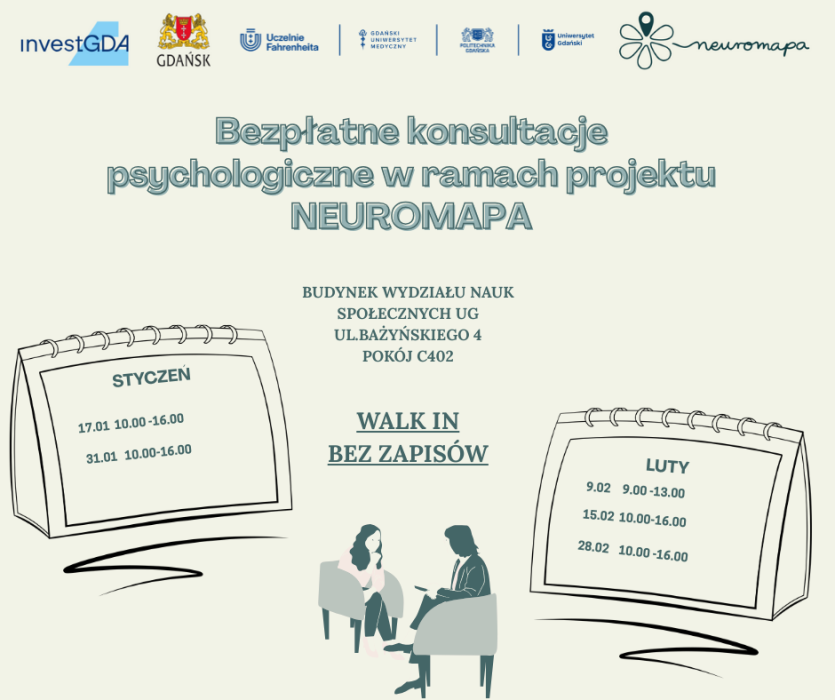
Magorzata Treppner: - We conducted research, numerous workshops, took an active part in conferences, conducted research walks and focus groups, which allowed us to better understand the needs of users and verify our assumptions in practice. At the same time, the Neuromapa website and app were created, which form the foundation of the accessibility tool. Currently, the project is also developing in the area of direct support – our psychologist conducts psychoeducational workshops and free consultations, thanks to which Neuromapa is not only an information platform, but also a real point of support for the community.
- What are your next steps in the project?
Małgorzata Treppner: - In the near future, we will focus primarily on conducting workshops and free consultations, which allow us to work directly with interested parties and respond to the real needs of the community. At the same time, we are planning promotional activities - we want to reach a wider audience, build awareness around neurodiversity and encourage more places to join Neuromapa.
Alicja Pomian: - Now, the main thing left to do is to implement the practical part of our project, which is mainly the promotion of events, psychological consultations and the possibilities of using the website.
- Who can benefit from the Nauromapa project?
Agata Rudnik: - Initially, the project was aimed primarily at parents of children with neurodiversity. However, it quickly became apparent that it would also be great for adults, including those with ADHD or on the autism spectrum. Over time, we came to the conclusion that we can all benefit from it. Who among us doesn't sometimes need a place to calm down, drink a coffee in peace, or, on the contrary, find a space where they can safely be with others? I don't want this to sound trivial, but I truly believe that everyone can find something for themselves in this project.
- What are your hopes for the project?
Alicja Pomian: - My greatest hope is that neurodiverse people will be able to participate more fully in social life - to feel seen, included and simply feel good in public spaces. We want Neuromapa to be useful in practice, to become a natural tool for choosing places, as obvious as checking opening hours or reviews, and at the same time an impulse for real change in thinking about accessibility.
- How did you react to the news about the funding?
Agata Rudnik: - With great joy. For us, it is a sign that such initiatives are needed and noticed. We are glad that there is more and more space for social projects that really support local activities. The funding gives us additional motivation, because thanks to it we can translate the idea into real, local activities and see their effect in our immediate surroundings.
- Last question: how can people support your project?
Malgorzata Treppner: - The project can be supported primarily by talking about it. Using Neuromapa, sharing information, promoting the initiative on social media and in your environment - all of this is extremely important. Even simple conversations about neurodiversity really raise awareness and help the project reach more people who can benefit from it. The more people get involved, the greater and more lasting the social impact will be.
Agata Rudnik: - We really want to reach as many people as possible. The project is constantly evolving, but its future largely depends on the community - on how many people will use it and share information about it. Every recommendation and every opinion helps us develop new elements of Neuromapa.
Thank you for the interview and I'm keeping my fingers crossed for the development of the project!
Neuromapa - information
The Neuromapa team consists of:
- Dr Agata Rudnik - project leader, Director of the Academic Psychological Support Centre at the University of Gdańsk and researcher at the Department of Clinical and Health Psychology at the Institute of Psychology at the University of Gdańsk
- Dr hab. Anna Supernat - Centre for Biostatistical and Bioinformatic Analysis, Medical University of Gdańsk
- Alicja Pomian and Małgorzata Treppner - PhD students from the Faculty of Social Sciences at the University of Gdańsk
- Anna Skupińska - psychologist specialising in neurodiversity
The Neuromapa project is partnered by the Academic Psychological Support Centre at the University of Gdańsk.