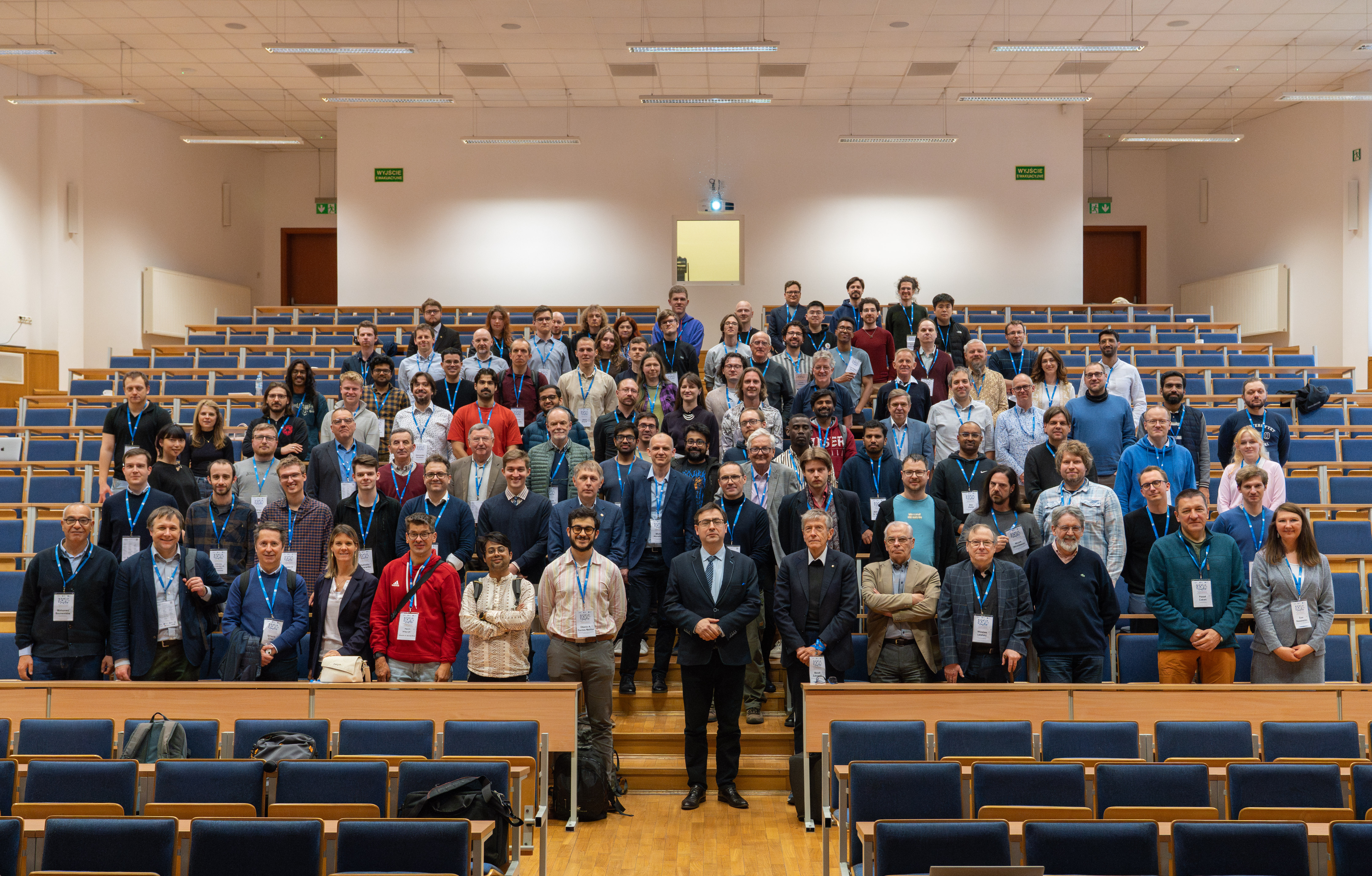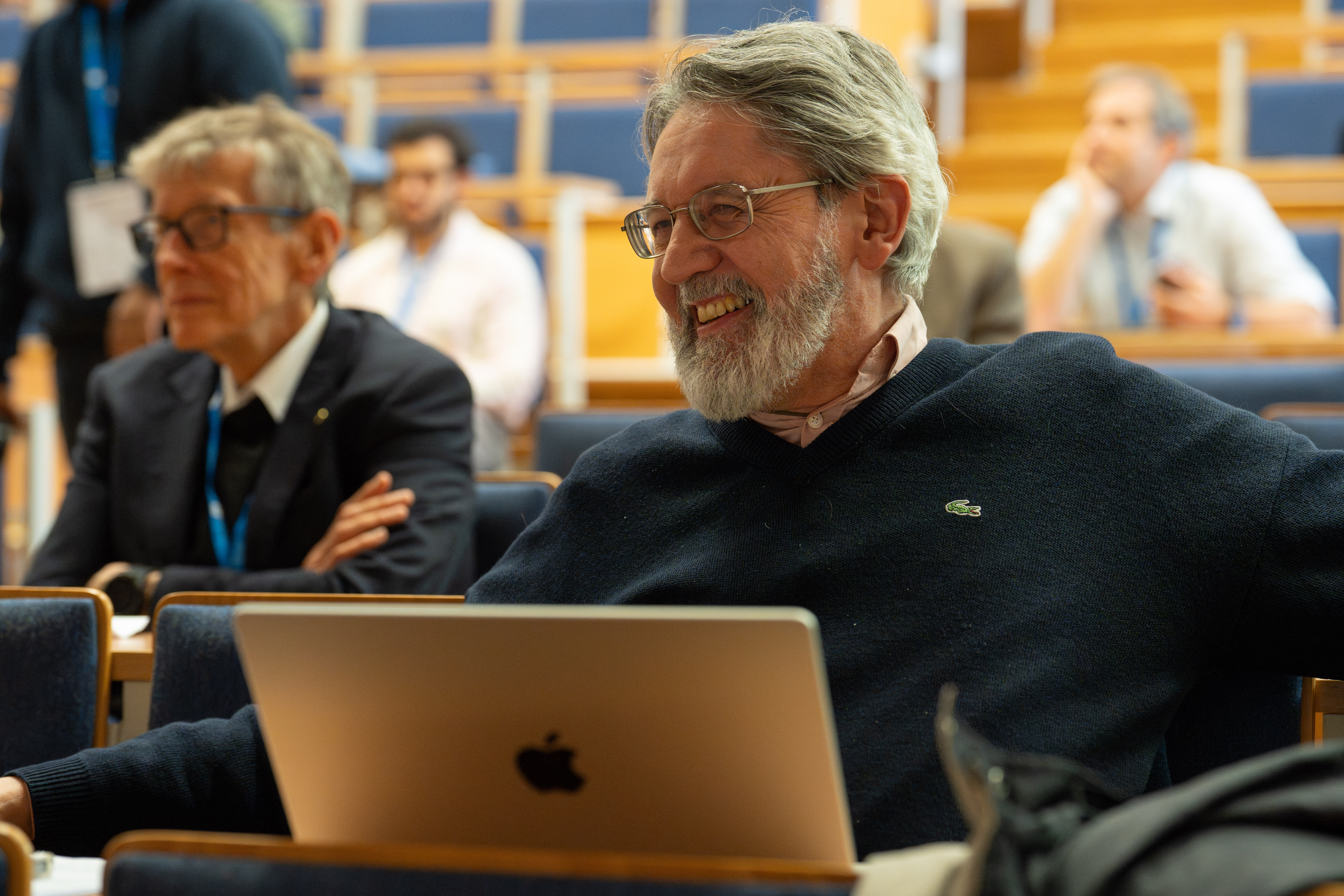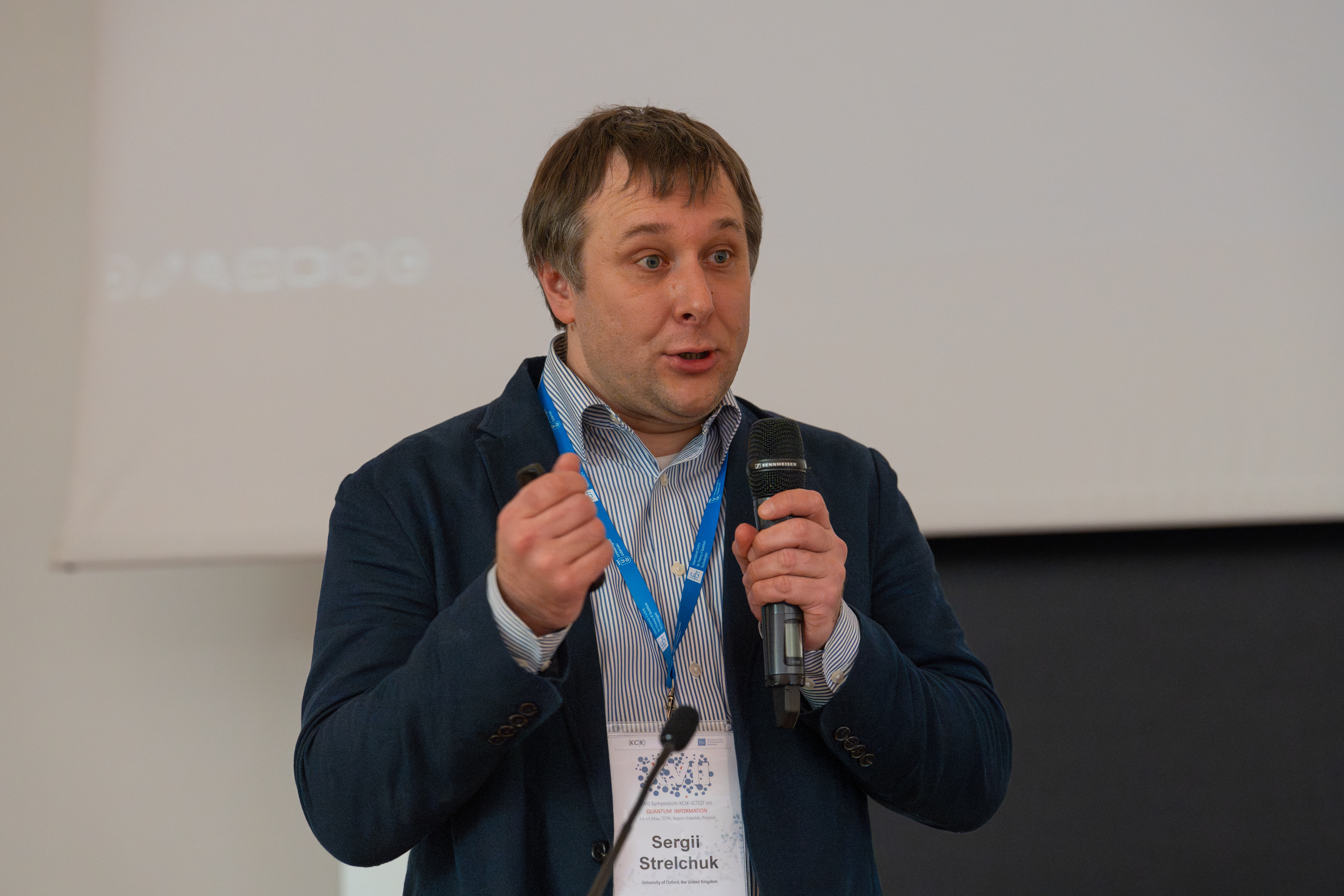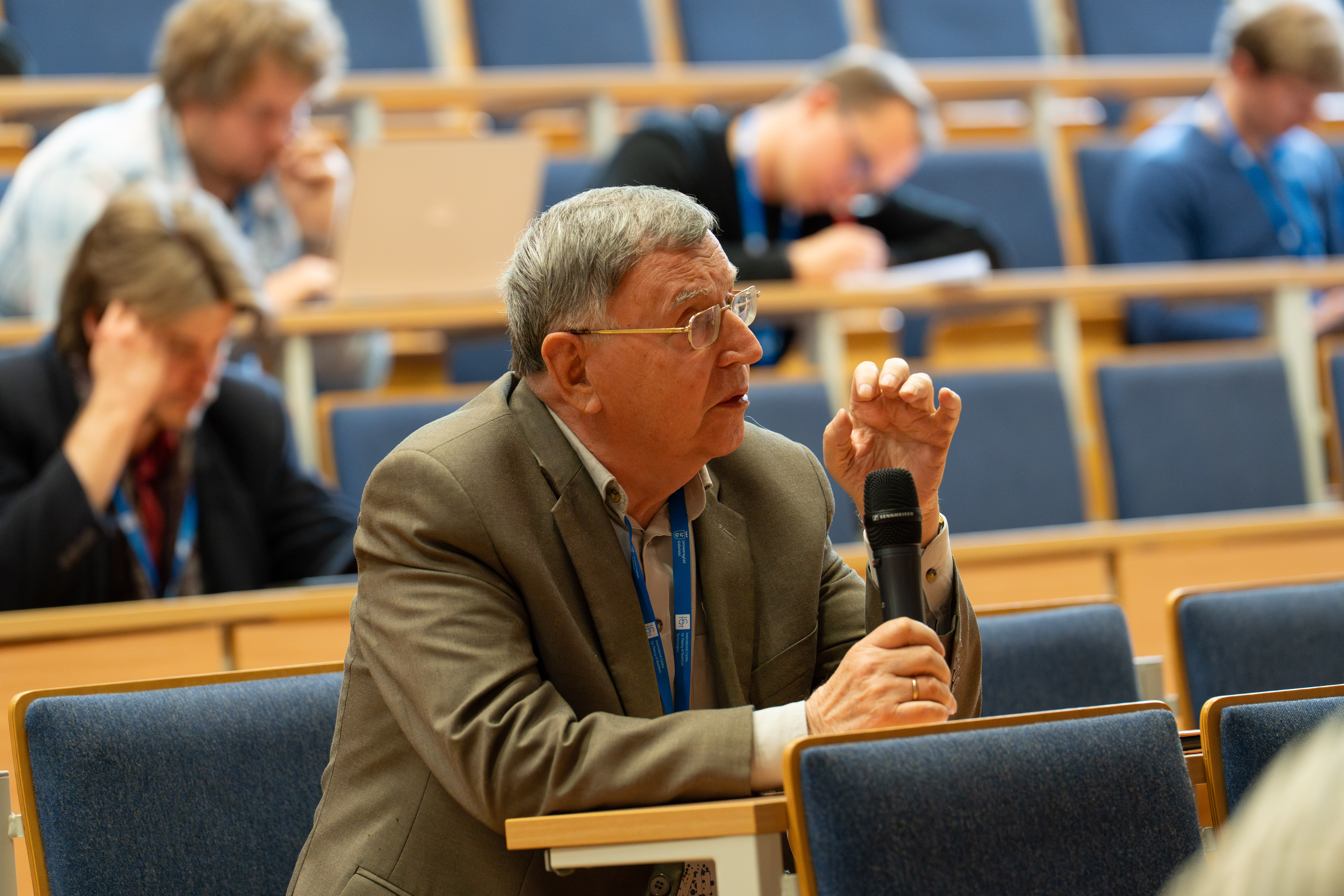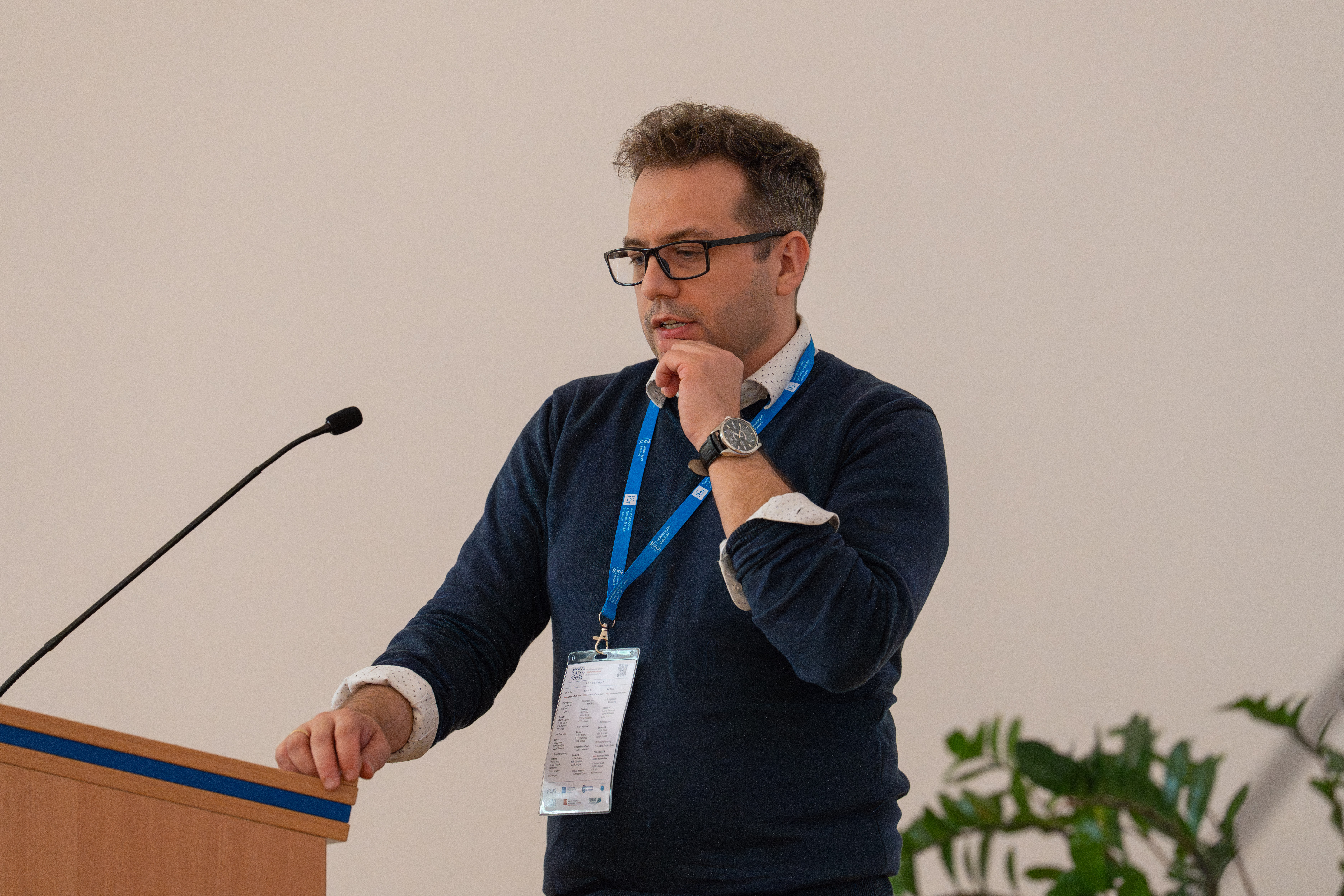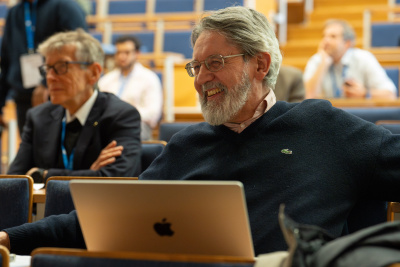
Three days, nine thematic sessions, over 20 speakers (including world-renowned experts in the field of quantum physics), and 51 scientific posters – the 17th KCIK-ICTQT Symposium on quantum information has come to an end. In the popular science lecture closing the Symposium, prof. Philippe Grangier described quantum research as ‘the greatest intellectual adventure of the 20th century.’ The annual meeting of the National Quantum Information Centre (KCIK), co-organised by the International Centre for Theory of Quantum Technologies at the University of Gdańsk (ICTQT), took place in Sopot on May 13–15, 2026.
The Symposium is one of the most important events bringing together the international community of researchers working in the broadly defined field of quantum information.
‘The unique character of the Symposium, cultivated since its first edition by prof. dr hab. Ryszard Horodecki, stems from the fact that we create a one-of-a-kind opportunity for the exchange of ideas between the greatest contemporary researchers in quantum information and ambitious young scholars in this field from domestic centres,’ said prof. Łukasz Rudnicki, co-organiser of the event.
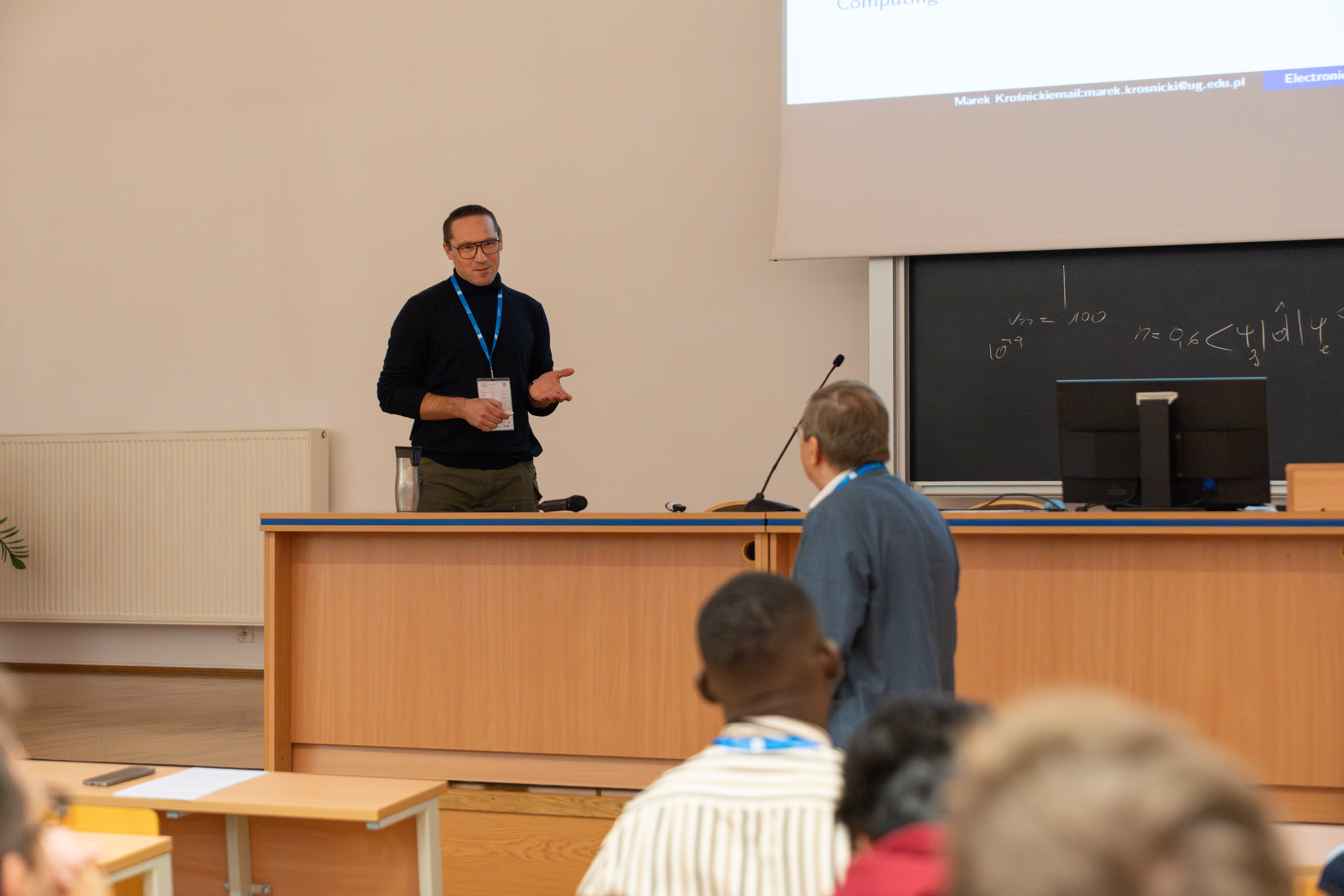
Among the undertaken topics were new results concerning the quantum-classical boundary, presented by prof. Philippe Grangier, whose speeches framed the conference, as he delivered both the opening presentation of the Symposium and a public lecture closing the event. Prof. Mohamed Bourennane from Stockholm University presented research on topological quantum photonics, whose experimental efforts aim to ensure maximum durability of quantum states of light and reduce the sensitivity of quantum systems to disturbances. The program also included a proposal to use thorium-229 isomers in the construction of an atomic clock, which is intended to be the most accurate clock in the world (presented by dr hab. Marek Krośnicki, prof. UG from the Institute of Theoretical Physics and Astrophysics, Faculty of Mathematics, Physics and Informatics, University of Gdańsk).
The full program of the event and the abstract book can be found here: 17th KCIK-ICTQT Symposium on Quantum Information - KCIK.
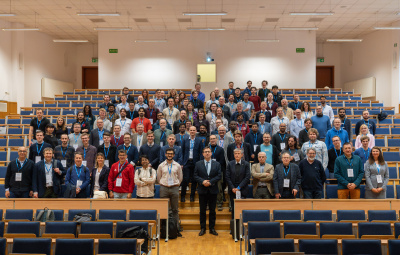
The final part of the programme was a public lecture held at the Faculty of Mathematics, Physics and Informatics at the University of Gdańsk. Before it began, the Dean of the Faculty, dr hab. Marcin Marciniak, prof. UG, welcomed the large audience (including students and doctoral candidates from the faculty) and introduced the speaker, Professor Philippe Grangier. Prof. Grangier delivered a lecture titled Quantum Mechanics: from Fundamental Principles to Technological Revolutions, in which he presented the history of the most important quantum discoveries since the field’s inception, including experiments from the 1980s on the violation of Bell’s inequality (for which, among others, the speaker’s then scientific supervisor, prof. Alain Aspect, and UG Honorary Doctor prof. Anton Zeilinger were awarded the Nobel Prize in Physics in 2022). Prof. Grangier described the development of quantum theory as ‘the greatest intellectual adventure of the 20th century,’ as it opened up a completely new area of scientific exploration at a time when it seemed that almost everything had already been explored - and to this day, it remains a cognitive challenge for physicists around the world.
The symposium was officially closed by the Director of ICTQT UG, prof. dr hab. Marek Żukowski, co-chair of the scientific committee. The professor thanked everyone who contributed to the organisation of the event.
Event organizers: The National Quantum Information Centre (KCIK) and the International Centre for Theory of Quantum Technologies (ICTQT) at the University of Gdańsk, with the support of the University of Gdańsk Development Foundation (FRUG), Wrocław University of Technology, the Gdańsk Branch of the Polish Academy of Sciences, and the Faculty of Mathematics, Physics and Informatics at the University of Gdańsk.
The scientific committee consisted of: prof. dr hab. Paweł Horodecki (Chair), prof. dr hab. Marek Żukowski (Co-Chair), prof. dr hab. Ryszard Horodecki, prof. dr hab. Łukasz Rudnicki, prof. dr hab. Adam Sawicki