
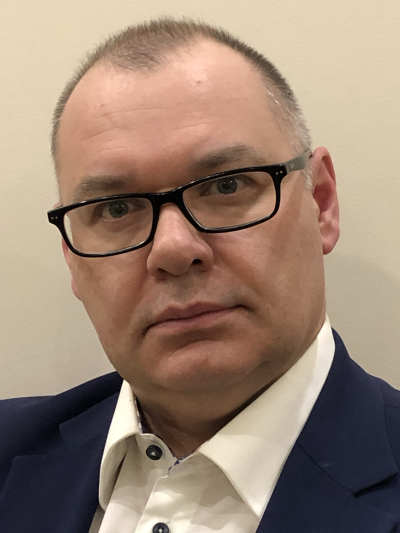
Dr Sebastian Susmarski from the Faculty of Management will be implementing the following project under the Horizon Europe programme: ‘Enabling and Connecting Interoperable FAIR Digital Objects’.
‘The University of Gdańsk, thanks to its scientific projects and presence in the SEA-EU alliance, is seen as a valued partner in marine research,’ explains dr Sebastian Susmarski, describing the origins of the winning project. ‘The idea is a continuation of the cooperation with Aristotle University of Thessaloniki, which began during the implementation of the Catalisi project, which I managed at the University of Gdańsk, with the implementation carried out by scientists from the Faculty of Economics: prof. Przemysław Borkowski, prof. Dariusz Tłoczyński and dr Agnieszka Szmelter-Jarosz.
There are 25 partners in total, including major European universities and institutes, such as the Karolinska Institute, one of Sweden's largest research centres in the field of biomedical sciences. The role of the University of Gdańsk will be to provide data on research in the Baltic Sea, test research data based on FAIR principles, and ensure the necessary interoperability between different repositories.
The total budget of the project is EUR 8,055,909.00, including EUR 200,000.00 in funding for the University of Gdańsk.
As stated in the project description: despite significant progress in open data access, code sharing and the implementation of FAIR (Findable, Accessible, Interoperable, Reusable) principles, there is still a lack of an automated, universal mechanism that could ‘FAIR-ise’ digital objects (Digital Objects, DOs) in large, cross-domain repositories and data spaces. The RAISE-CONNECT project responds to this challenge by creating AI-based, domain-independent ‘connectors’ that will enable the transformation of various types of digital objects (including data, code, experiments, research results and FDOs - FAIR Digital Objects) into a FAIR-compliant form and enable their interoperability across multiple repositories simultaneously.
Using existing EOSC-RAISE tools, the project will provide researchers and other stakeholders with an easy access point for searching, sharing and processing FDOs without the need for specialist technical knowledge. RAISE-CONNECT will also introduce a new architecture enabling the seamless creation, modification and integration of digital objects.
At the heart of the project is an automated FAIRisation service that will continuously improve digital objects by searching various repositories for missing FAIR elements.
This will enable any digital object to be transformed into a fully FAIR-compliant FDO – easy to find, interoperable and ready for reuse.
To increase usability, RAISE-CONNECT will allow users to interact with digital objects using simple natural language commands, utilising language models (LLM). Users will be able to “request’ a dataset, script, compare results or generate a workflow - without the need to build technical infrastructure.
The Common Repository Connector model will act as an intermediary layer, enabling the connection of diverse repositories and data spaces. Dedicated implementations will also be created for well-known Data Spaces and digital object repositories.
The FAIR‑ification Engine will provide continuous and ‘on-demand’ assessment of FAIRness and its automatic improvement. Complex analytical processes will be initiated both through natural language queries and graphical interfaces.
By removing technical barriers and ensuring compliance with FAIR principles, data traceability and repeatability, RAISE-CONNECT will transform open science from a policy statement into everyday research practice for scientists, innovators and data providers.
‘The project will simplify and democratise access to digital objects scattered across different repositories,’ concludes dr Sebastian Susmarski.
At our university, in addition to the Principal Investigator, the project team consists of:
- staff from the Faculty of Oceanography and Geography - Baltic Sea research data area: dr hab. Dorota Burska, prof. UG (chemical oceanography); dr Dorota Pryputniewicz-Flis (chemical oceanography); dr Aleksandra Cupiał (physical oceanography); dr Patryk Pezacki (physical oceanography); dr hab. Mariusz Sapota, prof. UG (biological oceanography); dr Halina Kendzierska (biological oceanography); dr Aleksandra Zgrundo (biological oceanography); dr hab. Małgorzata Witak, prof. UG (marine geology); dr Angelika Szmytkiewicz (marine geology);
- UG Library staff - technical issues related to the conversion of digital objects: Agnieszka Wasilewska, Katarzyna Cherbetko-Zygmuntowicz, Eliza Gościniak, Agnieszka Kranich-Lamczyk, Zbigniew Ruszczyk;
- Justyna Sikorska from the UG Office for Analysis and Expertise (technical support).
Short biography:
Dr Sebastian Susmarski - Doctor of Economics, Assistant Professor at the Department of Banking and Finance, Faculty of Management, University of Gdańsk. He conducts research and teaching activities in the field of finance, banking and economic analysis. He specialises in issues related to the functioning of the financial sector, financial markets and the assessment of the economic and financial condition of business entities, as well as the financing of the healthcare sector.
Author and co-author of scientific publications in the field of finance and banking, participant in research projects and expert ventures of a national and international nature. He actively cooperates with the socio-economic environment, combining academic activity with analytical practice.
He is the Director of the Office for Analysis and Expertise at the University of Gdańsk, where he is responsible for coordinating analytical and expert work carried out for public and private entities.
About all the winners of the programme: read here.