
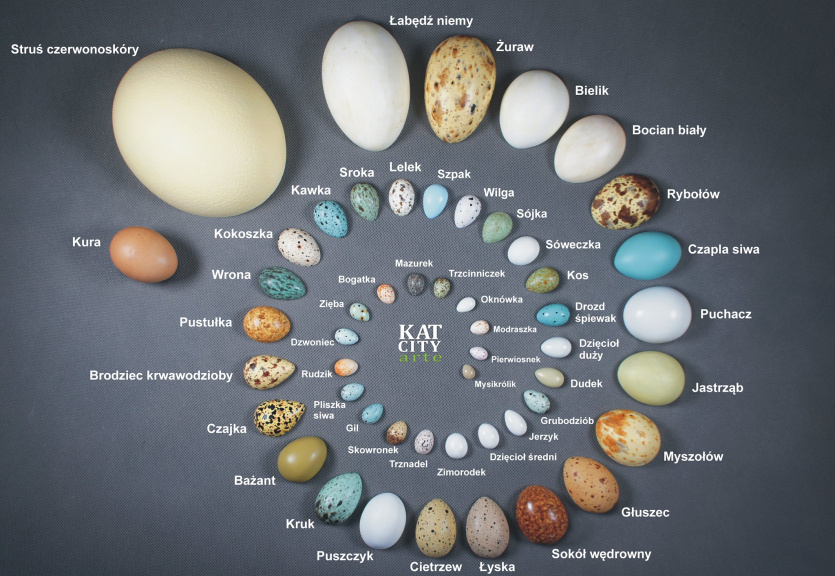
Źródło grafiki: katcityart.pl
It is hard to find a more recognisable and universal symbol of Easter than the Easter egg – that is, the egg itself. No wonder it is the egg that symbolises new life. The egg – complete with its shell – is a unique achievement of evolution, which allowed vertebrates to reproduce independently of an aquatic environment. It is also a marvel of natural engineering, strong enough to withstand the incubation period, yet constructed in such a way as to allow the chick to hatch. Bird eggs vary in size, shape, texture, and shell colour, creating a fascinating world of ‘natural Easter eggs’, as described by prof. dr hab. Dariusz Jakubas from the Department of Vertebrate Ecology and Zoology at the Faculty of Biology, University of Gdańsk.
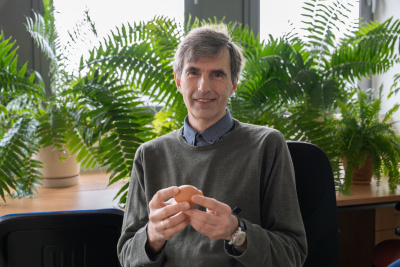
Karolina Żuk-Wieczorkiewicz: - Let’s start with something a bit unusual: records. What are the largest and smallest eggs in the bird world?
Prof. dr hab. Dariusz Jakubas: - As far as size and weight are concerned, among birds living today, the largest are ostrich eggs: 18 cm long and 14 cm wide, weighing nearly 1.5 kg. However, it is also worth mentioning the eggs of the elephant bird, an extinct species that lived in Madagascar until around the year 1000. These were the largest bird eggs known to mankind, measuring up to 37 cm in length and weighing 12 kg each. That is the equivalent of 150 chicken eggs, so this egg was truly enormous.
- You could make a decent scrambled egg with that...
- Yes – and that was probably one of the reasons for the species’ extinction: people exploited these birds not only for their meat, but also stole their eggs, which led to their extinction quite quickly. The same was true of megafauna on practically every continent – the arrival of humans often meant that this megafauna would somehow mysteriously disappear.
- We’ve been talking about the largest, but which bird’s egg is the smallest?
- The smallest eggs are laid by the Hawaiian bee hummingbird – and that reference to a bee is very apt. This bird measures about 6 cm, even less than 6 cm in one of the sexes. The eggs, of course, are correspondingly smaller, ranging from 1 cm to 1.3 cm in length.
- So they’re about the size of a tic tac candy?
- Yes, they weigh just one gram. A single chicken’s egg could hold 75 of these bee hummingbird eggs. So there really is a huge difference. In fact, everything about this species, such as its nest, is tiny.
Speaking of records, it’s interesting to note, for example, the egg of the kiwi (a flightless bird from New Zealand), which is the largest egg in relation to the body weight of the bird that lays it. Such an egg can account for as much as 25% of the female’s body weight. X-ray images show that during the breeding season, this egg virtually ‘monopolises’ the inside of her body.
- So the kiwi is only capable of laying a single egg. How does this compare with other birds?
- Clutch size varies. Often, birds that live longer have slightly smaller clutches (for example, many seabirds lay only one egg per season), as they have many breeding seasons ahead of them. Conversely, smaller birds, especially migratory ones, which do not live as long, tend to ‘maximise reproduction’ in a given season, as they have a lower chance of surviving to the next one. Among our native species, for example, titmouse can lay over 10 eggs in tree hollows or nesting boxes.
- It’s amazing how much eggs can vary.
- I think, above all, it’s worth emphasising what a marvellous product of evolution eggs are, because this is the trait that enabled vertebrates to permanently colonise the terrestrial environment. Let’s remember that eggs aren’t unique to birds.
- So we have the answer to the question of what came first: the chicken or the egg…
- In an evolutionary sense, yes, of course eggs came first. An egg cell must always be produced in some way, and the embryo must develop. The first eggs were laid in water. Amphibians had to (and still have to) return to an aquatic environment to reproduce. However, a major evolutionary step towards colonising terrestrial environments was precisely the emergence of hard-shelled eggs, which first appeared in reptiles. Birds then evolved from them. Let us also remember that there are still mammals (monotremes such as the platypus or the echidna) that continue to lay eggs. The development of the embryo directly within the mother’s body is a relatively recent evolutionary achievement. For a long time, it was the egg (and for many species still is) that provided the essential element for the embryo to develop. In a sense, the egg made it possible to bring the aquatic environment, which was once essential for fish and amphibians, onto land. This environment is enclosed within the egg, separated from external factors. Thanks to this, eggs can be incubated on land.
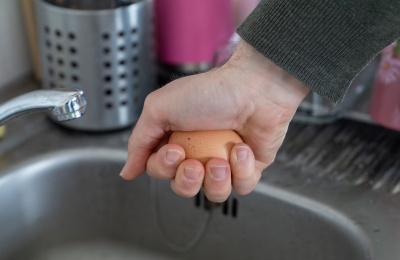
- So they are sat on?
- Most birds sit on their eggs, but some do not. There is a group of megapodes birds found in New Guinea and Australia, which, like reptiles, bury their eggs in the ground. Various thermal processes take place there (e.g. as a result of fermentation), and the birds regulate the temperature, for example, by adding rotting plants or turning the soil. Of course, there are also brood parasites (e.g. cuckoos), which do lay eggs but do not look after them themselves; instead, they leave this task to members of other species. All other birds, however, must devote quite a lot of time to ensuring the proper incubation of their eggs and embryos – a process that can last from a dozen or so days to several weeks.
- Which of the bird parents usually takes on the task of brooding the eggs? Are there species in which the parents share this responsibility?
- It varies. There are birds, such as hummingbirds, where only one sex is responsible for brooding. The situation is similar with ducks, in which an interesting behaviour has been observed…
- What sort?
- When a duck has to leave the eggs from time to time to eat, she plucks out her down feathers and covers the nest with them so that the eggs inside don’t get cold. Geese do the same. That’s how we know that the warmest down jackets and duvets are made from duck and goose down.
However, in many bird species, both sexes take turns incubating the eggs, so that both parents have time to forage or rest. Of course, the patterns of this division vary: for example, one parent incubates the eggs at night, and the other during the day. Another characteristic of brooding birds is the so-called brood patch, which appears during the breeding season. This is a featherless patch of skin that fits very closely against the eggs, enabling efficient heat transfer. It is a highly effective way of providing warmth – which is important, as eggs often require quite a high temperature, even around 38°C.
- Looking at the illustration, I see a vast variety of ‘natural Easter eggs’. They differ not only in colour and pattern, but also in the shape of the eggs.
- Indeed, some eggs (e.g. kingfisher) are rounder, whilst others have a very distinctive pear-shaped (or conical) form. And it is precisely this latter shape that may be of particular significance. There is a group of seabirds, murres, which lay their eggs on very narrow ledges on coastal cliffs. It is believed that the conical shape of the egg prevents it from being accidentally knocked off and rolling down the ledge.
Another interesting fact about murres: these birds nest in huge colonies, which can number thousands of individuals in very close proximity. In such a large group, it is easy to get confused about whose nest is where. But the murres have managed to cope with this too: they display a great deal of variation in the pattern on the shell, which helps with identifying the eggs. Each female knows the pattern of her own eggs. They are unique and differ between individuals.
- Bird eggs differ not only in colour or pattern…
- Their diversity is enormous. Some eggs are colourless, others are very colourful, and they can also have very different textures. There is, for example, a group of South American birds known as tinamous. Their eggs have very shiny shells; they look as if someone has varnished them. They come in very interesting colours, ranging from intense greenish hues to blue and dark purple.
The cassowary also has interesting eggs. Cassowary eggs look like kiwi fruit. Taken out of context, they look strange, but when they lie in a nest in a shady forest, they are not nearly as conspicuous as one might think.
The colour of the ani’s (Crotophagae) eggs changes over time. At first, the eggs are chalk-white; over time, as they are incubated and the outer layer of the shell wears away, they become increasingly blue.
- It’s a bit like the technique of decorating eggs by scratching patterns into them.
- A bit, yes. However, in the case of anis birds, the degree of wear on the eggs also provides information about when they were laid.
As for most of these eggs, which have a speckled colouring, this is simply cryptic colouring, designed to camouflage the egg so that it is not visible against its surroundings. This applies, for example, to the birds found on our beaches: the nests of plovers or terns take the form of a small hollow dug into the ground. And it is into these hollows that the birds lay their eggs. So when walking along the beach, you have to be very careful, as it is often easier to tread on the eggs than to spot the nest.
However, the undisputed masters of bird Easter-egging are cuckoos. They are genetically equipped to ‘imitate’ the eggs of the birds in whose nests they lay their own eggs. In most cases, cuckoo eggs have the same colour and shape as the host’s eggs (though these colours may vary among cuckoos themselves). Certain groups of cuckoos have, in a sense, adapted the colour and pattern of their eggs to match specific species of birds that raise their young.
For a long time, it was believed that there was only one species capable of resisting the cuckoo: the icterine warbler. It lays pink eggs with black spots, and the cuckoo has so far been unable to mimic these, although there are now early studies describing isolated cases where the cuckoo has managed to lay an egg in an icterine warbler’s nest.
It’s a bit like an arms race: which species will have an egg pattern that the cuckoo cannot mimic, so as not to end up raising the cuckoo’s chicks.
- What functions might the colour or pattern on an egg serve?
- One such function may be the recognition of a distinctive pattern by birds (as in the case of coots). White eggs are often laid by birds that nest in tree hollows (e.g. owls or woodpeckers), where visibility is poor, and a white object in a dark hollow may be more easily spotted by the brooding parent. We have already discussed cryptic colours in birds that lay their eggs on the ground. Herons and cormorants, for example, have blue eggs. There is a wide variety of shapes and colours.
- What are some examples of interesting textures?
- Textures can also vary greatly. The shell may be glossy, as in the case of kingfishers; it may also look as if it were covered in chalk; or it may have a more pronounced structure, a sort of micro-relief (as in storks).
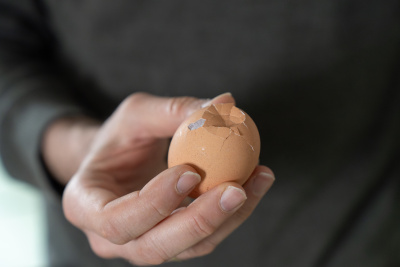
- The shell is an important part of the egg…
- As we said, it protects the embryo from external factors. It has numerous pores through which the embryo can breathe. It forms a unique structure which, on the one hand, must withstand the weight of incubation, and on the other, must be fragile enough for the chick to break out of it. This, incidentally, is also a clever design by nature: hatching chicks often have a so-called egg tooth on their beak, which always strikes the same part of the egg, making it easier to crack.
We often think that eggs are fragile, don’t we? Yet the shell is an incredibly strong structure, based on an arch (the same structural principle was used in old buildings and bridges). Its structure is somewhat reminiscent of the glass sometimes found in cars: if the windscreen shatters, the shards are held in place by a special film – and this is precisely the role played by the membranes inside the egg. They form an additional protective layer. The egg is a true masterpiece of nature.
- Thank you for the interview!